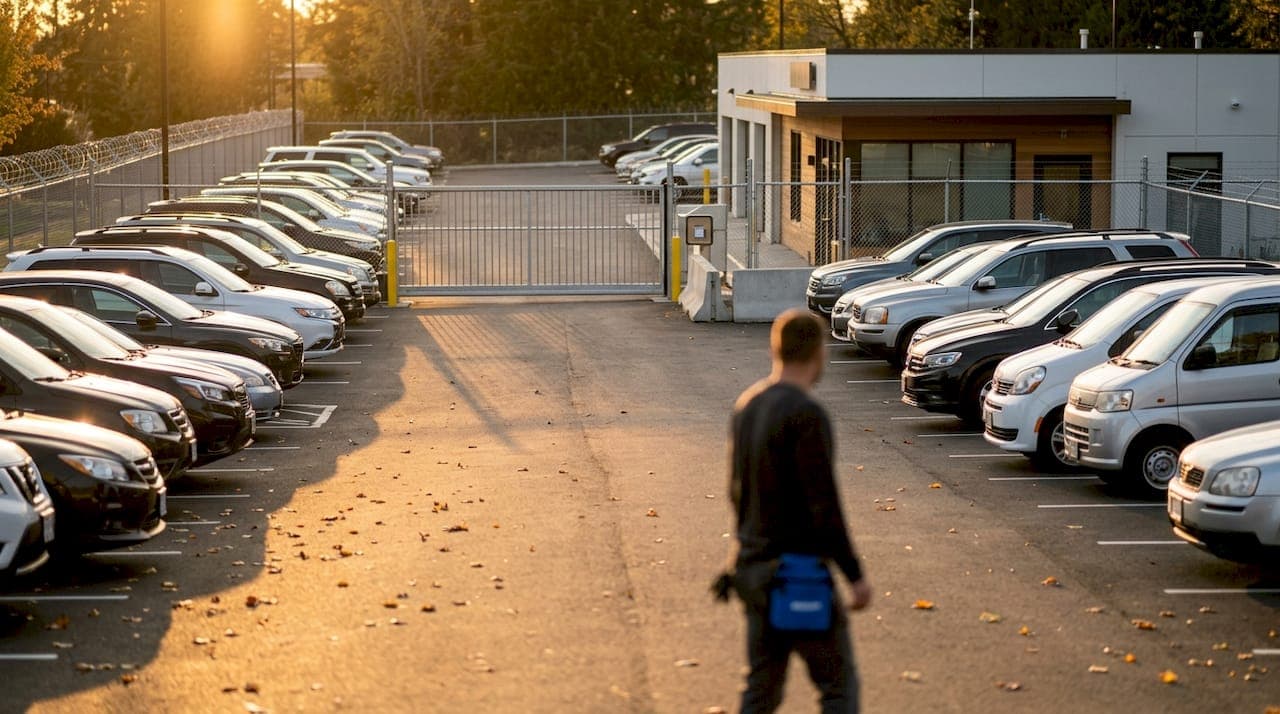
A vehicle storage facility is a dedicated, secured space where individuals and businesses can park or enclose cars, RVs, boats, and other vehicles for short-term or long-term periods. Whether you're a classic car enthusiast protecting a prized restoration or a business owner managing fleet overflow, the right auto storage solution protects your investment from weather, theft, and mechanical deterioration. This guide covers every decision point: unit types, preparation steps, costs, security features, and access policies, so you can store your vehicle with confidence.
What types of vehicle storage units are available?
Vehicle storage facilities offer three primary unit types: outdoor uncovered parking, covered or canopied parking, and fully enclosed indoor units. Each serves a different vehicle type, budget, and preservation need. Understanding the difference before you sign a contract saves money and prevents damage.
Outdoor uncovered parking is the most affordable option, typically running around $100 per month. It works for daily-driver vehicles that you access frequently and for short-term storage where weather exposure is acceptable. This is not the right choice for a vintage Porsche 911 or a restored muscle car.
Covered parking adds a roof or canopy over your space, blocking direct sun and rain without the cost of a fully enclosed unit. This middle-ground option suits newer vehicles stored for a few months, such as a seasonal convertible or a second car during a move.
Enclosed indoor units function like private garages. They block all weather, reduce temperature swings, and provide the highest baseline security. Climate-controlled units go further by actively maintaining temperature between 50 and 70°F and humidity between 40 and 50%. That humidity control matters as much as temperature for protecting leather interiors, rubber seals, and bare metal from corrosion. Facilities that only regulate temperature but not humidity are not offering true climate control. Ask for written specifications before you commit.
| Storage Type | Avg. Monthly Cost | Climate Control | Best For |
|---|---|---|---|
| Outdoor uncovered | ~$100 | None | Short-term, daily-driver vehicles |
| Covered/canopied | ~$150–$180 | None | Seasonal vehicles, moderate climates |
| Indoor enclosed | ~$175–$250 | Optional | High-value, classic, or luxury vehicles |
| Indoor climate-controlled | ~$258 | Full temp + humidity | Classic cars, exotics, long-term storage |
Sizing matters beyond just fitting the vehicle. You need clearance to open doors, access the trunk, and move around the car for maintenance checks. A standard 10x20 unit fits most sedans and small SUVs. Larger vehicles like trucks, vans, or vehicles with roof racks need a 10x30 or a custom-sized bay.
Pro Tip: When evaluating climate-controlled units, ask the facility how they maintain humidity levels during gate openings and extreme weather. A unit that loses humidity control every time the door opens is not protecting your vehicle the way you expect.
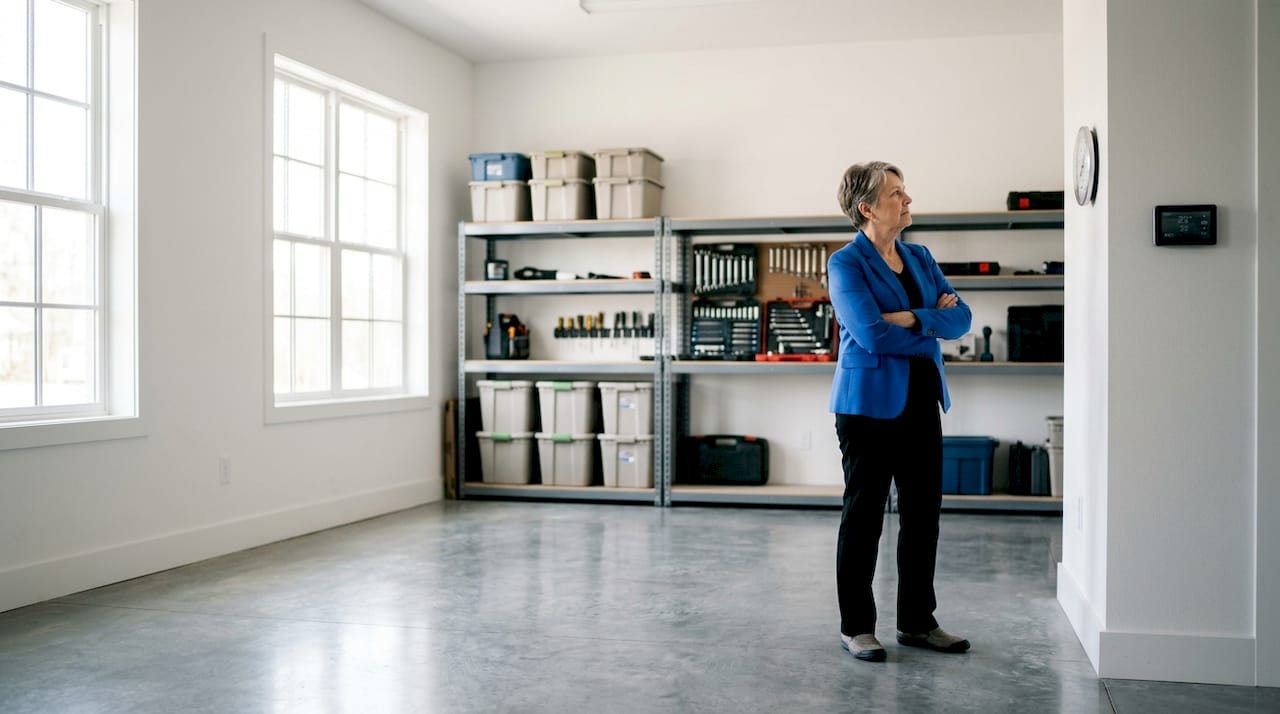
How to prepare your vehicle for storage at a facility
Proper preparation is what separates a vehicle that comes out of storage ready to drive from one that needs $2,000 in repairs. An 8-week preparation timeline is the standard for long-term storage, particularly for classic and collector vehicles. Start early and work through each step systematically.
-
Verify facility requirements. Most facilities require valid license, registration, and active insurance before move-in. Confirm these documents are current before your storage date. Letting insurance lapse during storage creates liability exposure and may violate your rental agreement.
-
Clean the vehicle thoroughly. Wash and dry the exterior completely. Clean the interior and remove all food, trash, and organic material. Dirt and moisture trapped against paint cause oxidation. Bird droppings and tree sap left on the surface etch clear coat within weeks.
-
Fill the gas tank and add fuel stabilizer. A full tank prevents moisture from condensing inside the fuel system. Add a product like STA-BIL Fuel Stabilizer and run the engine for 10 minutes to circulate it through the fuel lines. This step is non-negotiable for storage beyond 30 days.
-
Address the battery. A battery left connected will drain within weeks. Either disconnect the negative terminal or connect a trickle charger such as a CTEK MXS 5.0 or a Battery Tender Plus. For long-term storage, a maintainer is the better choice because it keeps the battery at optimal charge without overcharging.
-
Protect the tires. Tires develop flat spots when a vehicle sits stationary for months. Inflate them to the maximum recommended pressure listed on the sidewall. For storage beyond three months, place the vehicle on jack stands to remove weight from the tires entirely.
-
Top off all fluids. Old coolant, brake fluid, and power steering fluid absorb moisture over time. Fresh fluids reduce corrosion inside the system. Change the oil before storage, not after, because used oil contains combustion byproducts that degrade seals.
-
Use a breathable car cover. For indoor storage, a breathable fabric cover like those from Covercraft or California Car Cover protects the paint from dust without trapping moisture. Never use a plastic tarp indoors. It holds condensation against the surface and causes exactly the damage you are trying to prevent.
-
Set rodent deterrents. Mice and rats enter vehicles through the exhaust pipe, air intake, and cabin air vents. Stuff steel wool into the exhaust pipe and place rodent deterrent pouches inside the cabin. This step is overlooked more often than any other and causes some of the most expensive storage damage.
Pro Tip: Begin your preparation at least three to four weeks before your storage date. Rushing the process means skipping steps, and skipped steps are where storage damage originates.
What do vehicle storage facilities cost and what security do you get?
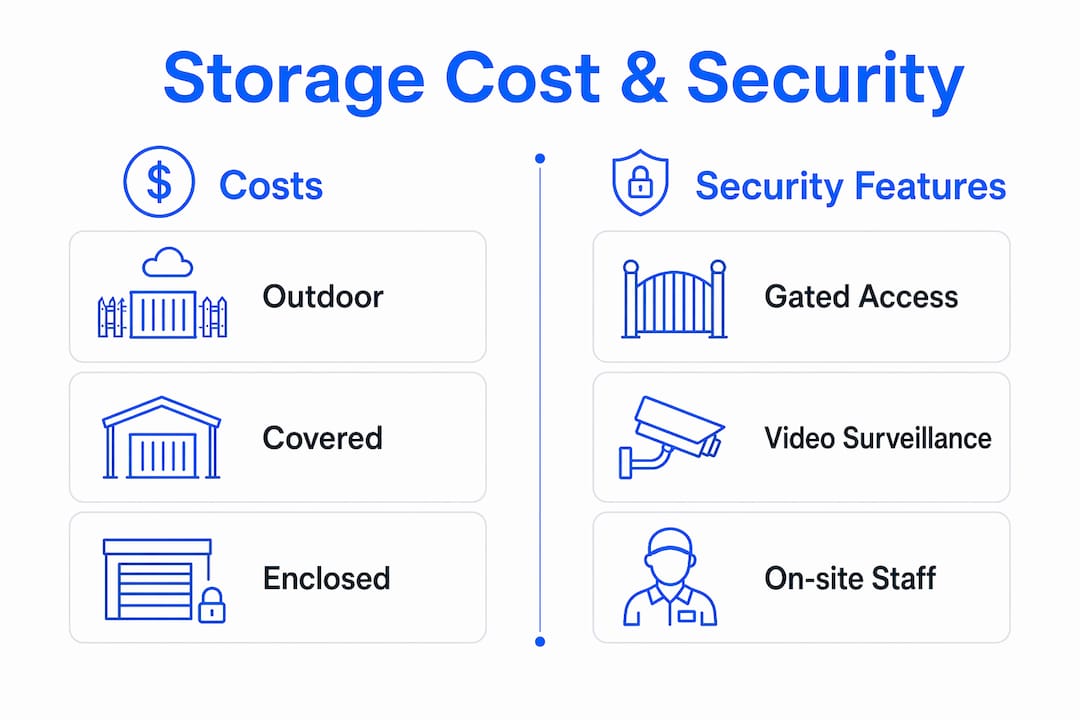
Car storage costs range from $30 to over $400 per month depending on unit type, location, and facility amenities. That wide range reflects real differences in what you receive. A $30 outdoor spot in a rural area and a $400 climate-controlled bay in a major metro are not comparable products.
Location drives pricing as significantly as unit type. Facilities in Los Angeles, New York, and Miami charge a premium over comparable units in smaller markets. Signing a longer contract, typically six months or a year, often reduces the monthly rate by 10 to 20 percent compared to month-to-month pricing.
Security features like gated access, perimeter fencing, bright lighting, on-site managers, and video surveillance increase monthly fees but provide measurable protection. A facility with 24/7 video surveillance, individual gate codes, and motion-activated lighting is a materially different product from an open lot with a padlock on the entrance. For a vehicle worth $50,000 or more, the cost difference between basic and premium security is small relative to the asset value.
| Security Feature | What It Provides | Impact on Cost |
|---|---|---|
| Perimeter fencing | Deters unauthorized entry | Low to moderate |
| Gated keypad access | Limits entry to renters | Moderate |
| 24/7 video surveillance | Deters theft, provides evidence | Moderate to high |
| On-site manager | Active monitoring and response | High |
| Individual unit alarms | Alerts on unauthorized access | High |
Pro Tip: Match the security level to your vehicle's value and how often you need access. A daily-driver stored for two weeks needs different security than a $150,000 classic stored for six months. Overpaying for security you do not need is wasteful. Underpaying for a vehicle that warrants it is a risk you cannot recover from.
Short-term vs. long-term vehicle storage: what to know about access
Gated storage lots commonly offer month-to-month rental options alongside longer-term contracts, giving renters flexibility for temporary vehicle storage needs. Month-to-month contracts cost more per month but eliminate the penalty for early exit. Long-term contracts reduce your monthly rate but lock you in. Choose based on how certain you are about your timeline.
Access policies vary more than most renters expect. Key points to confirm before signing:
- Gate hours. Some facilities offer 24/7 access with a personal gate code. Others restrict access to business hours, typically 6 a.m. to 10 p.m. If you need to retrieve your vehicle at 11 p.m. on a Saturday, confirm this is possible before you rent.
- Retrieval windows. Some lots require advance notice for vehicle retrieval, particularly for stacked or valet-style storage. Confirm the process in writing.
- Insurance requirements during storage. Long-term storage requires ongoing insurance compliance. Many renters drop their vehicle insurance to save money during storage, which violates most facility agreements and leaves the vehicle unprotected against fire, flooding, or theft.
- Ongoing maintenance access. If you plan to start the engine monthly or check fluid levels, confirm the facility allows this and that you have adequate space to do so safely.
Modern vehicle storage has expanded beyond basic parking. Facilities like E3 Storage in McKinney, Texas are opening automotive community spaces that combine secure storage with maintenance bays and enthusiast gathering areas. This trend reflects growing demand from collectors and hobbyists who want more than a parking spot.
Key takeaways
Choosing the right vehicle storage facility requires matching unit type, security level, and access terms to your specific vehicle and timeline.
| Point | Details |
|---|---|
| Match unit type to vehicle value | Climate-controlled units protect classic and luxury vehicles; outdoor parking suits short-term daily drivers. |
| Prepare weeks in advance | Fuel stabilizer, battery maintenance, and rodent deterrents prevent the most common storage damage. |
| Verify all documents before move-in | Valid license, registration, and active insurance are required by most facilities and protect your coverage. |
| Confirm access policies in writing | Gate hours, retrieval windows, and maintenance access vary widely and affect day-to-day convenience. |
| Balance cost against asset value | Monthly cost differences between security tiers are small compared to the value of a high-end vehicle. |
What I've learned from watching vehicle storage decisions go wrong
I've seen the same mistakes repeat across every type of vehicle owner. The classic car collector who chose the cheapest indoor unit without asking about humidity control. The business owner who dropped vehicle insurance during storage to cut costs and then filed a theft claim that wasn't covered. The person who signed a six-month contract without confirming gate hours and discovered they couldn't access their vehicle on weekends.
The single biggest mistake is treating vehicle storage like a commodity purchase. People compare monthly prices the way they compare gas prices, looking only at the number. But a $100 difference per month between a basic outdoor lot and a climate-controlled indoor unit with 24/7 surveillance is $1,200 per year. On a vehicle worth $40,000, that is 3 percent of asset value for substantially better protection. That math almost always favors the better facility.
Climate control is the area where I see the most misleading marketing. Facilities advertise "climate-controlled storage" when they only regulate temperature. True climate control, the kind that actually protects leather, rubber, and metal, requires active humidity management. Ask for the facility's documented specifications. If they cannot provide them, the unit is temperature-controlled at best.
The preparation steps matter more than most people realize. I've watched vehicles come out of six-month storage with flat-spotted tires, dead batteries, varnished fuel systems, and rodent nests in the engine bay. Every one of those problems was preventable with a few hours of preparation before move-in. The 8-week preparation timeline exists for a reason. Use it.
— Mike
How Corvane Systems helps storage facilities get found
If you operate a vehicle storage facility, being invisible online means losing renters to competitors who show up in Google searches and AI-generated answers. Corvane Systems is an SEO and AI search visibility agency built specifically for self-storage operators. We publish 30 keyword-optimized articles per month, optimize your Google Business Profile, and structure your facility's digital presence so it surfaces when someone asks ChatGPT or Perplexity where to find secure vehicle storage near them. One flat monthly rate, no contracts, no minimums. If your facility offers the auto storage solutions renters are searching for, Corvane makes sure they find you.
FAQ
What is a vehicle storage facility?
A vehicle storage facility is a secured property that offers parking spaces or enclosed units for storing cars, trucks, RVs, boats, and other vehicles on a short-term or long-term basis. Units range from outdoor uncovered spots to fully enclosed, climate-controlled bays.
How much does it cost to store a car at a facility?
Car storage costs range from approximately $30 to over $400 per month depending on unit type and location. Outdoor uncovered parking averages around $100 per month, while indoor climate-controlled units average $258 per month.
Do I need insurance to store my vehicle at a facility?
Most vehicle storage facilities require proof of active insurance before move-in, and maintaining that coverage throughout the storage period is standard in rental agreements. Dropping insurance during storage can void your rental contract and leave your vehicle unprotected.
What is the difference between climate-controlled and temperature-controlled storage?
Temperature-controlled storage regulates heat and cold but does not manage humidity. True climate-controlled storage maintains both temperature between 50 and 70°F and humidity between 40 and 50%, which is necessary to protect leather, rubber seals, and metal components from deterioration.
How do I access my vehicle at a storage facility?
Access depends on the facility's policies. Many offer 24/7 gate access with a personal keypad code, while others restrict hours to a set window. Confirm gate hours and any retrieval notice requirements in writing before signing a rental agreement.