
Storing appliances in a self storage unit is safe and cost-effective when you clean them properly, select the right unit size, and choose climate-controlled storage for sensitive or long-term needs. Whether you're between homes, renovating a kitchen, or clearing out a business property, self-storage for appliances is a practical solution that protects your investment. The key variables are preparation quality, unit dimensions, and environmental controls. Get those three right, and your refrigerator, washer, or dishwasher comes out of storage in the same condition it went in.
How to prepare household appliances for storage
Most appliance damage after storage comes from improper preparation, not from flaws in the storage unit itself. A refrigerator that goes into storage with residual moisture becomes a mold factory within weeks. A washer with water left in the drum corrodes from the inside. The good news: a few hours of preparation prevents nearly all of it.
Follow these steps before moving any appliance into a unit:
- Clean all surfaces inside and out. Use a mild detergent on interiors and wipe down every surface, including rubber door seals on refrigerators and dishwashers. Grease and food residue attract pests and accelerate mold growth.
- Drain all water lines and hoses completely. Washers, dishwashers, and refrigerators with ice makers all hold residual water. Run a short spin cycle on the washer with no laundry to expel remaining water, then disconnect and drain the hoses fully.
- Dry every interior surface for at least 24 hours. Leaving appliance doors open before the move allows air circulation to prevent trapped humid air from creating mildew inside sealed cavities.
- Tape doors shut during transit only. Secure refrigerator and freezer doors closed while moving to prevent them swinging open. Once the appliance is in the storage unit, remove the tape and prop the doors slightly open to allow airflow.
- Wrap exteriors with moving blankets or bubble wrap. This prevents scratches and dents during loading and unloading. Secure wrapping with stretch wrap, not tape directly on the appliance surface.
- Place moisture absorbers inside the unit. Products like DampRid absorb ambient humidity and protect appliances from condensation during extended storage periods.
Pro Tip: Place a dryer sheet or open box of baking soda inside refrigerators and dishwashers before closing them in storage. It neutralizes odors and discourages pests without any chemical residue.
Keeping refrigerator doors slightly ajar reduces odor and mold risk significantly. This single step is the most commonly skipped and the most frequently regretted.
What size self storage unit do you need for appliances?
Accurate measurements of your appliances plus clearance for walking and packing are more reliable than estimating by box count. Units marketed for large appliances typically range from 10×20 to 10×30 feet and are designed with these spatial needs in mind.
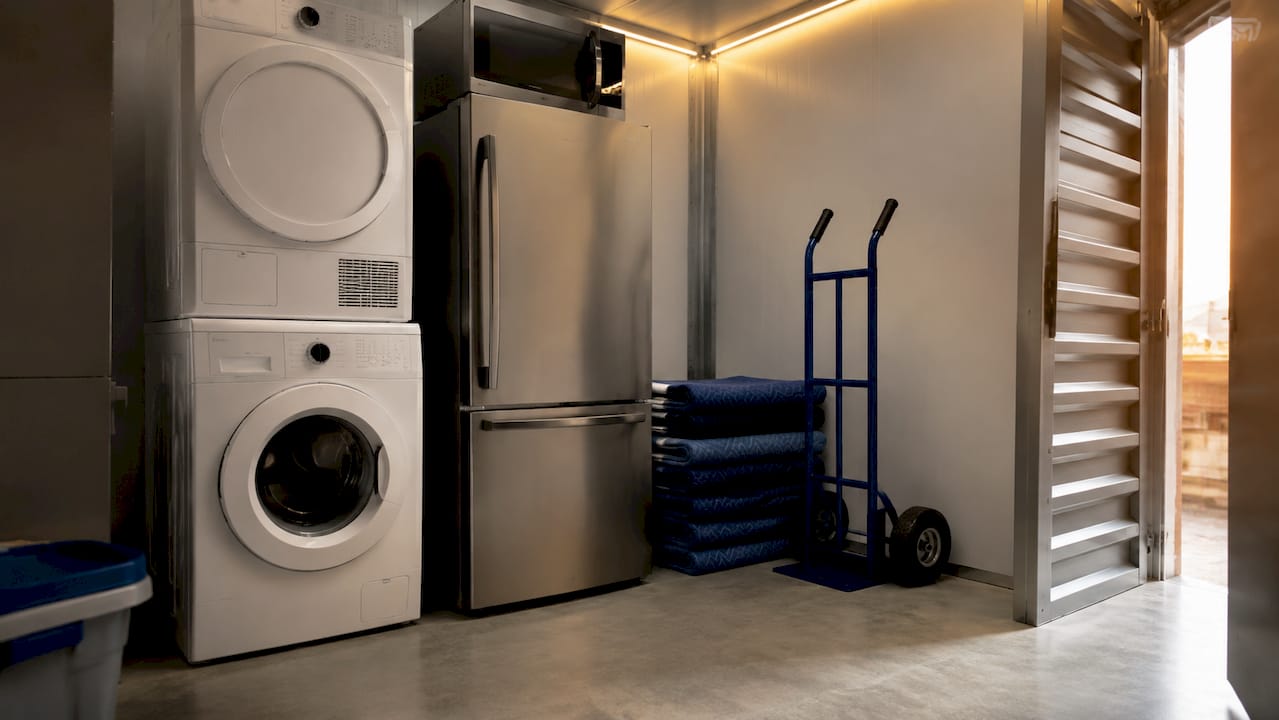
Here is a practical comparison of common unit sizes and what they realistically hold:
| Unit size | Best for |
|---|---|
| 5×5 ft | One or two small appliances (microwave, countertop appliances) |
| 5×10 ft | A washer or dryer plus boxes and small furniture |
| 10×10 ft | Full kitchen appliance set: refrigerator, stove, washer, dryer |
| 10×20 ft | Multiple large appliances plus furniture from a 1-2 bedroom home |
| 10×25 ft | Large appliance collection plus a full room of furniture and boxes |
| 10×30 ft | Business-scale storage or full household contents with easy access |
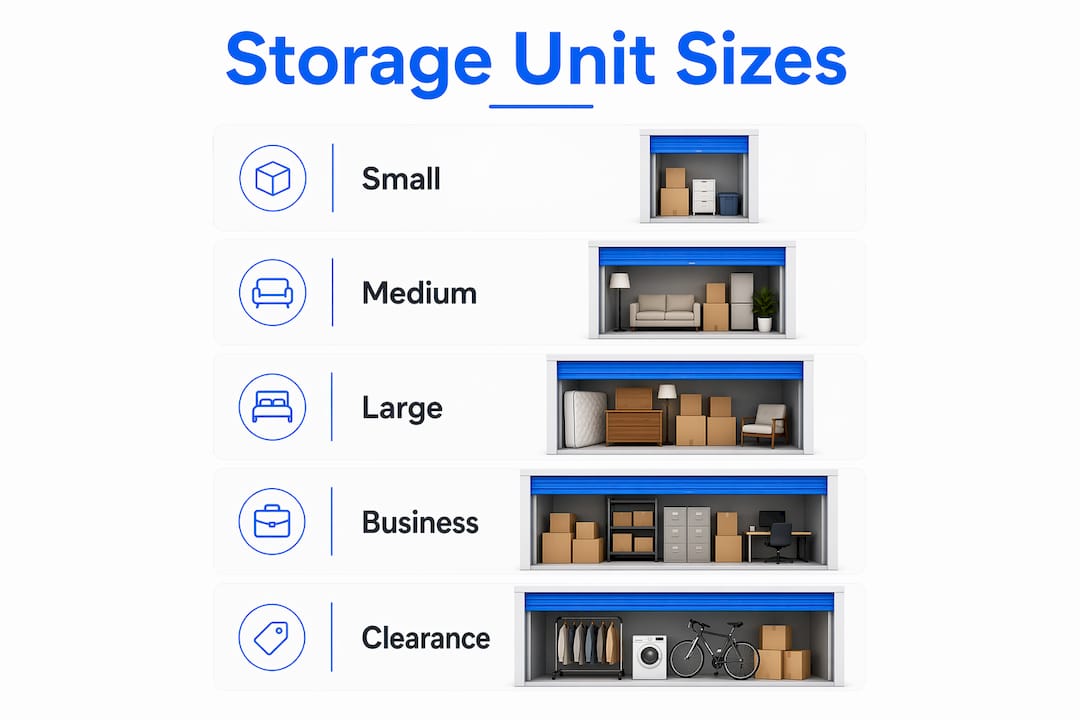
The 10×10 unit is the most popular choice for individuals storing a standard set of kitchen and laundry appliances. However, if you need to walk around items to inspect them or retrieve boxes, size up to a 10×20. Overcrowding a unit increases the risk of damage when loading and unloading, and it makes periodic inspections nearly impossible.
Pro Tip: Measure each appliance's width, depth, and height before booking a unit. Add at least 18 inches of clearance on each side for walking space. Facilities like NSA Storage and Extra Space Storage publish detailed size guides on their websites to help you plan.
For businesses storing multiple commercial appliances, the 10×20, 10×25, and 10×30 foot units provide enough room for multiple large items, furniture, and clear access paths. Never stack heavy appliances on top of each other, regardless of unit size.
Climate-controlled vs. standard units: what's best for appliances?
Climate-controlled storage maintains temperatures between 55 and 85°F with humidity regulated between 30 and 50%. That stable environment is what separates a unit that preserves your appliances from one that gradually destroys them.
Standard units expose contents to whatever temperature and humidity exists outside. In Phoenix in July, that means interior unit temperatures above 120°F. In Minnesota in January, it means below-freezing conditions that crack rubber seals and damage electronic components. Climate control extends appliance lifespan and reduces repair needs, particularly for appliances with sensitive electronics and mechanical parts.
Use this checklist to decide whether climate control is necessary for your situation:
- Storage duration over 3 months: Standard units are acceptable for short-term storage. Beyond three months, temperature and humidity swings accumulate into real damage.
- Appliances with electronics: Refrigerators with digital displays, smart washers, and dishwashers with electronic controls are all vulnerable to heat and moisture damage.
- Location with extreme climate: If your facility is in a region with hot summers or cold winters, climate control is not optional for appliance storage.
- High-value appliances: A $2,000 refrigerator or a commercial-grade range warrants the added protection. The cost difference is minor compared to repair or replacement.
- Long-term business storage: Businesses storing appliances between deployments or during renovations need consistent conditions to keep equipment operational.
Climate-controlled units typically cost 20 to 30% more than standard units of the same size. That premium is a protective investment, not a luxury, when you consider the mechanical and electrical risks appliances face from temperature and humidity fluctuations.
How much does it cost to store appliances near you?
Standard 10×10 self storage units run between $80 and $150 per month nationally in 2026, while climate-controlled 10×10 units range from $100 to $200 per month. Prices shift significantly by city, facility quality, and lease terms.
Here is a sample price table for common unit sizes in a mid-size U.S. city like Sacramento, CA:
| Unit size | Standard (monthly) | Climate-controlled (monthly) |
|---|---|---|
| 5×5 ft | $40–$65 | $55–$85 |
| 5×10 ft | $55–$90 | $75–$115 |
| 10×10 ft | $80–$130 | $100–$160 |
| 10×20 ft | $130–$200 | $160–$250 |
| 10×30 ft | $180–$280 | $220–$340 |
Local pricing variation is significant. A climate-controlled 10×10 unit in Sacramento averages around $87 per month at some facilities, while the same unit in Manhattan can exceed $300. The most accurate way to budget is to compare units by size and climate control within your specific geographic area.
To get the best rate:
- Request quotes from at least three facilities in your area before committing.
- Ask about first-month promotions. Many facilities offer the first month free or at half price.
- Negotiate on longer lease terms. A 6-month or 12-month commitment often unlocks a lower monthly rate.
- Factor in access hours. Facilities with 24-hour access often charge a small premium but add real convenience for businesses.
Common mistakes to avoid when storing appliances
The most expensive storage mistakes are also the most preventable. These are the errors that consistently lead to damaged appliances and wasted money:
- Leaving water in drainage paths. A washer or dishwasher with residual water in hoses or pumps will develop mold and corrosion within weeks. Drain completely and confirm it before loading.
- Sealing appliance doors shut in storage. Taping a refrigerator or washer door closed traps humid air inside. Propping doors open and ensuring complete drying minimizes internal moisture buildup that causes odors and mold.
- Choosing a unit that is too small. Cramming appliances into an undersized unit forces you to stack or lean items, which causes dents, broken components, and scratched surfaces.
- Skipping climate control in extreme climates. Storing appliances in unregulated spaces, including standard storage units in hot or cold regions, exposes them to the same risks as garages or sheds, where heat, moisture, and pests cause consistent damage.
- Placing appliances directly against walls. Air needs to circulate around stored items. Pushing appliances flush against unit walls traps moisture and blocks the airflow that prevents condensation.
- Never visiting during long-term storage. Check on stored appliances at least every 60 to 90 days. Catch moisture issues, pest activity, or unit problems before they become costly.
Pro Tip: Before your first long-term storage period, photograph every appliance from multiple angles. If damage occurs, you have documentation for insurance claims or facility disputes.
Key takeaways
Properly preparing appliances and selecting the right unit type are the two decisions that determine whether your storage experience is a success or a costly mistake.
| Point | Details |
|---|---|
| Preparation prevents damage | Clean, dry, and drain all appliances before storage to stop mold, corrosion, and odors. |
| Size up for access | A 10×10 unit fits a standard appliance set; size up to 10×20 if you need walking space. |
| Climate control is worth it | Units maintaining 55 to 85°F and 30 to 50% humidity protect electronics and seals long-term. |
| Budget by location | National averages guide estimates, but local quotes determine your actual cost. |
| Inspect regularly | Visit stored appliances every 60 to 90 days to catch moisture or pest issues early. |
What I've learned from watching people store appliances the wrong way
I've seen the same pattern repeat itself dozens of times. Someone skips climate control to save $20 a month, stores a $1,500 refrigerator in a standard unit through a Texas summer, and pulls it out six months later with warped door seals, a corroded compressor, and a repair bill that exceeds what they saved. The math never works out in favor of cutting corners on environmental controls.
The preparation step is where most people underestimate the time required. Draining a washer completely, wiping down every interior surface, and letting everything air dry for 24 hours feels excessive until you open a unit to find mold growing inside a sealed appliance. That experience changes your perspective permanently.
My honest advice: treat climate-controlled storage as part of the appliance's maintenance cost, not as an optional upgrade. For anything with electronics, rubber seals, or mechanical components, the stable environment pays for itself. Work with your storage facility directly. Ask specifically about temperature and humidity ranges, not just whether the unit is labeled "climate-controlled," since that term is applied inconsistently across the industry.
For businesses storing commercial appliances between deployments, the facility cleaning and preparation standards you apply before storage directly affect how quickly equipment returns to service. A thorough pre-storage cleaning protocol, similar to what commercial property managers use for facility maintenance audits, is worth building into your standard operating procedure.
— Mike
How Corvane Systems helps storage facilities get found by customers like you
When you search for the best self storage units near you, the facilities that appear at the top of Google and inside AI tools like ChatGPT and Perplexity are there because of deliberate search and AI visibility work. Corvane Systems builds exactly that presence for self-storage operators. If you run a storage facility and your units are not appearing when potential customers search for appliance storage solutions in your area, that is a visibility problem with a direct solution. Corvane Systems combines traditional SEO with Generative Engine Optimization so your facility surfaces in both search results and AI-generated recommendations. Explore what AI-driven storage visibility looks like for your facility.
FAQ
How do you store appliances in a self storage unit safely?
Clean and dry all appliances thoroughly, drain water lines completely, and prop doors open once in the unit to allow airflow. Use a climate-controlled unit for any storage period exceeding three months or in regions with extreme temperatures.
What size storage unit do I need for appliances?
A 10×10 unit holds a standard set of kitchen and laundry appliances including a refrigerator, stove, washer, and dryer. Size up to a 10×20 if you need walking space or are storing additional furniture alongside the appliances.
Is climate-controlled storage necessary for appliances?
Climate-controlled storage is strongly recommended for appliances with electronic components, rubber seals, or mechanical parts, especially for storage periods over three months. Units maintaining 55 to 85°F and 30 to 50% humidity prevent condensation, corrosion, and mold.
How much does it cost to store appliances in a self storage unit?
Standard 10×10 units run $80 to $150 per month nationally, while climate-controlled 10×10 units cost $100 to $200 per month. Prices vary by city, so request local quotes from at least three facilities before committing.
Can I store a refrigerator in a storage unit long-term?
Yes, with proper preparation. Defrost and clean the interior completely, drain the water line if it has an ice maker, and prop the door slightly open in the unit. A climate-controlled unit is the right choice for refrigerators stored longer than 60 days.