
Flag the review through your Google Business Profile within minutes of spotting it, then post a short, professional public reply while you wait. Google removes reviews that violate its content policies, but only if you report them correctly and back the report with evidence. Screenshot everything now, because reviews and reviewer profiles can disappear or change before you get to document them.
TL;DR:
- Reporting fake reviews within the first hour with clear evidence, including screenshots and transaction records, greatly improves chances of removal.
- Choosing the correct violation category, such as "Fake and Misleading Content" or "Conflict of Interest," is crucial for Google's automated review removal process.
- Supporting evidence should include reviewer account age, identical text patterns, and suspicious review activity across different businesses to strengthen your case.
- If Google’s initial automated response rejects your report, escalate through appeals, support cases, or legal channels, prioritizing documentation and quick action.
- Handling ongoing fake review issues often requires outside monitoring services to manage patterns across multiple locations and prevent review attacks.
Table of Contents
- How Do You Report a Fake Review on Google?
- What Evidence Do You Need Before It Disappears?
- Where Do You Go When Google's First Pass Fails?
- How Should You Respond Publicly While You Wait?
- When Should the FTC or a Lawyer Get Involved?
- What Actually Works in the Field
- The Real Priority Order Most Guides Get Wrong
- Get Help When Fake Reviews Become a Pattern, Not a One-Off
- Where to Report and Verify Everything
- Sources
How Do You Report a Fake Review on Google?
Reporting works the same way whether you spot the review in Google Search, Google Maps, or your Google Business Profile dashboard. The mechanics are simple, but the details you fill in decide whether Google's automated system takes action or shrugs it off.
Here's the exact sequence:
- Find the review on your listing (via Search, Maps, or business.google.com).
- Click the three vertical dots in the corner of the review.
- Select "Report review."
- Choose the violation category that most precisely matches what happened.
- Submit, then log the report date somewhere you'll remember it.
Once submitted, track the report inside the Reviews Management Tool in your Business Profile dashboard. This is where you'll see status updates and, if the automated pass rejects your report, where you file your one-time appeal.
Category choice matters more than most owners realize. Defaulting to "spam" is the most common mistake. If a competitor or a person with no transaction history posted the review, "Fake & Misleading Content" is usually the better fit. If a former employee, a business rival, or someone with a personal grudge left it, "Conflict of Interest" often applies instead. Google's Maps reporting guidance confirms that only policy violations qualify for removal, not simply reviews you dislike.
Before you submit anything, run through a quick operational checklist: screenshot the review in full, copy the direct share link, and write down the date and time you found it. That record becomes the backbone of any appeal you file later.
Pro Tip: Report first, then respond publicly. Google doesn't penalize you for replying while a report is pending, and a calm public response often does more for your reputation than the removal itself.
What Evidence Do You Need Before It Disappears?
Evidence collected in the first hour is worth more than evidence you try to reconstruct a week later. Reviewers sometimes edit or delete their posts once they realize you've noticed, so move fast.
Build a folder with:
- A full screenshot of the review text, star rating, and posting date
- A screenshot of the reviewer's profile, including their review history if visible
- The direct URL to the review
- Transaction, booking, or account records showing whether this person was ever actually a customer
- Any messages, emails, or threats connected to the review
When you include transaction records in an appeal, redact anything unnecessary. Google doesn't need a customer's full payment details, just enough to show whether the name on the review matches (or doesn't match) anyone in your system for that date.
Three patterns make a case stronger almost every time: a reviewer account that's brand new with no other history, near-identical text showing up on a competitor's page, and a pattern of that reviewer leaving similar one-star complaints across unrelated businesses. Practitioner guides on removing fake reviews note that automated checks frequently miss these patterns, which is exactly why a human appeal matters.
Where Do You Go When Google's First Pass Fails?
Automated reviews commonly return "no policy violation" even on reviews that clearly break the rules. That's not the end of the road. It's the point where you move up the escalation ladder in order, starting with the cheapest and fastest option.
- File the one-time appeal. Inside the Reviews Management Tool, write a short, factual statement referencing the specific policy you believe was violated by name, and attach your evidence folder. A well-documented appeal read by a human succeeds far more often than the initial automated flag.
- Open a support case through your GBP dashboard. Include your case ID from the earlier report, your screenshots, and any transaction proof. Keep this case number, you'll need it if you have to follow up.
- Use the Merchant Extortion form for pay-to-remove scams. If someone threatens to post or leave up a negative review unless you pay them, this is not a normal appeal situation. Google routes extortion reports to a Trust & Safety team rather than the standard content queue, and industry guides are blunt about it: never pay or negotiate, preserve every message, and report it through the dedicated channel.
- Post in the Google Business Profile Community Forum. Product Experts who volunteer there can sometimes escalate complex or stuck cases to Google staff directly, which is worth trying if support cases stall for weeks.
- Consider legal removal for defamation or doxxing. This is the last resort, reserved for reviews that cross into false statements of fact or expose private information. A lawyer will want your full evidence packet, the review's posting history, and any prior correspondence with Google.
Pro Tip: Never skip straight to legal action. Google's own channels are free and often faster, save the lawyer for cases where the review contains outright lies about specific, checkable facts.
How Should You Respond Publicly While You Wait?
Most flagged reviews stay visible during the review process, sometimes for several days or longer, so your public response matters just as much as your report.
Keep it short and neutral:
- "We take feedback seriously but have no record of this transaction. Please contact us directly at [phone/email] so we can look into it."
- "We're reviewing this with Google. In the meantime, reach out to us at [contact] and we'll sort this out."
While that plays out, work on the things you can control. Send your review request link to recent satisfied customers through text or email, timed close to their visit so the ask feels natural rather than desperate. Keep your hours, services, and photos current, since an outdated profile makes any negative review look more credible than it should. Watch your overall rating trend weekly rather than obsessing over a single post.
Pro Tip: A steady stream of genuine, recent reviews dilutes the visibility of one fake one far faster than any removal request will.
When Should the FTC or a Lawyer Get Involved?
The FTC's final rule banning fake reviews makes buying, selling, or coordinating fake reviews a violation with real penalties attached. That's useful context, but it's not a fast lane for getting one review off your listing.
An FTC complaint makes sense when:
- You can show a coordinated or purchased review campaign, not a single angry post
- A competitor is running a pattern of fake reviews across multiple businesses
- You have documentation suggesting an organized scheme, not an isolated incident
It's the wrong tool when you just need one review taken down quickly. The FTC doesn't function as a removal service.
Legal action fits differently. It targets defamation (false statements of fact, not opinions) or doxxing (exposing private information). Expect a lawyer to request your evidence packet, send a formal notice, and, if that fails, pursue a cease-and-desist or suit, a process that typically runs weeks to months and carries real legal fees.
What Actually Works in the Field
Speed beats perfection. Capture screenshots and the review URL the moment you see the post, before worrying about which category to select or how to word your appeal. Then build one clean evidence packet, review text, reviewer profile, transaction records, and any messages, so you only have to gather it once and can reuse it across the report, the appeal, and a support case if needed.
If a message ever demands payment to remove or avoid posting a review, stop drafting a polite response and go straight to the Merchant Extortion form. That's not a negotiation, it's a policy violation.
Multi-location operators and anyone facing an ongoing pattern of coordinated fake reviews, not just a single bad actor, usually reach a point where handling this manually across every location stops being realistic. That's when bringing in outside help for monitoring and evidence tracking starts to make sense, alongside a broader look at how your listings and audit trails hold up across your whole portfolio.
The Real Priority Order Most Guides Get Wrong
Most advice on this topic treats reporting a review as the finish line. It isn't. The automated system is a filter, not a judge, and it rejects a surprising number of genuinely fake reviews on the first pass simply because the report lacked specifics.
The playbook that actually works flips the usual emphasis: spend less time worrying about wording your report perfectly and more time building the evidence packet before you ever click "submit." A reviewer account with zero history, posting near-identical text to a competitor's page, is a stronger signal than any clever phrasing in your report. Lead with that pattern, not your frustration.
The other gap in conventional advice is speed. Owners often wait a day or two to "figure out the right approach," and by then the reviewer has edited the post or deleted their profile. Report within the hour. Document everything even faster than that.
Finally, don't treat the Merchant Extortion form as a last resort. Guides to bury it near legal action, but if you're being threatened for payment, it belongs at the top of your list, right after documentation. Paying never ends the problem, it just confirms you're an easy target.
— Mike
Get Help When Fake Reviews Become a Pattern, Not a One-Off
Handling a single fake review is a Tuesday afternoon task. Handling a coordinated attack across five locations, or a review extortion attempt tied to your listing's search visibility, is a different problem entirely. That's where Corvanesystems fits in, we work with self-storage operators who need their Google Business Profile and AI search presence managed as an ongoing system, not a once-a-year fix.
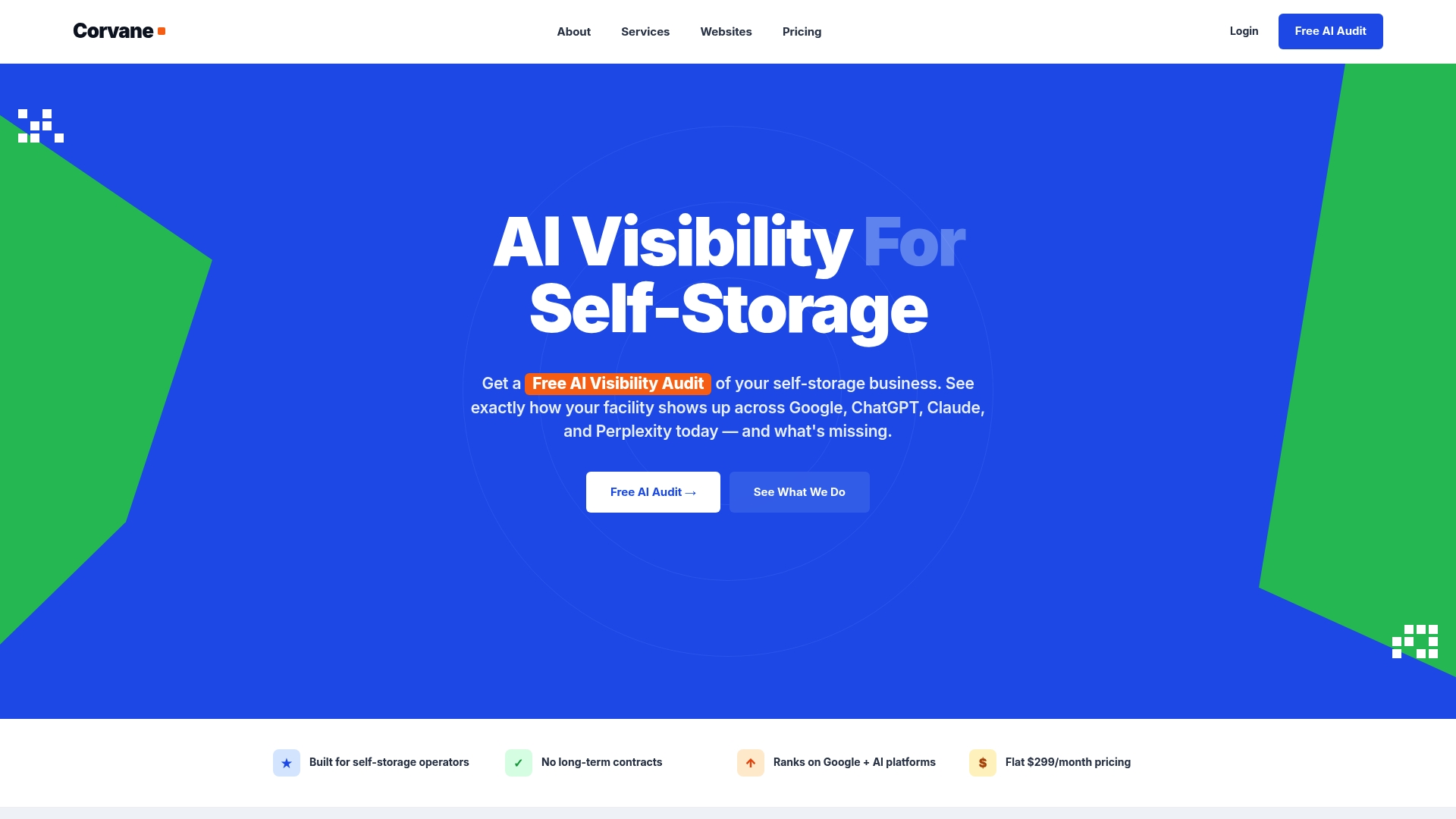
Our service includes local search positioning and Google Business Profile optimization, which means your listing gets monitored consistently instead of only when something goes wrong. For operators managing review campaigns across multiple facilities, or those who'd rather have a second set of eyes tracking their visibility audit and reputation signals monthly, that ongoing attention closes gaps a once-in-a-while check misses. If you're dealing with recurring fake reviews or want a clearer picture of how your facility shows up across Google and AI search tools, visit Corvanesystems to request a visibility audit and talk through your specific situation.
Where to Report and Verify Everything
Bookmark these before you need them in a hurry:
- Report inappropriate reviews on your Business Profile, for the Reviews Management Tool, tracking report status, and filing your one-time appeal.
- Report a review on Google Maps, for the flagging steps and Google's policy on what actually qualifies for removal.
- FTC final rule on fake reviews, for understanding when a coordinated fake-review campaign crosses into federal enforcement territory.
Keep your review response habits sharp with current best practices for managing your listing while reports and appeals are in progress.
Sources
- Report inappropriate reviews on your Business Profile — Google Business Profile Help
- Report a review — Google Maps Help
- Federal Trade Commission announces final rule banning fake reviews, testimonials
- How to Remove Fake Google Reviews: Step-by-Step for 2026 — TrueReview