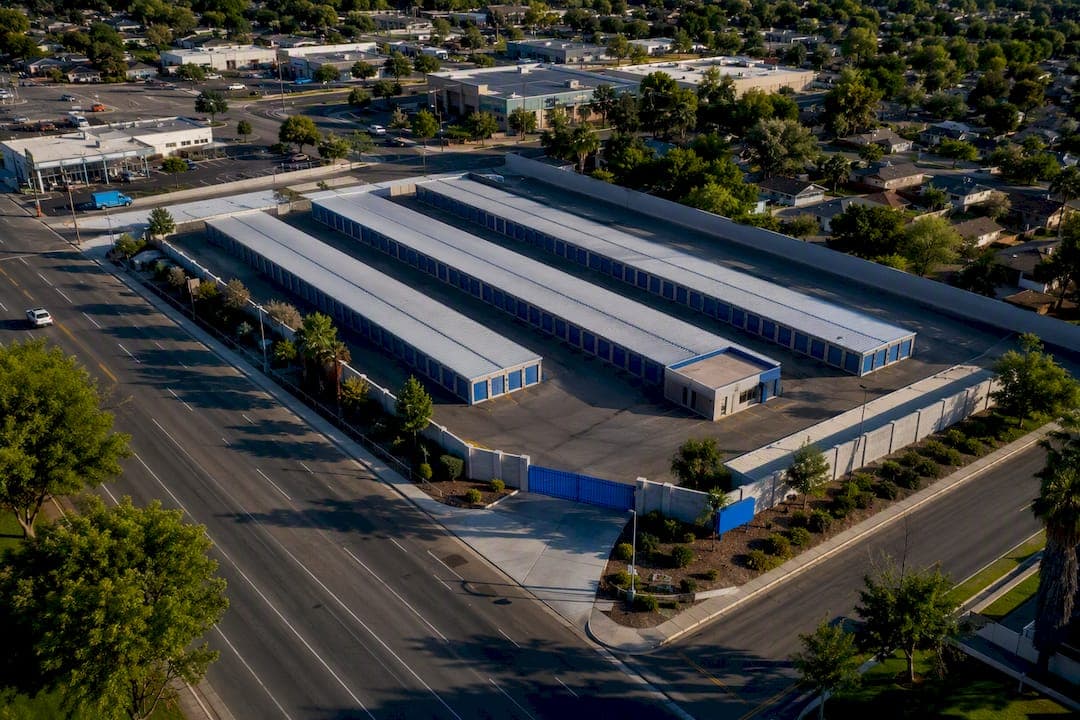
Yes, changing your physical location will change your local search visibility. Google recalculates proximity, your Google Business Profile has to be re-verified at the new address, and any citation mismatch between old and new addresses will confuse ranking systems for a while. The dip is usually temporary if you update things in the right order. The checklist below tells you exactly what to touch first.
TL;DR:
- Moving closer to the target market’s center can improve local rankings quickly, while relocating away from it often causes ranking drops.
- Verify and update your Google Business Profile, citations, and website data before the move to minimize downtime and confusion.
- Redirect all URLs correctly and fix citation inconsistencies immediately after the move to prevent prolonged visibility loss.
- Expect map-pack stabilization within four to eight weeks, but full recovery, including organic traffic, may take two to six months.
- Handling multiple facilities or complex relocations may benefit from professional SEO services that manage citations, GBP edits, and content.
Table of Contents
- Location Move SEO Impact: Which Signals Actually Shift
- Pre-Move Checklist: What to Update Before the Address Changes
- Day-Of and First-Week Actions to Protect Rankings
- What Recovery Actually Looks Like, Week by Week
- Common Post-Move Problems and How to Fix Them
- What Practitioners Actually See When Businesses Relocate
- My Take: Treat the Move Like a Campaign, Not a Chore
- When It Makes Sense to Bring in Help
- Sources
Location Move SEO Impact: Which Signals Actually Shift
The core reason a move shakes up rankings comes down to proximity. Google's local algorithm weighs how close a business is to the searcher, so the moment your coordinates change, your position in the map pack changes too. This is the real mechanism behind "location move seo impact," and it explains why a move across town behaves differently from a move across the metro area.
Several signals move at once, not just one:
- Proximity and map-pack math reset instantly once your new address is live and verified.
- Google Business Profile verification controls whether the new location even shows up, and re-verification can take days.
- NAP consistency (name, address, phone) across directories either reinforces the new address or contradicts it, and contradictions suppress trust signals.
- Website location data, including schema markup and location pages, needs to match the new address or search engines keep treating the old one as current.
- Distance of the move matters: a few blocks rarely disrupts much, but a cross-city or cross-market move resets your competitive set entirely.
Local SEO practitioners have noted that a move can actually help if you're relocating toward the center of your target area, since proximity is one of the more controllable levers in local ranking. A move outward, away from your densest customer base, tends to work against you instead.
Pre-Move Checklist: What to Update Before the Address Changes
Do this work before you flip the switch on your new address. Skipping the prep step is where most businesses lose weeks of visibility they didn't need to lose.
- Benchmark everything now. Screenshot your current GBP listing, pull Search Console data for top pages and queries, and note your rank at several map points near your current location.
- Lock down your exact NAP string. Decide the precise formatting for your new name, address, and phone number, then draft the website and schema markup updates ahead of time.
- Inventory your citations. List every directory where your business appears (Yelp, Bing Places, industry directories) and assign someone to update each one the day you move.
- Plan your GBP timing. Decide when you'll submit the address change and re-verification request, and have new photos and a "we've moved" post ready to publish immediately.
- Map every URL that needs a redirect. If your site's URL structure changes at all, list old-to-new mappings and test the redirects on a staging environment first.
Pro Tip: Avoid changing your domain and your address in the same week. A domain move introduces its own technical risk, and stacking it on top of a physical relocation makes it far harder to tell which change caused a ranking drop.
Day-Of and First-Week Actions to Protect Rankings
The first week after a move sets the tone for how fast you recover. Move fast, but move in order.
- Update your existing GBP listing. Never create a new profile. Editing the current one keeps your reviews, photos, and history intact, and Google's own guidance backs updating rather than starting over.
- Push website changes immediately, including the contact page, footer, and LocalBusiness schema, then resubmit your sitemap in Search Console.
- Update high-authority directories first, then work down the list to smaller citation sources.
- Test every redirect and watch server logs for spikes in 404 or 500 errors that signal a broken migration.
- Ask for a few early reviews that mention the new location by name. Fresh, location-specific reviews speed up how quickly Google trusts the new address.
What Recovery Actually Looks Like, Week by Week
Set your expectations before you start watching rankings obsessively, because the recovery curve is rarely a straight line. Practitioner data suggests map-pack positions typically stabilize within 4 to 8 weeks, with fuller recovery, including organic traffic and secondary keyword rankings, taking anywhere from two to six months depending on how far you moved and how competitive your market is.
Track the right numbers instead of just watching your rank fluctuate:
| What to monitor | Where to check it | What it tells you |
|---|---|---|
| GBP views, calls, direction requests | Google Business Profile insights | Whether the new listing is gaining trust |
| Clicks and impressions | Google Search Console | Whether organic visibility is recovering |
| Map-pack position at set points | Local rank tracker | Whether proximity gains are landing |
| 404/500 error rates | Server logs | Whether technical issues are dragging recovery |
If clicks are flat but impressions are climbing, that's usually a temporary indexing delay, not a systemic problem. If both are flat or falling after eight weeks, you likely have a broken redirect or a citation conflict that needs fixing, not more patience. Once GBP and citations are stable, that's the moment to ramp up backlink updates and local partner outreach. Hold off on unrelated site changes until the dust settles.
Common Post-Move Problems and How to Fix Them
Most prolonged ranking losses trace back to one of a handful of avoidable mistakes.
- Duplicate GBP listings. Search your business name to check whether an old or auto-generated listing is competing with your updated one, and request removal through GBP support if you find one.
- Inconsistent citations. Run a citation audit and fix the highest-authority mismatches first. This is a leading cause of local ranking drops after a move.
- Broken or lazy redirects. Redirect old URLs to their true new equivalents, not blanket redirects to the homepage, which strand both users and search engines.
- Outdated location pages. Update or retire city-specific pages tied to your old address so they don't compete with the new one.
- A misplaced map pin. Double-check the pin manually. If it's wrong, use GBP support channels to correct it since a mislaid pin quietly tanks proximity rankings.
Pro Tip: Fix your top five citations first: Google, Bing, Apple Maps, Yelp, and your industry's primary directory. These carry more ranking weight than fifty scattered smaller listings combined.
What Practitioners Actually See When Businesses Relocate
In practice, moves that land closer to a market's center often show map-pack gains within days, but only once GBP and citations are already synced. Consolidating three thin, redundant location pages into one strong page during a move frequently improves topical authority instead of hurting it. A typical relocation workflow runs audit, then citation migration, then GBP management, then locally optimized content. Small operators with tight timelines should accelerate review requests and local press outreach immediately, since service-area businesses also need to reset their radius settings after any address change, even when the address itself stays hidden from public listings.
My Take: Treat the Move Like a Campaign, Not a Chore
A location move is a marketing project with a deadline, not an afternoon task you knock out between other work. Budget real hours for it, or budget for a vendor who will. Document your baseline metrics before the truck shows up, because you'll need them to know if you're actually recovering or just guessing. Handled well, a move can put you closer to more customers than you were before. Handled sloppily, with citations out of sync and redirects half-finished, it turns into months of lost visibility that had nothing to do with the market and everything to do with sequencing.
— Mike
When It Makes Sense to Bring in Help
Some moves are simple enough to run yourself with the checklist above. Others aren't, particularly if you're relocating multiple facilities at once, your team doesn't have the bandwidth to chase down forty citations, or it's been three months and your map-pack visibility still hasn't recovered.
That's the gap Corvanesystems fills for self-storage operators specifically. Instead of piecing together GBP edits, citation fixes, and AI-search visibility work on your own, Corvane runs the full relocation sequence for you: a relocation audit, citation migration across the directories that actually matter, ongoing Google Business Profile management, and monthly AI-optimized content that keeps your new address showing up correctly in tools like ChatGPT and Perplexity, not just Google. It's one flat monthly rate with no contract, built around the reality that a storage facility's occupancy depends entirely on being found in its actual service area. If your move is stalling your rankings or you'd rather hand the whole sequence to someone who does this daily, take a look at Corvane Systems' storage-focused SEO service and see what a managed relocation plan would look like for your facility.
Sources
For the procedural details behind this checklist, consult Google's own Change of Address guidance and Google Business Profile Help center, along with independent migration checklists that quantify typical recovery timelines.
- Change your business address - Google Business Profile Help
- Moving Your Business? The Complete Google Update Checklist (2026)
- How Much Does Move Affect SEO | AAMAX
- Joy Hawkins — Search Engine Land author page