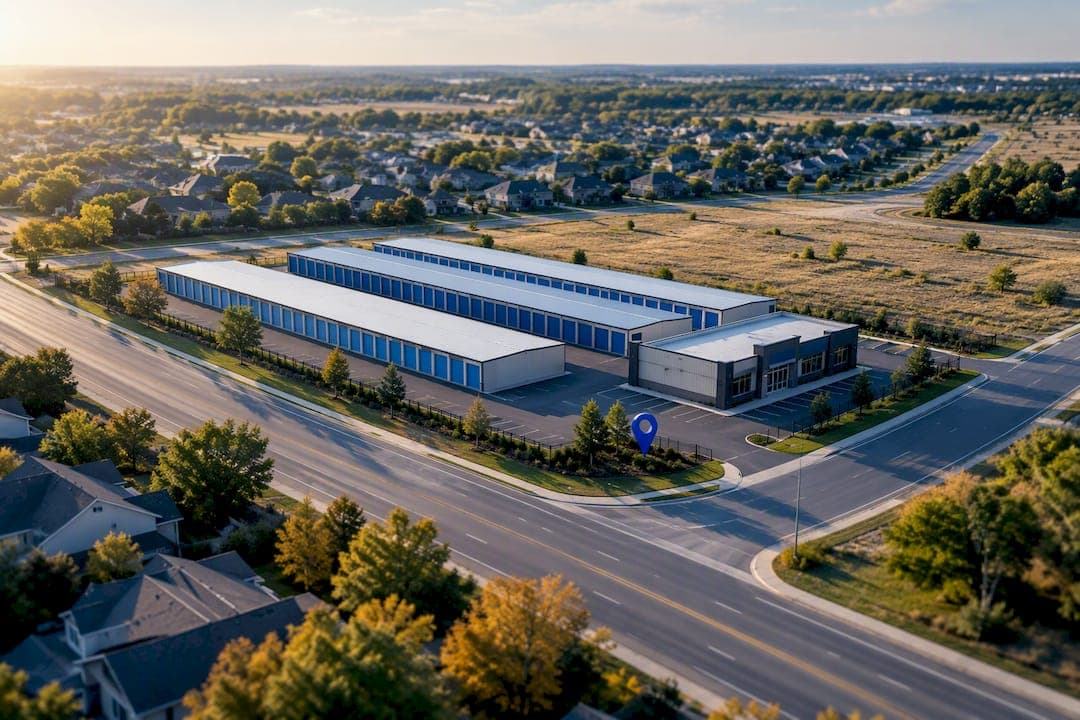
Proximity is one of Google's three core local ranking factors, and for most searches it acts as a gate, not a tiebreaker: if you're outside the searcher's operational radius, better content and more reviews often won't pull you into the pack. That radius varies by vertical and query type, so the first move isn't optimizing your Google Business Profile. It's measuring your own coverage against Google's official guidance before you spend another dollar on tactics that can't fix a distance problem.
TL;DR:
- Proximity in local rankings is generally a gatekeeper, with a steep decay zone typically between 1.5 and 4 kilometers, beyond which visibility drops sharply.
- Urgent service providers see proximity as critical within a tight radius, while destination businesses and those in dense urban areas can have larger effective zones due to their target customer behavior.
- Measuring your proximity cliff through grid scans reveals whether you are inside or outside the decisive distance zone, guiding whether to focus on profile fixes or relocation strategies.
- When outside the proximity cliff, improving prominence has limited impact; only building actual location relevance or shifting to a closer centroid can improve rankings.
- AI Overviews will influence proximity importance, but current evidence suggests location still governs immediate visibility, with content authority affecting longer-term ranking stability.
Table of Contents
- How Proximity in Local Rankings Actually Works
- Why Proximity's Weight Changes By Vertical and City
- How Google Weighs Distance Against Relevance and Prominence
- How to Measure Your Own Proximity Cliff
- What to Fix Once You Know Where You Stand
- When Proximity Can't Be Fixed With Tactics
- How Corvane Systems Measures Proximity for Storage Operators
- What Happens to Proximity as AI Overviews Grow
- Get Your Proximity Cliff Measured Before You Spend Another Dollar on Content
- Sources
- FAQ
How Proximity in Local Rankings Actually Works
Google doesn't measure distance from your business address to some fixed point on the map. It measures distance from a centroid, which is either the searcher's actual location (for "near me" style queries) or a location Google infers from the query itself, like "downtown Austin" or a neighborhood name. That second type is called a query-drifted centroid, and it can shift the effective center of a search away from where the searcher is physically standing.

Distance from that centroid doesn't decay in a straight line. It behaves more like a cliff. Grid-scan analysis from Geogrid shows a steep decay zone, often somewhere between 1.5 and 4 kilometers depending on the vertical, followed by a near-flat zone where visibility barely exists no matter what else you do.
The practical takeaway breaks into two pieces:
- Inside the steep zone, small distance differences matter less than you'd think. Being 800 meters closer than a competitor rarely decides the outcome by itself.
- Crossing from inside the cliff to outside it matters enormously. A plumber ranking 3 kilometers from a burst pipe might vanish entirely at 5 kilometers, while a wedding venue with strong prominence can still surface for searches originating well outside any tight radius.
Why Proximity's Weight Changes By Vertical and City
Not every business feels proximity the same way, and the difference comes down to how urgently the searcher needs a solution nearby. Urgent, commodity-style services (plumbers, locksmiths, urgent care clinics) sit inside a tight radius because Google assumes the searcher wants the closest viable option, full stop. Destination businesses (wedding venues, specialty retailers, high-end restaurants) get more slack because searchers already expect to travel for the right fit.
City form changes the math too. Brookings research on metro area design shows that denser, more walkable areas concentrate economic activity and job density, which compresses the effective radius people are willing to travel and intensifies competition inside it. A dense downtown core can have a proximity cliff measured in a few hundred meters, while a rural service area might stretch that cliff to 15 or 20 miles simply because there's nothing else nearby.
Competitor clustering matters just as much as raw distance. If ten competitors sit inside a two-mile radius, your actionable zone for winning top-three placement shrinks even if Google's underlying decay curve stays the same. Fewer competitors in a sparse market can mean a wider effective cliff, because there's less prominence competition pushing you out of contention even at distance.

How Google Weighs Distance Against Relevance and Prominence
Google states plainly that local ranking runs on three factors: relevance, distance, and prominence. It doesn't publish exact weights, but the practical pattern is consistent across measured data: distance often determines whether you're even in the running, and relevance and prominence determine your order once you're inside that radius.
That distinction changes how you should prioritize your time. Independent local-pack analysis has found that distance combined with primary category selection frequently explains more ranking variance than content quality or backlink count, a blind spot a lot of agencies miss when they pitch content calendars to businesses that actually have a coverage problem.
Once proximity qualifies you for a centroid, here's where effort pays off:
- If you're inside the cliff and still not ranking top three, focus on prominence: reviews, primary category accuracy, and a complete profile.
- If you're outside the cliff for a valuable centroid, no amount of content or link-building brings you back in. That's a location problem, not a content problem.
- If you're borderline, relevance signals like service-specific landing pages can nudge you over the edge faster than generic blog content.
How to Measure Your Own Proximity Cliff
You don't need to guess where your cliff sits. A grid scan tells you directly.
- Set up a 13 by 13 grid of search points centered on your business, spaced roughly 750 meters apart, covering a 5 to 6 kilometer radius.
- Run the same target keyword from every point and log whether you appear in the local pack, and at what position.
- Plot the results as a heatmap. The color break between "ranking" and "invisible" is your cliff.
- Repeat monthly if you're in an active, competitive market, or quarterly if your market moves slowly, according to Geogrid's operational guidance.
A 13 by 13 grid at that spacing resolves the cliff clearly in most metro areas without generating so much data that you can't act on it. Our own guide to running geo grid heatmaps walks through the setup in more detail if you want to run this yourself rather than outsource it.
Pro Tip: Don't just track whether you rank. Track the distance at which you stop ranking. That single number tells you more about where to spend your budget than a dozen keyword rank reports.
What to Fix Once You Know Where You Stand
Your next move depends entirely on which side of the cliff you're on.
Inside the cliff and still losing to competitors, the fixes are mostly mechanical:
- Confirm your primary category matches exactly what searchers are looking for, not a broader adjacent category.
- Complete every field in your Google Business Profile, including hours, services, and photos.
- Keep your name, address, and phone number identical across every directory listing.
- Build review velocity steadily rather than in bursts, since Google's own guidance ties consistent activity to prominence.
- Add location-specific landing pages with schema markup for each service area you legitimately serve.
Outside the cliff for a centroid you want, mechanical fixes won't help. You need to either build enough prominence that Google stretches your radius for that query, or accept the limit and target a different centroid. Location pages built around reachable centroids, targeted PR, and concentrated review campaigns in that specific area can extend your reach modestly. Paid local ads can bridge the gap short term while organic prominence builds.
Pro Tip: If you're a service-area business, be honest about your service polygon in Google Business Profile. Overstating your coverage doesn't expand your cliff, it just wastes impressions on searches you'll never win. Our location page playbook and service-area page guide cover the setup specifics.
When Proximity Can't Be Fixed With Tactics
Sometimes the math doesn't work no matter how much prominence you build. At that point you're choosing between a few real options:
- Keep investing in prominence and accept a longer timeline to stretch your radius.
- Open a satellite address or storefront closer to the centroid that matters most.
- Relocate entirely if your current site sits outside every valuable centroid in your market.
- Shift focus toward a different centroid or customer segment where your existing location already competes.
The decision usually comes down to your measured cliff distance versus your competitors' cliffs, and whether the revenue at stake justifies a physical move. A business three miles outside a lucrative centroid, watching competitors rank easily inside it, often finds a satellite location cheaper than years of prominence-building that may never close the gap.
How Corvane Systems Measures Proximity for Storage Operators
We run grid scans and AI visibility audits for self-storage facilities specifically, mapping where a facility qualifies for the local pack and where it doesn't, then fixing profile and content gaps inside that radius. One facility we assessed discovered its cliff sat just under two miles, well short of a densely populated area it had been targeting with ad spend. Redirecting that budget toward a location page for a closer, reachable neighborhood produced a more realistic path to occupancy gains.
What Happens to Proximity as AI Overviews Grow
Proximity will keep deciding urgent, local-intent searches for years to come. What's shifting is the middle ground. Local Falcon's whitepaper research found AI Overviews show almost no correlation between distance and rank position once a business appears, though appearance rates still lean toward nearby options for some queries.
My read: track your AI Overview appearance rate alongside your grid-scan cliff. If your cliff holds steady but your AI Overview visibility drops, that's a content authority problem, not a location problem.
— Mike
Get Your Proximity Cliff Measured Before You Spend Another Dollar on Content
There are services that run grid scans, score your visibility across Google and AI platforms like ChatGPT and Perplexity, and provide a roadmap instead of a content calendar you might not need.
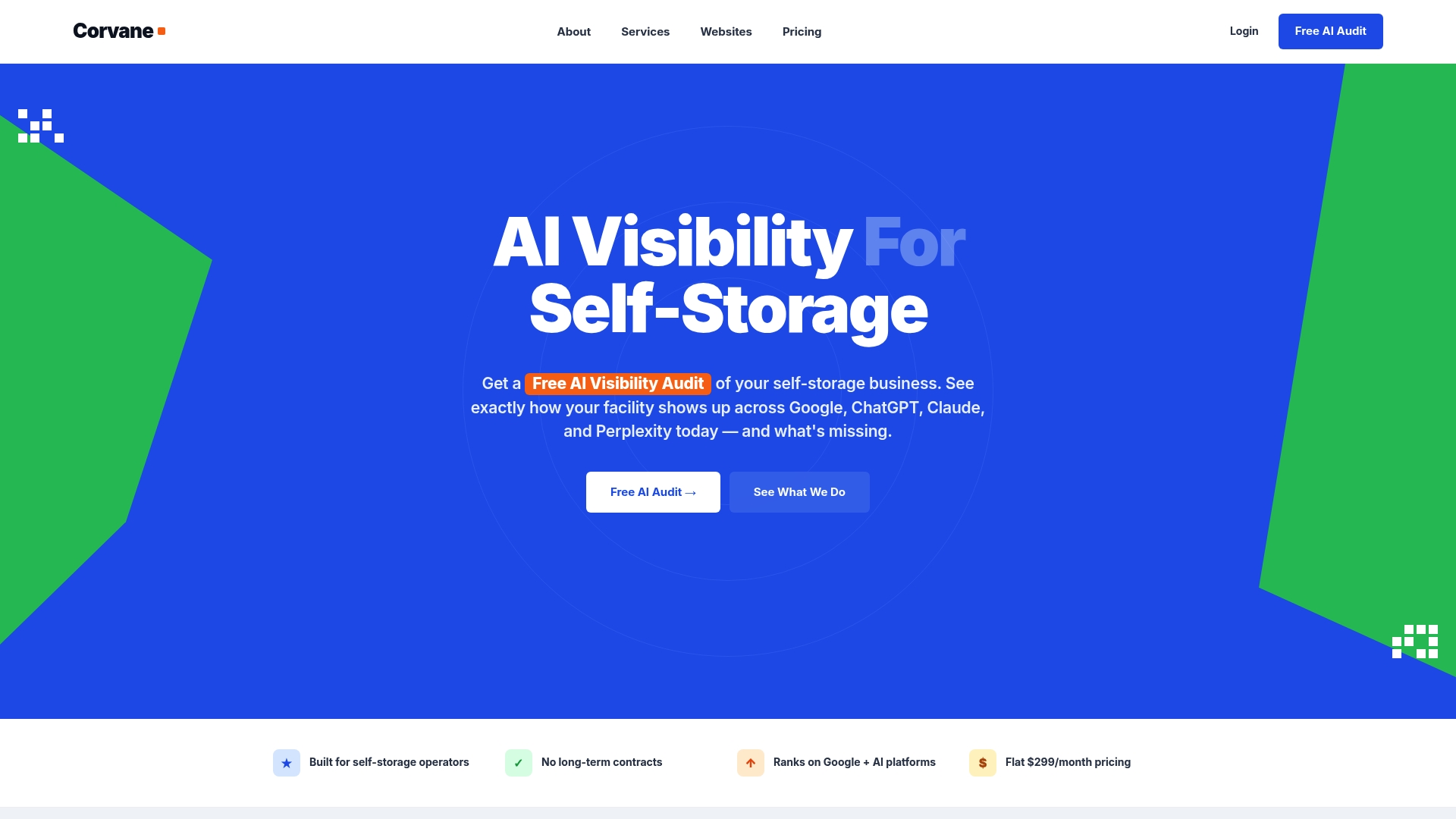
Pricing is available on the provider's website, including a flat monthly rate and a one-time onboarding fee, with no contracts. If you want to see where your facility's cliff actually sits before committing to anything, start with the free AI visibility audit and find out whether your next move should be a Google Business Profile fix or a location page for a neighborhood you're currently missing entirely.
Sources
- Tips to improve your local ranking on Google — Google Business Profile Help
- How the Proximity Factor Actually Works on Google Maps | Geogrid Blog
- Connecting people by proximity — Brookings
FAQ
What Is the 80/20 Rule in SEO?
Chasing content volume before confirming you're inside your proximity cliff wastes much of your effort.
When Should You Focus On Proximity Over Other Ranking Factors?
Focus on proximity first whenever you're not appearing in the local pack at all for searches you'd expect to win. If you already rank but sit outside the top three, the gap is usually relevance or prominence, not distance.
What Will Local SEO Look Like in 2026?
Expect the local pack to keep leaning on distance, relevance, and prominence as before, while AI Overviews add a parallel visibility layer that rewards content authority more than raw proximity for certain query types. Businesses that track both a grid-scan cliff and an AI Overview appearance rate will have a clearer picture than those watching traditional rankings alone.
What Does Location Proximity Mean in Search Results?
It means how physically close a business is to the searcher's location or to the location implied by their search terms. Google uses that distance, measured from a centroid rather than a fixed point, as one of its core signals for deciding which local businesses appear in the pack.