
A "storage near me" search is a location-based query that triggers Google's Local Pack, displaying nearby self-storage facilities with ratings, distances, hours, and contact options for immediate comparison. The moment you type those four words, Google reads your device's location and returns a curated shortlist of local storage options within seconds. This is not a general web search. It is a high-intent, transactional query that places you at the bottom of the purchase funnel, ready to book. Platforms like FindStorageFast and storageunitsnearme.ai extend this further, letting you filter by amenities and compare pricing across your entire metro area.
What is a "storage near me" search and how does it work?
A "storage near me" search activates Google's Local Pack, a map-based module that surfaces three nearby self-storage facilities with their name, star rating, review count, address, hours, and one-tap call or directions buttons. This format is purpose-built for speed. You see the most relevant options without clicking into a single website.
Local Pack rankings depend on three core signals: your physical proximity to the facility's registered address, the keyword relevance of the business listing, and the authority of the facility's Google Business Profile. A storage facility two miles away with a fully optimized profile will consistently outrank one a mile away with sparse listing data. That proximity effect is why storage rental search results feel so personalized.
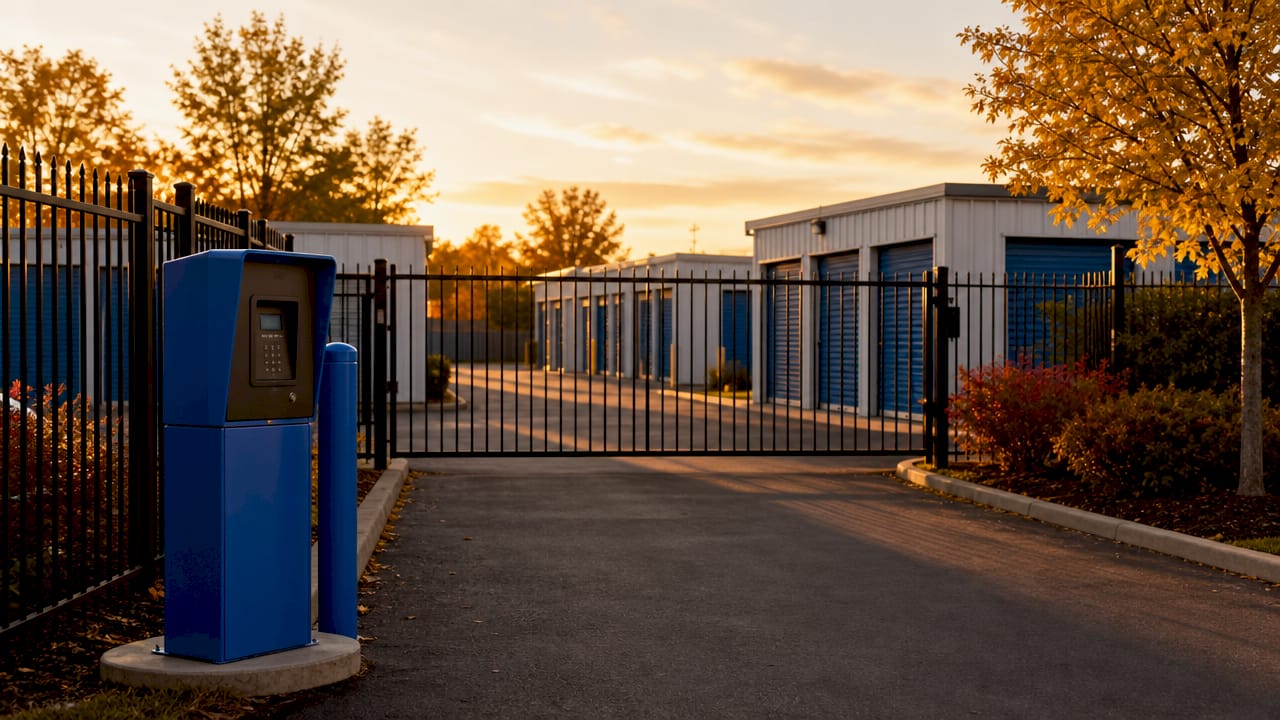
Users running these searches are not browsing. They are deciding. That urgency is exactly why the Google Local Pack captures such a high share of clicks for storage queries. The three businesses shown receive the overwhelming majority of attention before a user ever scrolls to organic results.
Beyond Google, aggregator platforms add a second layer of discovery. Storageunitsnearme.ai lets you enter a ZIP code or street address and filter by radius in tiers of 5, 10, 15, or 25 miles, then narrow results by climate control, drive-up access, or 24-hour availability. FindStorageFast operates similarly, pulling real-time pricing data from self-storage facilities across hundreds of markets. These tools transform a broad local search into a precise comparison engine.
Key data fields you see in a typical storage near me result:
- Business name and star rating (usually out of 5)
- Number of Google reviews
- Distance from your current location
- Partial hours or open/closed status
- One-tap call and directions buttons
- Price per month for available unit sizes (on aggregator platforms)
What factors matter beyond proximity and price?
Proximity and price are the two filters most people apply first, and they are also the two most likely to lead you to the wrong unit. The factor that protects your belongings is environment fit, and it costs nothing extra to get right.
Climate-controlled units maintain stable temperature and humidity levels year-round, which matters enormously for wood furniture, electronics, artwork, documents, and musical instruments. Standard units expose your items to ambient weather changes. In a city like Houston, where summer temperatures regularly exceed 95°F, storing a solid wood dresser in a non-climate-controlled unit for six months can warp it beyond repair. The cost difference between unit types rarely exceeds $20 to $40 per month. The cost of replacing damaged furniture is far higher.
Drive-up access is the second most underrated factor. A drive-up unit lets you pull a truck or SUV directly to the unit door and load or unload without navigating hallways, elevators, or shared corridors. On a moving day when you are already managing a truck rental, a crew, and a tight schedule, this distinction is enormous. Interior units accessed by elevator are fine for long-term storage of light items, but they add real friction to any heavy or frequent access scenario.
Facility layout also deserves attention before you commit. Consider these practical questions:
- Is there covered parking or a loading dock for large vehicles?
- Can a 26-foot moving truck navigate the facility's internal roads?
- Are the access gates wide enough for trailers?
- Does the facility have adequate lighting for evening access?
Access hours shape your day-to-day experience more than any other single feature. A facility with gate access only from 6 a.m. to 10 p.m. may work fine for most renters, but if you run a small business and need early morning or late-night access, that restriction becomes a real operational problem. Check the self-storage access options available at each facility before signing anything.
Price variation by city is also steeper than most renters expect. A standard 10x10 unit costs around $64 per month in Houston but approximately $202 per month in Los Angeles for a comparable unit. That gap reflects real estate costs, local demand, and market competition, not unit quality. If you are relocating and comparing storage costs across cities, treat local pricing as a function of the market, not the facility.
Pro Tip: Before visiting a facility, call ahead and ask specifically whether a standard moving truck can access your unit directly. Many listings show "drive-up access" but the internal road width or gate height limits what vehicles can actually enter.
How to use search filters and comparison tools effectively
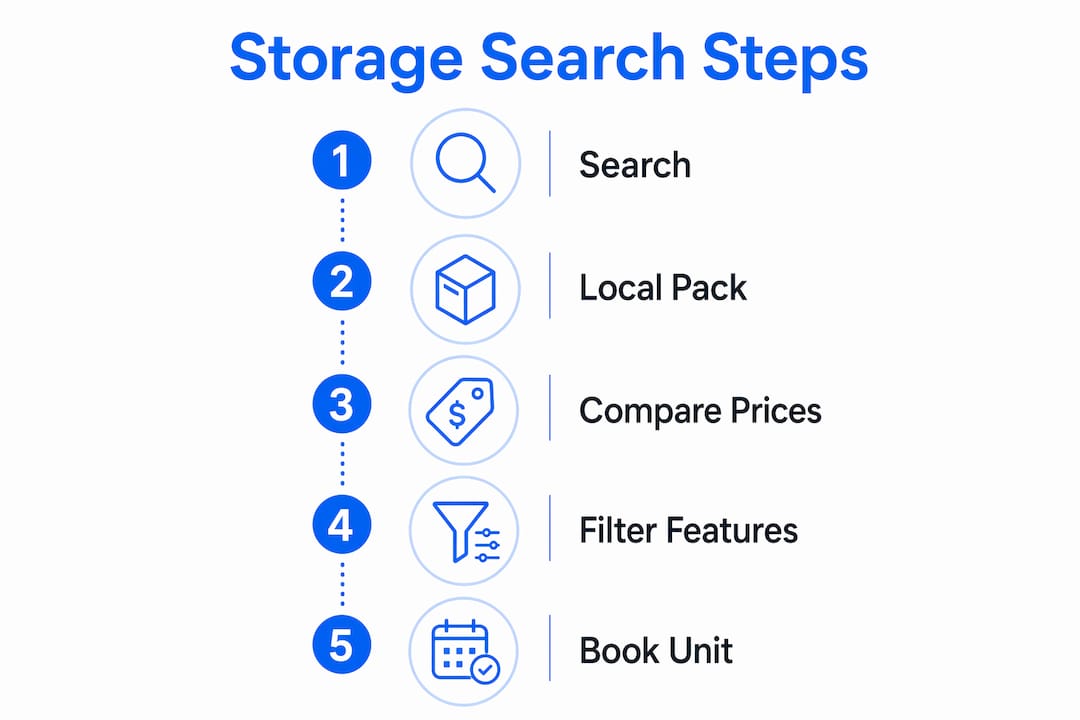
The most efficient way to find the right unit is to run your storage rental search in two stages: broad discovery first, then filtered comparison.
-
Start with a ZIP code search on an aggregator platform. Enter your address or ZIP on storageunitsnearme.ai or FindStorageFast to pull all available facilities within your chosen radius. Start at 5 miles and expand to 10 or 15 only if results are limited.
-
Filter by unit environment before price. Select climate control if you are storing anything heat or humidity sensitive. Applying a price filter before an environment filter risks surfacing cheap units that will cost you more in damaged goods.
-
Sort by distance within your filtered results. Once environment is locked in, proximity becomes the next meaningful variable. The closest facility that meets your requirements is almost always the right choice for convenience.
-
Check access hours and gate entry method. Many listings display hours, but not all specify whether access is keypad-only, app-based, or staffed. This affects what you can do if you lose a code or need emergency access.
-
Confirm loading area details directly with the facility. Online listings frequently omit specifics about truck access, parking availability, and dock height. A two-minute phone call before your visit eliminates move-in day surprises. Verifying operational details directly with the facility is the step most renters skip and most often regret.
Pro Tip: When comparing two facilities at similar prices, ask each one what their most recent rent increase was and when. Storage facilities in high-demand markets often raise rates after the first three months. Knowing the increase history tells you more about long-term cost than the advertised rate.
How do unit types and access options compare?
Choosing between unit types is a decision about what you are storing and how often you need to get to it. The table below covers the most common configurations available at self-storage facilities in 2026.
| Unit type | Access model | Best for | Security features |
|---|---|---|---|
| Climate-controlled interior | Elevator or hallway | Electronics, furniture, documents | Video surveillance, keypad entry |
| Standard drive-up | Direct vehicle access | Appliances, tools, boxes | Video surveillance, individual locks |
| Climate-controlled drive-up | Direct vehicle access | High-value items needing frequent access | Video surveillance, keypad, individual locks |
| Outdoor parking/vehicle storage | Open lot or covered | Cars, RVs, boats | Perimeter fencing, camera coverage |
Most self-storage facilities offer month-to-month leases as the default, which gives you flexibility to downsize or vacate without penalty. Some facilities offer a discounted rate for a six-month or twelve-month commitment, typically 10 to 15 percent below the monthly rate. If you know your storage need extends beyond three months, asking about a longer-term rate at sign-up is worth the conversation.
Security features vary more than most renters realize. Video surveillance is nearly universal at reputable facilities, but the quality and coverage differ. Keypad gate access is standard. Some newer facilities use app-based entry, which logs every access event and allows remote management. If you are storing high-value items, look for facilities that offer individual unit alarms in addition to perimeter security. For anyone considering storing a vehicle, covered units with climate control provide the best protection against weather and UV damage.
Pro Tip: Ask whether the facility uses individual unit door alarms. Perimeter cameras catch activity in common areas, but a door alarm triggers specifically if your unit is accessed without authorization. Not every facility offers this, but those that do provide a meaningfully higher level of protection.
Key takeaways
A "storage near me" search works best when you treat it as a two-step process: use Google's Local Pack and aggregator platforms for discovery, then verify environment fit, access hours, and facility layout before committing.
| Point | Details |
|---|---|
| Local Pack drives discovery | Google surfaces three nearby facilities with ratings, hours, and contact options for instant comparison. |
| Environment fit beats price | Matching unit type to what you store prevents damage that costs far more than any monthly savings. |
| Drive-up access matters on moving day | Direct vehicle access to your unit removes the biggest logistical friction point during move-in and move-out. |
| Prices vary sharply by city | A 10x10 unit ranges from $64 in Houston to $202 in Los Angeles, reflecting local market conditions. |
| Verify details before committing | Online listings omit operational specifics; a direct call confirms truck access, gate entry, and exact hours. |
What most people get wrong about storage near me searches
I have worked with enough storage operators and renters to know that the "storage near me" search is almost always used correctly as a starting point and almost always abandoned too early in the evaluation process.
The pattern I see repeatedly is this: someone runs a local search, sees three options in the Local Pack, picks the cheapest one within two miles, and books online without a single phone call. Then on moving day, they discover the facility's internal road cannot fit a 20-foot truck, or the gate closes at 9 p.m. and they are arriving at 9:30, or the unit they rented is on the third floor with one elevator serving the entire building.
None of that information was hidden. It was just never confirmed.
The other mistake I see is treating the first-month promotional rate as the real price. Many facilities advertise a discounted first month to win the booking, then raise rates at the 90-day mark. The advertised price in a search result is a marketing number. The real cost is what you pay in month four.
My honest advice: use the search tools for what they are good at, which is narrowing a long list down to three or four realistic candidates. Then treat those candidates as leads, not decisions. Call them. Ask about truck access. Ask about recent rate increases. Ask what happens if you need to access the unit outside of posted hours. The facility that answers those questions clearly and confidently is almost always the right choice, regardless of whether it ranked first in the Local Pack.
— Mike
How Corvane Systems helps storage facilities get found
If you operate a self-storage facility, the "storage near me" search is the most valuable query in your market. When a potential renter types those words, the facilities that appear in the Local Pack and in AI-generated answers get the bookings. The ones that do not appear get nothing.
Corvane Systems is built specifically to put storage facilities in those results. We combine traditional local SEO with Generative Engine Optimization, structuring your facility's digital presence so it surfaces in Google's Local Pack, Google AI Overviews, ChatGPT, Claude, and Perplexity. Our service includes Google Business Profile optimization, 30 keyword-targeted articles published monthly, AI visibility audits, and full technical SEO. One flat monthly rate, no contracts. If your facility is not showing up when renters search, Corvane Systems closes that gap.
FAQ
What does a "storage near me" search actually show?
A "storage near me" search returns Google's Local Pack, a map module featuring three nearby self-storage facilities with their name, rating, hours, distance, and one-tap contact options. Aggregator platforms like FindStorageFast and storageunitsnearme.ai extend this with price filters and amenity sorting.
How much does a storage unit near me typically cost?
Prices vary significantly by city. A standard 10x10 unit costs around $64 per month in Houston and approximately $202 per month in Los Angeles, with differences driven by local real estate costs, demand, and competition.
What is the difference between climate-controlled and standard storage?
Climate-controlled units maintain stable temperature and humidity, protecting heat and moisture-sensitive items like wood furniture, electronics, and documents. Standard units are exposed to ambient weather and cost less, but carry higher damage risk for sensitive belongings.
Should I book a storage unit online or visit first?
Use online search tools to identify candidates, then confirm key details by phone or in person before booking. Online listings frequently omit truck access dimensions, exact gate hours, and loading dock specifics that matter on move-in day.
What filters should I use when searching for storage units nearby?
Start by filtering for unit environment (climate control vs. standard) based on what you are storing, then apply a distance radius, then sort by price. Applying price filters before environment filters risks selecting a unit that damages your belongings.