
The fastest path to getting your facility found: verify a Domain property in Google Search Console, submit a clean sitemap, and add LocalBusiness JSON-LD to every location page. "Google Search Console storage" here means using GSC to monitor and fix how your facility pages get crawled, indexed, and displayed, not a cloud storage product. Do those three things this week and you'll start seeing which searches actually bring renters to your door.
TL;DR:
- Verifying a domain property through DNS ensures complete coverage of all subdomains and protocols, preventing traffic loss from redirects or CDN caching issues.
- Running URL Inspection weekly on top booking pages helps identify indexing issues and verifies whether structured data appears correctly in Google search results.
- Addressing common problems like noindex tags, robots.txt blocks, or incorrect canonical tags can significantly improve page visibility and facilitate faster indexing.
- Regularly exporting Performance data beyond the 16-month Google retention window is essential for tracking trends in local search queries and bookings.
- Combining Search Console monitoring with structured data optimization and AI visibility audits enhances the chances of appearing correctly in AI-powered search snippets and assistive platforms.
Table of Contents
- The 6-Step Google Search Console Checklist for Storage Operators
- How Do You Verify a Domain Property vs URL-Prefix?
- Which Search Console Reports Actually Predict Bookings?
- Fixing the Indexing and Structured-Data Problems That Hide Your Pages
- Turning Query Data Into Pages That Actually Book Units
- When Should You Request Indexing vs Resubmit a Sitemap?
- The Monthly GSC Routine That Keeps Occupancy Moving
- How Does Google Search Console Store and Process Your Data?
- What Kinds of Data Does Search Console Actually Store?
- Is Your Search Console Data Private and Secure?
- A Storage-Specific Take on GSC and AI Visibility
- Get a Free AI Visibility Audit for Your Facility
- Sources
- FAQ
The 6-Step Google Search Console Checklist for Storage Operators
Most facility owners open Search Console once, get lost in the reports, and never come back. Work through this order instead:
- Verify a Domain property and add your agency or marketing manager as a delegated user, not just yourself.
- Publish and submit a clean XML sitemap that lists only your canonical location and unit pages.
- Add LocalBusiness JSON-LD to every location page, then check it with the Rich Results Test.
- Run URL Inspection on your top booking pages and request indexing for anything that matters right now.
- Check the Performance report weekly for high-intent queries and pages with strong impressions but weak click-through rates.
- Set a monthly review date, and export your top queries for either new content or ad targeting.
Six steps, one afternoon of setup, and a repeatable rhythm after that.
How Do You Verify a Domain Property vs URL-Prefix?
Domain-level verification is the better choice whenever you can get it, because it pulls together http, https, www, and any subdomains under a single property. If your facility runs a booking subdomain or a separate blog, a URL-prefix property misses traffic the Domain property would catch automatically. Google's own guidance on Search Console's top tasks recommends Domain properties specifically for this reason.
Here's how the two verification paths actually work:
- Domain property: requires a DNS TXT record added through your domain registrar. This is the recommended method and covers your entire domain in one shot.
- URL-prefix property: verified through an HTML file upload, a meta tag in your site's header, Google Analytics, or Google Tag Manager. Faster to set up, but it only covers that exact prefix.
- Permission levels: assign "Owner" to whoever manages the account long-term (you, or your agency's lead contact) and "Full" or "Restricted" user access to anyone doing day-to-day checks.
Multi-location operators run into the same three snags every time: DNS propagation that takes 24 to 48 hours to clear, redirect loops between www and non-www versions of the site, and CDN caching that serves an old version of the verification file. If verification stalls, check your DNS settings before assuming the account itself is broken.
Pro Tip: If you work with a web developer or marketing agency, get Domain-level verification done before any redesign or migration. Re-verifying after a domain change is far messier than doing it right the first time.
Which Search Console Reports Actually Predict Bookings?
Three reports matter more than the rest, and each one tells you something different about whether your pages are working.
- Performance report: filter by query and page to spot "storage near me," "climate controlled storage," and unit-size searches. Impressions with low click-through rate flag pages whose titles or descriptions aren't matching search intent.
- URL Inspection: shows whether the live version of a page matches what Google actually indexed, plus whether your structured data was detected. This catches the gap between "the page looks fine to me" and "Google sees something else."
- Coverage / Indexing report: lists excluded URLs and the reason, whether that's a stray noindex tag, a robots.txt block, or a canonical pointing somewhere else.
- Sitemaps report: confirms your sitemap was actually read and flags parse errors before they quietly stall your indexing for weeks.
The Performance report breaks results down by clicks, impressions, CTR, and average position across queries, pages, countries, and devices, which is exactly the granularity you need to tell a generic "storage" search apart from a conversion-ready "10x10 storage unit near me" search.
Fixing the Indexing and Structured-Data Problems That Hide Your Pages
Most invisible facility pages share the same handful of causes. Work through these in order:
- Check for accidental robots.txt blocks or noindex tags left over from a staging site or a developer's default settings.
- Resolve duplicate content from filtered unit-listing pages by setting canonical tags back to the main unit or location page.
- Rebuild your sitemap to include only canonical pages, then resubmit it through the Sitemaps report.
- Add LocalBusiness JSON-LD to each location page with address, telephone,
openingHoursSpecification, and geo coordinates, following Google's structured data guidance. - Re-run URL Inspection after any fix to confirm Google now sees the corrected markup, not the old version.
Google's developer documentation also recommends placing your business details on an obvious page, like your homepage or a dedicated location page, rather than burying them three clicks deep.
Pro Tip: Validate structured data with the Rich Results Test before you assume a fix worked. A JSON-LD block with one missing comma renders as nothing, and Search Console won't always flag it right away.
Turning Query Data Into Pages That Actually Book Units
The Performance report is a demand map for your local market. It tells you what people are actually typing before they call.
- Pull your top 20 queries by impressions and sort out which ones show clear booking intent versus general research.
- Rewrite title tags and meta descriptions to match that intent, working in unit sizes, availability language, and "near me" phrasing where it fits naturally.
- Add short FAQ content to location pages, since compact question-and-answer formatting is what AI assistants tend to pull from when they recommend a facility.
- Build or refine landing pages for climate-controlled units, vehicle storage, and seasonal specials, each with its own schema-aligned headings.
Regional demand data from sources like the Self Storage Association can help you decide which unit types deserve their own page versus a shared section. Structured, well-organized location pages also feed AI Overviews and chatbot answers, since a clearly tagged address and phone number is exactly what those systems look for when they surface a concise recommendation.
Pro Tip: If a query has high impressions but a CTR under 2%, that's usually a title tag problem, not a ranking problem. Fix the headline before you touch anything else on the page.
When Should You Request Indexing vs Resubmit a Sitemap?
Use URL Inspection's "Request Indexing" for a single new location page, a major content rewrite, or a structured-data fix you need Google to notice quickly. Resubmit your sitemap through the Sitemaps report instead when you've made site-wide changes or pushed a batch of fixes across many pages at once.
- Check URL Inspection results first: if the page is blocked by robots.txt, tagged noindex, or throwing a server error, indexing will fail no matter how many times you request it.
- Fix the underlying issue before requesting indexing again, or you'll waste your daily request quota.
- Keep a simple log, even a basic spreadsheet, tracking what you requested and when it actually got indexed.
- For multi-location facilities, batch your requests by priority: booking pages first, informational pages second.
That log becomes useful fast. After a few months you'll know exactly how long your indexing requests typically take to resolve, and you'll spot patterns (a particular subdirectory, a particular content type) that consistently stall.
The Monthly GSC Routine That Keeps Occupancy Moving
Set aside 30 minutes a month, same day every time, and run through five checks.
- Pull your top 10 queries and top 10 pages by clicks and impressions.
- Scan the Coverage report for new errors since last month.
- Confirm your sitemap status shows "Success," not "Couldn't fetch."
- Review recent indexing requests and note which ones actually resolved.
- Export the data and forward anything technical to your developer or agency.
Track four numbers month over month: how many priority pages are actually indexed, impressions on your highest-intent queries, click-through rate on target pages, and how many indexing requests succeeded versus stalled. If impressions climb but bookings don't follow, the problem usually isn't Search Console at all. Check your booking widget, your phone number's visibility above the fold, and whether your call-to-action buttons actually work on mobile.
How Does Google Search Console Store and Process Your Data?
Search Console keeps most of its performance data available in the interface for roughly 16 months, which is why the date-range picker in the Performance report caps out around that window. Anything older than that isn't accessible through the standard reports, so if you want a longer historical view, you need to export the data on a regular schedule and keep your own archive.
Coverage and indexing data works differently. It reflects a rolling snapshot of your site's current crawl and index status rather than a long-term historical log, which means a fixed issue can drop out of the report within days once Google recrawls the page. That's useful for operators: it means your indexing report always reflects where things stand right now, not a stale problem you already solved three months ago.
None of this data lives on your own servers. Google processes and stores it entirely within its own infrastructure, tied to the property you verified. You don't manage storage capacity, retention settings, or backups yourself. The tradeoff is that you're working within Google's fixed retention window rather than a system you control, which is exactly why exporting your Performance data monthly matters if you want a real trend line for your facility beyond that 16-month ceiling.

What Kinds of Data Does Search Console Actually Store?
Search Console stores several distinct categories of data, and understanding the split matters because each one behaves differently in the reports.

Query and click data covers the search terms that triggered your pages, how many times each impression occurred, clicks, and average position. This is the largest and most volatile dataset, since search behavior shifts week to week and Google aggregates it across countries and devices.
Crawl and index status tracks which URLs Google has crawled, indexed, or excluded, along with the reason for any exclusion. This dataset updates continuously as Googlebot revisits your site, so a page you fixed yesterday might not reflect the correction for several days.
Structured data and enhancement reports log whether your JSON-LD markup was detected and parsed correctly. This includes LocalBusiness fields like address and hours, and any errors get flagged separately from indexing issues.
Sitemap submission history stores when you submitted a sitemap, whether Google successfully fetched it, and any parse errors.
For a multi-location operator, this volume adds up fast. A facility group with ten locations, each running unit-type landing pages, generates far more query and page combinations than a single-site operator, which is exactly why filtering by page and query dimensions in the Performance report matters. Without filters, the sheer volume of data makes it easy to miss which specific location page is underperforming.
Is Your Search Console Data Private and Secure?
Search Console data is tied to verified ownership, not public visibility. Nobody can see your facility's query data, click numbers, or indexing status unless you've explicitly granted them access as a user on that property, so there's no risk of a competitor viewing your search performance through the tool itself.
Access control is where most of the actual risk lives. If you've handed Owner-level access to a former employee or an agency you no longer work with, that person can still see your data and, in some cases, verify or remove properties. Review your user list periodically and remove anyone who no longer needs it. This matters more for multi-location operators who've had several agencies or in-house staff touch the account over the years.
Google doesn't sell or share your individual Search Console data with third parties as part of the standard product. The data you export, however, is your own responsibility. Once you've pulled query data into a spreadsheet for reporting, standard data handling practices apply, so treat that export the same way you'd treat any other business record with customer-adjacent information.
A Storage-Specific Take on GSC and AI Visibility
Generic SEO advice treats every business the same way, but storage search behavior isn't generic. Renters search with urgency, often within a tight radius, and they decide fast. That changes what "good" Search Console data looks like: a facility owner should care less about broad ranking and more about whether "climate controlled storage near me" queries convert.
Combining disciplined GSC monitoring with content structured for AI assistants gives a facility two shots at the same renter. One through classic search results, one through whatever answer ChatGPT or Google's AI Overviews generate. Storage operators who treat these as separate problems are already behind.
— Mike
Get a Free AI Visibility Audit for Your Facility
This service is built to close the gap between what you just fixed in Search Console and what actually shows up in ChatGPT, Perplexity, or Google's AI Overviews when someone asks where to rent a unit. Most storage operators get the technical basics right and then have no idea whether AI platforms even recognize their facility exists.
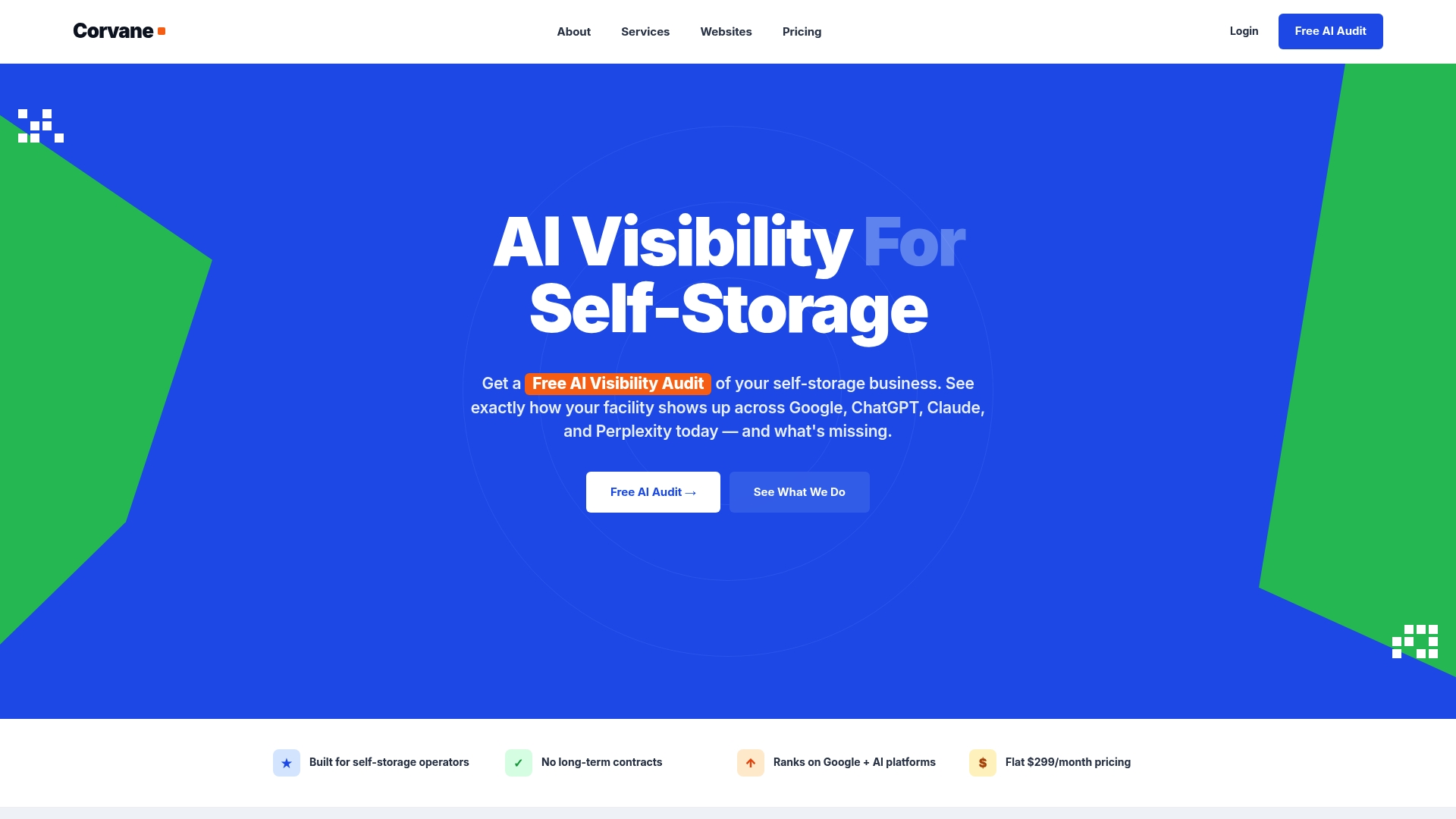
The service runs at a flat monthly rate with a one-time onboarding fee, no contracts, and no tiers, covering technical SEO, local search positioning, and AI-optimized article publishing, built around what you've just implemented in GSC. Every plan starts the same way: a free AI visibility audit that scores exactly how your facility currently appears across major AI platforms, with a specific roadmap to fix what's missing. If your indexing and structured data are already clean, this is the next logical step. If they're not, the audit will tell you that too.
Sources
- Local Business (LocalBusiness) Structured Data | Google Search Central
- Top tasks for Search Console users - Search Console Help
- Sitemaps report - Search Console Help
FAQ
How Long Does Search Console Keep My Data?
Performance report data stays accessible in the interface for roughly 16 months before it drops off the date-range picker. Export data regularly if you want a longer historical record for reporting or year-over-year comparisons.
Should I Use a Domain Property or URL-Prefix Property?
Domain properties are the better choice whenever you can verify them through DNS, since they combine http, https, and all subdomains into one view. Google's Search Console guidance recommends this approach specifically for sites with multiple subdomains or mixed protocols.
Why Isn't My Location Page Getting Indexed?
The most common causes are an accidental noindex tag, a robots.txt block, or a canonical tag pointing to a different page. Check these first in URL Inspection before requesting indexing again, since a repeated request won't fix an underlying block.
What Does LocalBusiness JSON-LD Actually Do for My Facility?
It gives Google structured, machine-readable details about your address, hours, and phone number, which improves how your facility appears in search results and helps AI systems generate accurate answers about your location. Validate it with the Rich Results Test after adding it to catch formatting errors.
How Much Does Corvanesystems Cost?
Corvanesystems runs on a flat monthly rate of $299, plus a one-time $50 onboarding fee, with no contracts or tiered pricing. Full details and a free AI visibility audit are available on the Corvanesystems site.