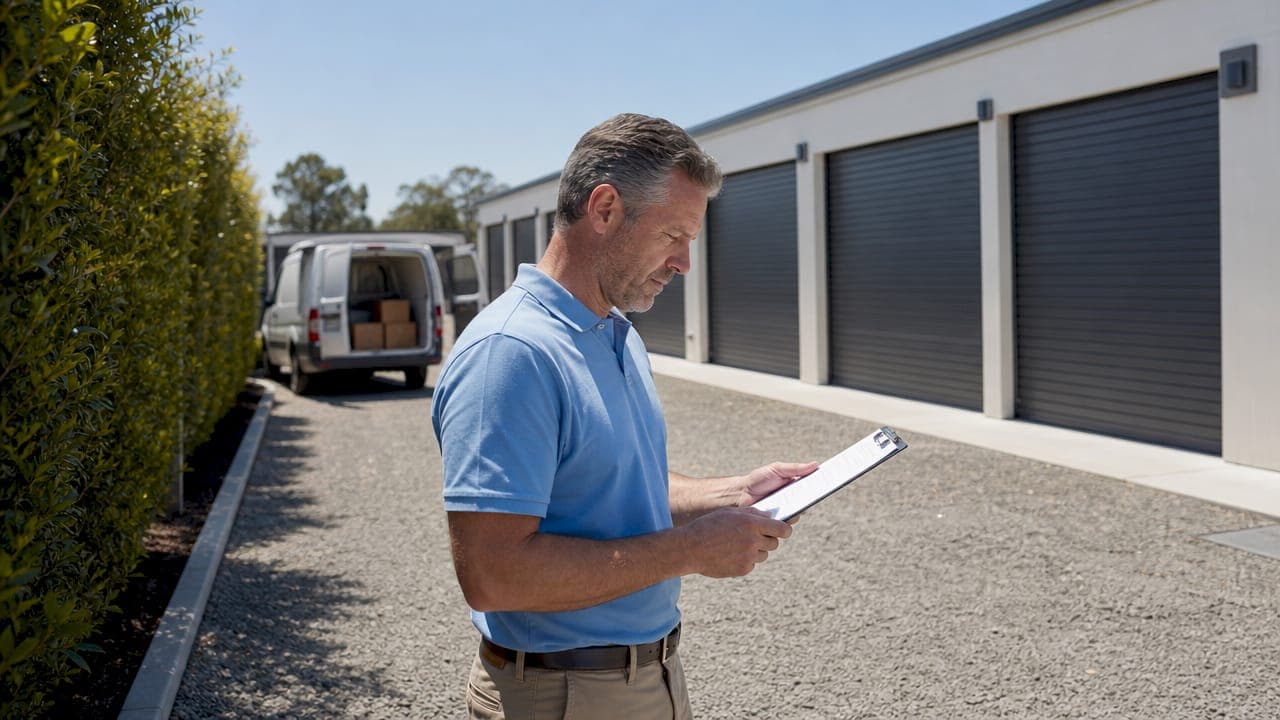
Storage facility evaluation is the process of comparing location, price, unit size, security, and contract terms to find the best rental match for your specific needs. Most renters skip at least one of these factors and end up paying more than expected or storing in a unit that doesn't protect their belongings. A thorough assessment before signing anything saves money and prevents frustration. This guide covers every factor you need to weigh, with real pricing data, security benchmarks, and contract red flags to watch for in 2026.
What are the key factors when you evaluate a storage facility?
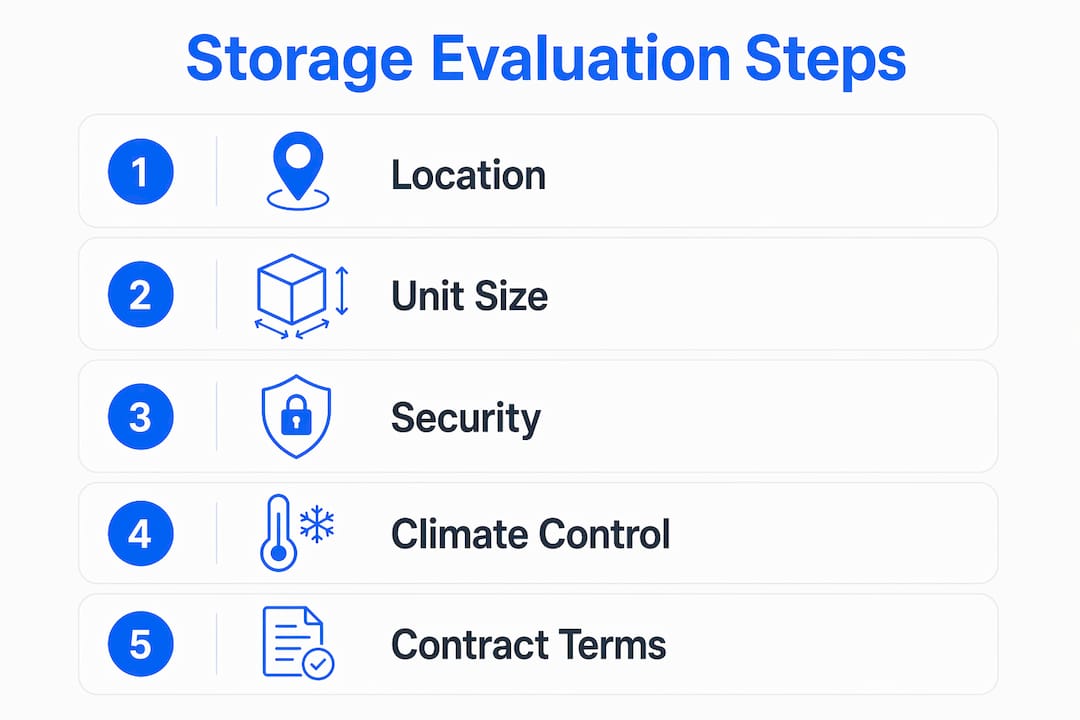
The five core factors in any storage facility comparison are location, unit size, security, climate control, and contract terms. Each one affects your total cost and the safety of your belongings. Skipping even one creates blind spots that show up as unexpected fees or damaged items later.
Location and accessibility determine both convenience and price. A facility close to a major city center typically costs significantly more per month than one in a suburban or rural area. Proximity and local market conditions directly shape what you pay, so factor in drive time and fuel costs alongside the monthly rate.
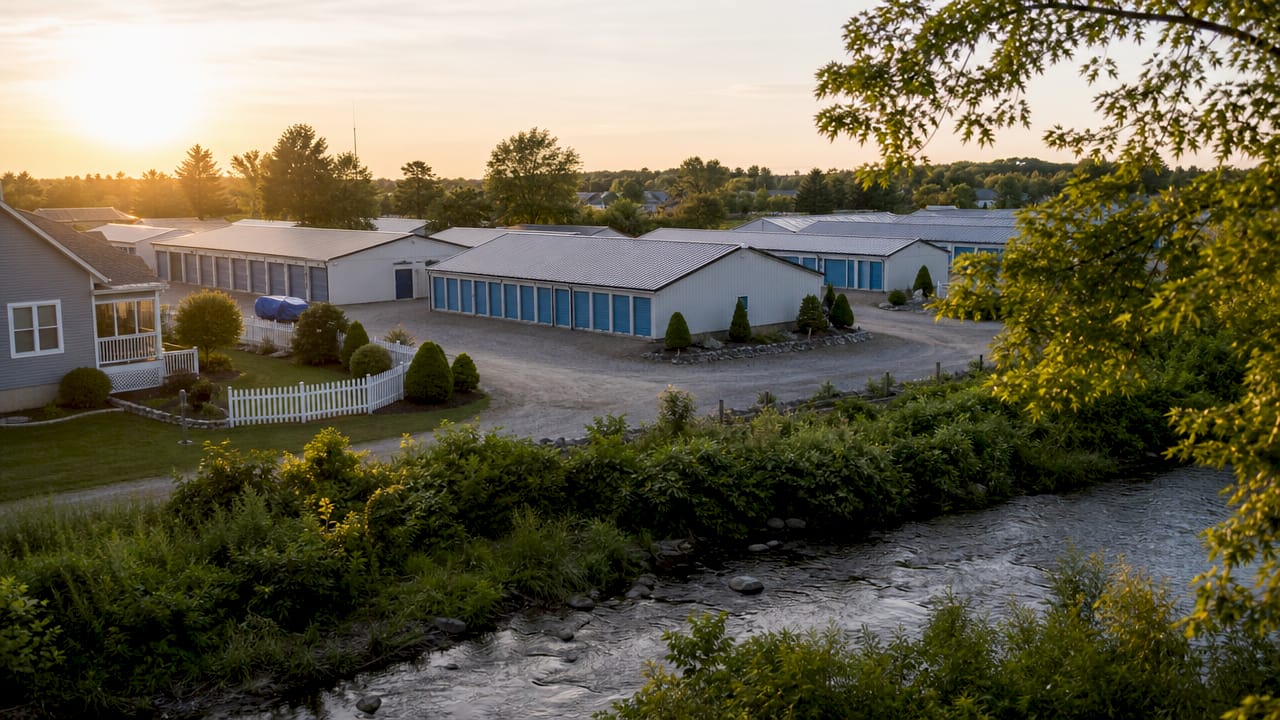
Unit size and type affect cost efficiency more than most renters realize. Renting a unit that is too large wastes money every month. Renting one that is too small forces you into a second unit. Measure your items before committing, and ask the facility for a size guide. Indoor vs. outdoor unit types also matter for item protection and ease of access.
Security features vary widely between facilities. The minimum standard includes perimeter fencing and video surveillance, but the best facilities add individual unit alarms and on-site staff. Unit-level alarms add a layer of protection that generic perimeter security cannot replicate.
Climate control and amenities protect sensitive items like electronics, wood furniture, documents, and artwork. Climate-controlled units guard against heat, humidity, and pests, which justifies the higher monthly cost for long-term storage.
Contract terms and total cost round out the evaluation. Monthly rent is only part of the picture. Admin fees, insurance requirements, lock purchases, and late fees all add to your real cost. A comprehensive facility checklist that scores each factor from 1 to 5 helps you compare facilities objectively rather than going on gut feeling alone.
How does pricing vary across storage locations and unit sizes?
Storage pricing varies more than most renters expect. A standard 10x10 unit ranges from $64 per month in low-cost areas to over $200 per month in dense urban markets. That is a variance exceeding 300%, which means location alone can triple your monthly bill for the exact same unit size.
Geographic pricing reflects local real estate costs, demand density, and competition. Markets like New York City, San Francisco, and Boston consistently sit at the top of the price range. Secondary cities and rural areas offer the same unit sizes for a fraction of the cost. If you have flexibility on location, even moving a few miles outside a city center can produce meaningful savings.
Unit size also drives cost efficiency. Smaller locker-style units often cost more per square foot than mid-size units because facilities price them at a premium for convenience. Appropriately sized units can produce savings up to 65% compared to renting multiple smaller lockers for the same total volume. The math strongly favors renting one correctly sized unit over stacking smaller ones.
| Unit Size | Low-Cost Market (monthly) | Urban Market (monthly) | Best Use Case |
|---|---|---|---|
| 5x5 | ~$30 | ~$80 | Small boxes, seasonal items |
| 10x10 | ~$64 | ~$200+ | One-bedroom apartment contents |
| 10x20 | ~$90 | ~$280+ | Two-bedroom move or business inventory |
| Climate-controlled 10x10 | ~$85 | ~$230+ | Electronics, furniture, documents |
Climate control adds a consistent premium across all markets. Vehicle storage adds another layer of cost depending on whether the space is covered or enclosed. Factor these amenity costs into your budget before comparing base rates.
Pro Tip: Use online storage marketplaces to pull real-time rates for your exact zip code and unit size before calling any facility. You will walk into negotiations knowing the market rate, which gives you leverage on price and move-in promotions.
What security and accessibility features should you prioritize?
Security at a storage facility is not a single feature. It is a layered system, and the strength of each layer determines how well your belongings are actually protected.
The baseline layer includes perimeter fencing, gated entry with a personal access code, and video surveillance cameras covering the property. Most facilities meet this minimum. The problem is that many renters assume this is enough. Security assumptions about uniform coverage are one of the most common mistakes renters make, and they leave high-value items exposed.
The next layer is individual unit alarms. These trigger if someone opens your specific unit without authorization. Not every facility offers them, and those that do often charge a small monthly premium. For anyone storing electronics, business inventory, or irreplaceable personal items, unit-level alarms are worth the extra cost. Perimeter cameras catch incidents after the fact. Unit alarms prevent them.
On-site staff adds a third layer. A staffed facility deters opportunistic theft in ways that cameras alone cannot. Ask about staffing hours, not just office hours. Some facilities have staff on-site only during business hours, leaving the property unmonitored at night.
Accessibility is a separate but equally practical concern. Access hours and real access policies need to match your actual schedule, including evenings, weekends, and holidays. A mismatch between advertised hours and actual gate access creates real problems, especially for business renters who need reliable entry outside standard hours.
- Confirm gate code access hours versus office hours. They are often different.
- Ask specifically about holiday access restrictions.
- Check whether the facility offers 24-hour access and at what cost.
- Verify whether drive-up access is available for large or heavy loads.
- Ask if the facility has loading docks or dollies available for move-in days.
Pro Tip: Visit the facility in person during the evening or on a weekend before signing. You will see the actual lighting, gate responsiveness, and foot traffic at the times you are most likely to use the unit.
How do you compare storage facility contracts and additional costs?
The monthly rate is the number facilities advertise. The total cost is what you actually pay. These two figures are rarely the same, and the gap between them is where most renters get surprised.
Common one-time and recurring fees include:
- Admin or setup fee: Charged at move-in, typically $15–$30.
- Lock purchase: Some facilities require you to buy their specific lock.
- Insurance: Many facilities require renters insurance. Some sell it directly at $10–$20 per month.
- Late payment fee: Usually triggered after a 5-day grace period.
- Deposit: Not universal, but some facilities require one to two months upfront.
Total cost estimation must include monthly rent, one-time fees, insurance, and transport costs for an accurate budget. Renters who focus only on the base rate routinely underestimate their actual spend by 20% or more.
Contract flexibility is the other major variable. Month-to-month leases cost slightly more per month but give you the freedom to leave without penalty. Long-term contracts offer lower rates but can carry expensive early termination fees. Long-term contract penalties are a common pitfall for renters whose storage needs change, which they often do.
| Contract Type | Typical Rate Advantage | Flexibility | Risk |
|---|---|---|---|
| Month-to-month | Base rate | High | Rate increases with notice |
| 6-month lease | 5–10% discount | Moderate | Penalty if you exit early |
| 12-month lease | 10–20% discount | Low | Higher penalty, locked rate |
Promotional offers like "first month free" or "50% off for three months" are worth evaluating carefully. Calculate the total cost over your expected rental period, not just the promotional window. A facility offering the first month free on a higher base rate may cost more over six months than a facility with no promotion and a lower monthly rate.
How do online tools help with storage facility comparison?
Online storage marketplaces have changed how renters find and compare facilities. A decade ago, you called facilities one by one and compared notes on paper. Now, digital platforms let you filter by unit size, price, location, amenities, and access hours in a single search. That transparency shifts negotiating power toward the renter.
The most useful filtering options include unit size, climate control, vehicle storage, 24-hour access, and price range. Instant booking features let you reserve a unit without a phone call, which also locks in the advertised rate before it changes. Cancellation policies on these platforms tend to be more flexible than direct facility contracts, which is worth noting if your timeline is uncertain.
Digital reviews add another layer of quality assessment. Online reviews reveal patterns that a facility tour cannot, including how staff handles disputes, whether the gate system is reliable, and how the facility responds to security incidents. Look for reviews that mention specific experiences rather than generic ratings.
The limitation of online tools is that they cannot replace a physical visit for high-value or long-term storage. Photos can be outdated, and listed amenities do not always reflect current conditions. Use online platforms to build your shortlist, then visit the top two or three options before signing.
Key Takeaways
Evaluating a storage facility correctly requires comparing location, price, security layers, contract terms, and total cost before committing to any rental.
| Point | Details |
|---|---|
| Price varies by location | A 10x10 unit ranges from $64 to over $200 per month depending on market. |
| Unit size drives efficiency | Renting the right size can save up to 65% versus stacking smaller units. |
| Security is layered | Unit-level alarms protect better than perimeter fencing and cameras alone. |
| Total cost beats base rate | Add fees, insurance, and deposits to get your real monthly spend. |
| Online tools build your shortlist | Use marketplaces to filter and compare, then visit top options in person. |
What I've learned from watching renters get this wrong
The most consistent mistake I see is renters treating storage like a commodity purchase. They find the lowest advertised rate, sign the contract, and move in without reading the fine print. Three months later, they are paying for insurance they did not budget for, locked into a 12-month lease with a rate increase clause, and accessing a facility that closes at 7 p.m. on weekdays.
Price matters, but flexibility matters more than most people admit upfront. Storage needs change. A business renter who signs a 12-month lease to save 15% per month can end up paying more overall if their inventory needs shift and they need to exit early. The math on long-term contracts only works if your situation stays stable.
The technology shift is real and worth using. Online marketplaces have made it genuinely easy to compare 10 facilities in the time it used to take to call two. But I have seen renters over-rely on photos and listed amenities without visiting. A facility that looks clean in photos can have poor lighting, a broken gate, or a staff member who is indifferent to security concerns. Visit before you sign, especially for anything over three months.
The renters who make the best decisions treat the evaluation like a checklist, not a gut call. They score each facility on location, price, security, access, and contract terms. They calculate total cost over their expected rental period. They visit in person. That process takes an extra hour and saves real money.
— Mike
Corvanesystems and the storage operators you find online
Storage operators who invest in their digital presence show up when renters search. Corvanesystems works specifically with self-storage facility operators to build that presence, combining traditional SEO with AI visibility so facilities appear in Google searches, AI Overviews, ChatGPT, and Perplexity when renters are actively comparing options.
For renters, this matters because well-optimized facilities publish accurate pricing, current amenity details, and verified reviews, which makes your evaluation faster and more reliable. For operators, it means more qualified renters finding your facility at the moment they are ready to book. Corvanesystems offers AI-driven storage visibility at a flat monthly rate with no contracts, built entirely around the self-storage industry.
FAQ
What is the most important factor when selecting a storage facility?
Security and contract flexibility are the two most underweighted factors. Most renters focus on price, but unit-level alarms and month-to-month lease terms protect you from both theft and unexpected cost increases.
How much does a 10x10 storage unit cost per month?
A 10x10 unit ranges from $64 per month in low-cost markets to over $200 per month in dense urban areas. Climate control adds a consistent premium on top of the base rate.
What fees should I expect beyond the monthly rent?
Expect admin fees, a required lock purchase, renters insurance, and potential late fees. Total these costs alongside monthly rent to calculate your real budget before signing.
How do I know if a storage facility's security is adequate?
Ask specifically whether individual unit alarms are included, not just perimeter fencing and cameras. Visit the facility in the evening to assess lighting and gate reliability firsthand.
Are month-to-month storage contracts worth the higher rate?
Month-to-month leases cost slightly more per month but eliminate early termination penalties. For anyone with uncertain storage timelines, the flexibility outweighs the small rate premium.