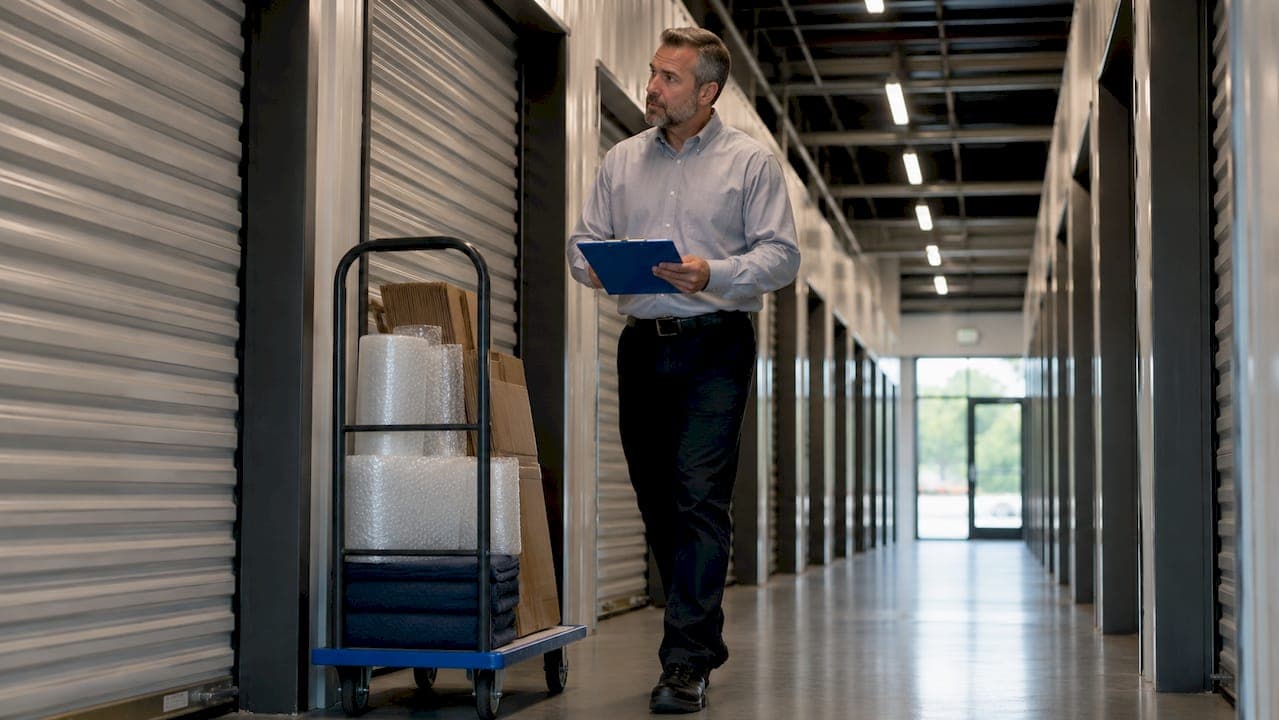
An indoor storage facility is a fully enclosed building containing individual rental units accessed through interior hallways, lobbies, or elevators rather than directly from a parking lot. These facilities, formally called interior-access self-storage, give your belongings a physical barrier against weather, pests, and theft that outdoor drive-up units simply cannot match. Indoor units typically cost 10–20% more than drive-up options. That premium buys real protection, not just a roof. Whether you are storing electronics, documents, or furniture during a move, understanding how these facilities work helps you spend money on the right unit the first time.
What is an indoor storage facility and how does it differ from drive-up units?
An indoor storage facility houses rental units inside a climate-stable building, with access controlled through a main entrance rather than an exterior roll-up door facing a parking lot. That single design difference changes nearly everything about the experience, from security to temperature consistency to how you move your belongings in and out.
Drive-up units sit in rows along an open lot. You back your truck to the door and load in minutes. Indoor units require you to enter a building, navigate corridors, and sometimes ride an elevator to your floor. The trade-off is significant protection. Building insulation moderates temperature and blocks dust, pests, and moisture in ways that a metal roll-up door facing the elements never can.
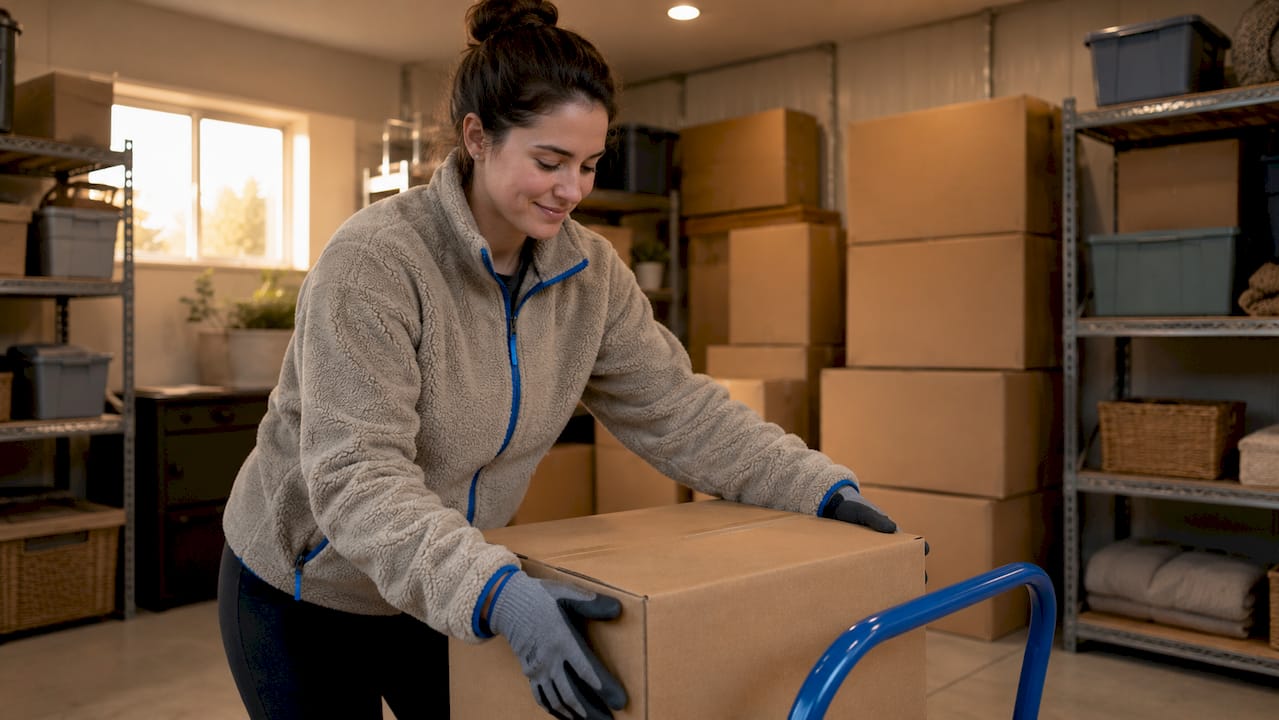
The physical layout of indoor facilities also supports better security. Multi-tiered access codes cover the perimeter gate, the building entrance, and sometimes individual floors. A thief who gets past the gate still faces a locked building door and a second code before reaching any unit. That layered structure is a meaningful deterrent.
Key physical features that distinguish indoor facilities include:
- Interior corridors and elevators connecting units on multiple floors
- Covered loading docks that keep you dry while moving items from your vehicle
- Shared loading carts and dollies provided by the facility at no extra charge
- Keypad or fob entry at the building door, separate from the perimeter gate
- Consistent lighting and climate stability throughout common areas
Pro Tip: Ask the facility manager whether the building is insulated and whether the HVAC system runs year-round. Insulation alone moderates temperature, but active climate control is a separate feature that costs more and must be verified before you sign.
What are the benefits of using an indoor storage facility?
The core benefit of indoor storage is environmental stability. Your belongings sit inside a building that blocks rain, snow, wind, direct sunlight, insects, and rodents. Indoor units benefit from insulation that outdoor metal containers cannot replicate, and that difference compounds over months or years of storage.
Here are the primary benefits, ranked by impact for most renters:
- Weather protection. Rain, snow, and humidity never reach your unit. This matters most in regions with harsh winters or humid summers where outdoor units see significant moisture infiltration.
- Temperature stability. Even without active climate control, an insulated building keeps temperatures far more consistent than an outdoor unit baking in summer sun. Climate-controlled units maintain temperatures between 65°F and 85°F, protecting electronics, wooden furniture, and artwork from warping or cracking.
- Pest and dust control. Sealed interior spaces dramatically reduce the chance of rodents, insects, or airborne debris reaching your belongings.
- Layered security. Indoor units offer greater privacy and reduced theft risk compared to outdoor units visible from public areas. A unit on the third floor of a locked building is far less accessible to opportunistic theft than a roll-up door facing a street.
- Cleanliness. Interior hallways stay clean. Your boxes and furniture do not collect grime from wind, rain splatter, or exhaust fumes the way outdoor units do.
The security advantage deserves specific attention. Security experts recommend indoor storage for items with high sentimental or financial value precisely because the combination of physical barriers and access controls creates multiple points of friction for anyone attempting unauthorized entry. For business owners storing inventory, client records, or equipment, that friction translates directly into reduced liability.
If you want to understand why renters choose storage in the first place, the most common reasons align directly with what indoor facilities do best: protecting valuables during transitions, securing business assets, and preserving items with long-term sentimental value.
How does the indoor storage access and loading process work?
Access to an indoor storage facility follows a consistent sequence. You enter the property through a gated perimeter, then use a separate code or key fob to enter the building itself. From there, you navigate interior hallways or take an elevator to your unit. Building main entrances may close at night, so access hours matter more here than with 24-hour drive-up facilities.
The loading process is where indoor storage requires the most planning. Most facilities provide shared equipment to make the process manageable:
- Flatbed carts and dollies available near the loading dock or elevator lobby
- Covered loading bays where you pull your vehicle under a roof before unloading
- Wide freight elevators sized for furniture and appliance transport
- Hallway widths typically designed for standard furniture, though oversized items need measurement in advance
The table below compares the access experience between indoor and drive-up units across the factors that matter most during move-in:
| Factor | Indoor Storage | Drive-Up Storage |
|---|---|---|
| Weather during loading | Protected by covered dock | Fully exposed to elements |
| Access hours | Often limited to daytime | Frequently 24-hour access |
| Equipment provided | Carts, dollies, elevators | Typically none |
| Ease of moving bulky items | Restricted by elevator and hallway limits | Direct vehicle-to-unit access |
| Security during loading | Interior building adds a barrier | Unit door faces open lot |
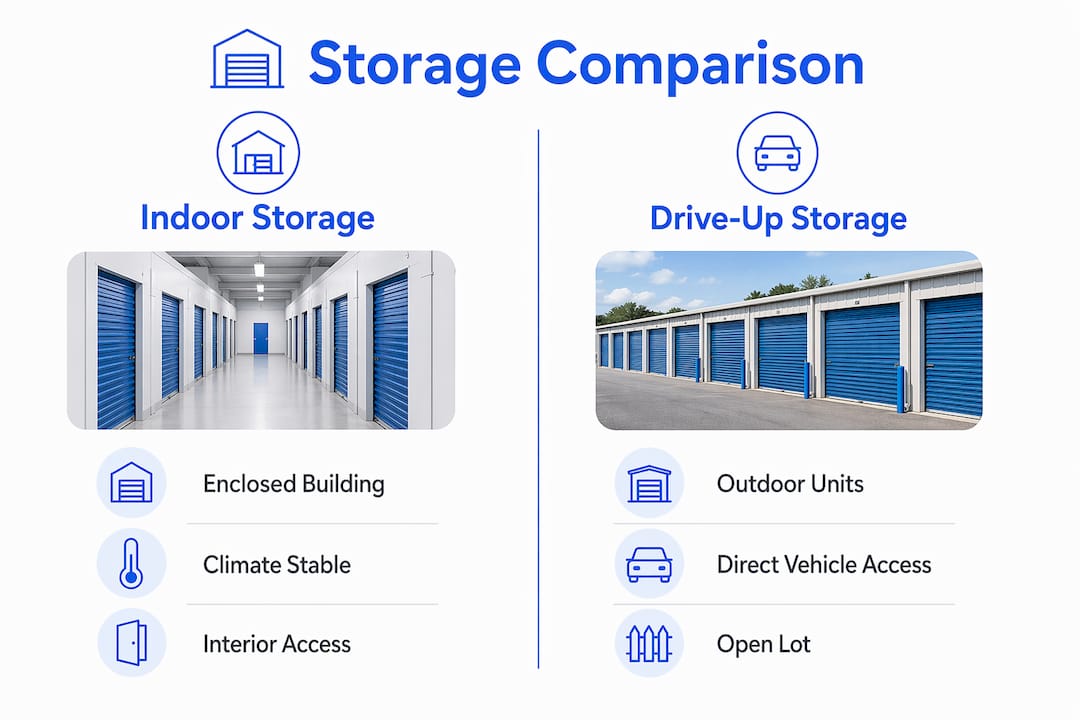
Elevators and hallways may limit bulky item access, which is the most common complaint from renters who store large furniture or heavy equipment. A king-size mattress fits most freight elevators, but a full sectional sofa or a commercial refrigerator may not. Measure your largest items before committing to an indoor unit.
Pro Tip: Visit the facility before signing and walk the route from the loading dock to your unit. Ride the elevator with a tape measure. Hallway width and elevator depth are the two constraints that cause the most move-in frustration.
For a full breakdown of storage access options across different facility types, including keypad systems, mobile access, and 24-hour facilities, Corvanesystems has published a detailed 2026 guide worth reading before you commit.
Who should choose indoor storage solutions?
Indoor storage is the right choice when protection matters more than convenience. Indoor storage is best for sensitive, long-term, and high-value storage, particularly in climates where temperature swings, humidity, or precipitation are seasonal realities.
The items that benefit most from indoor storage include electronics, musical instruments, wooden furniture, artwork, wine, documents, and clothing stored long-term. These are materials that warp, corrode, mold, or degrade when exposed to temperature extremes or moisture. Storing a vintage guitar or a box of tax records in an outdoor unit through a Midwest winter is a gamble. Storing them indoors is not.
The comparison below helps clarify when indoor storage outperforms outdoor options and when it does not:
| Situation | Indoor Storage | Outdoor Drive-Up |
|---|---|---|
| Electronics, artwork, documents | Strong fit | Poor fit |
| Vehicles, boats, large equipment | Poor fit | Strong fit |
| Long-term storage (6+ months) | Strong fit | Acceptable with caveats |
| Frequent daily access needed | Moderate fit | Strong fit |
| Harsh weather climate | Strong fit | Poor fit |
| Budget is the primary concern | Higher cost | Lower cost |
| Business inventory or records | Strong fit | Moderate fit |
Business users represent a growing segment of indoor storage renters. A small business storing client files, product samples, or seasonal inventory benefits from the security and climate stability of an indoor unit in ways that justify the cost premium. For guidance on storing appliances safely, the same principles apply: climate control and sealed interiors prevent the corrosion and moisture damage that ruins equipment stored outdoors.
The cost difference is real but manageable. Indoor units run 10–20% more per month than comparable outdoor units. On a $100 per month outdoor unit, that means $110–$120 for indoor access. For items worth hundreds or thousands of dollars, that monthly difference is straightforward insurance.
Key takeaways
Indoor storage facilities deliver superior protection for sensitive belongings through enclosed building design, layered security, and environmental stability that outdoor drive-up units cannot replicate.
| Point | Details |
|---|---|
| Definition and access | Indoor units sit inside enclosed buildings accessed through interior hallways, lobbies, or elevators. |
| Cost premium | Indoor units cost 10–20% more per month than outdoor drive-up units, reflecting real protection benefits. |
| Climate control is not automatic | Indoor does not mean climate controlled. Verify active temperature and humidity regulation before renting. |
| Best item types | Electronics, artwork, documents, and wooden furniture benefit most from indoor environmental stability. |
| Loading logistics | Measure large items before signing. Elevator weight limits and hallway widths restrict oversized furniture. |
The mistake most first-time renters make
Most people searching for indoor storage assume that "indoor" automatically means "climate controlled." It does not. Climate control must be specifically verified because it is a distinct, separately priced feature. I have seen renters store vintage furniture in an indoor unit, assume the building's HVAC covered their space, and discover six months later that their unit had no active temperature regulation at all. The building kept out rain and pests. It did not keep out summer heat.
The second mistake is ignoring access hours. Drive-up units at many facilities run 24 hours. Indoor facilities often lock the building entrance at 9 or 10 p.m. If you run a business and need to retrieve inventory at 6 a.m. before a job site opens, that restriction matters. Ask specifically about building access hours, not just gate hours. Those are two different things, and facilities do not always volunteer the distinction.
My honest recommendation for first-time renters: treat the facility visit as a job interview. Walk the loading dock. Ride the elevator. Ask about access hours, climate control specifics, and what happens if the elevator is out of service. A good facility manager answers those questions without hesitation. One who deflects or gives vague answers is telling you something important.
The indoor vs. outdoor storage comparison is not about which type is objectively better. It is about matching the facility's actual features to what your belongings need. Indoor storage wins on protection. Drive-up wins on convenience. Know which one you are actually buying.
— Mike
How Corvanesystems helps storage facilities get found
If you operate an indoor storage facility, being the best option in your market means nothing if renters cannot find you when they search.
Corvanesystems is an SEO and AI visibility agency built exclusively for self-storage operators. When a potential renter searches "indoor storage near me" or asks an AI assistant for a recommendation, Corvanesystems structures your facility's digital presence so it surfaces in those results. The service covers technical SEO, local search positioning, and AI-optimized content published monthly so that platforms like ChatGPT, Perplexity, and Google AI Overviews recognize and recommend your facility. One flat monthly rate, no contracts. See how it works and find out where your facility currently stands in AI search results.
FAQ
What is an indoor storage facility?
An indoor storage facility is an enclosed building containing individual rental units accessed through interior hallways, elevators, or lobbies rather than directly from a parking lot. It provides superior weather protection, cleaner conditions, and layered security compared to outdoor drive-up units.
Are all indoor storage units climate controlled?
No. Climate control is a distinct feature that must be verified before renting. An indoor unit sits inside a building, which moderates temperature through insulation, but active temperature and humidity regulation requires a separate HVAC system tied to your unit.
How much more does indoor storage cost than outdoor storage?
Indoor units typically cost 10–20% more per month than comparable outdoor drive-up units. That premium reflects the added protection, security layers, and facility amenities like covered loading docks and shared carts.
What items are best suited for indoor storage?
Electronics, wooden furniture, artwork, documents, musical instruments, and clothing stored long-term all benefit from the environmental stability of indoor units. These materials are most vulnerable to temperature swings, humidity, and pest damage that indoor facilities prevent.
Can i access my indoor storage unit at any time?
Not always. Building entrances may close at night, limiting access to daytime hours even if the property gate stays open. Confirm building access hours separately from gate hours before signing a rental agreement.