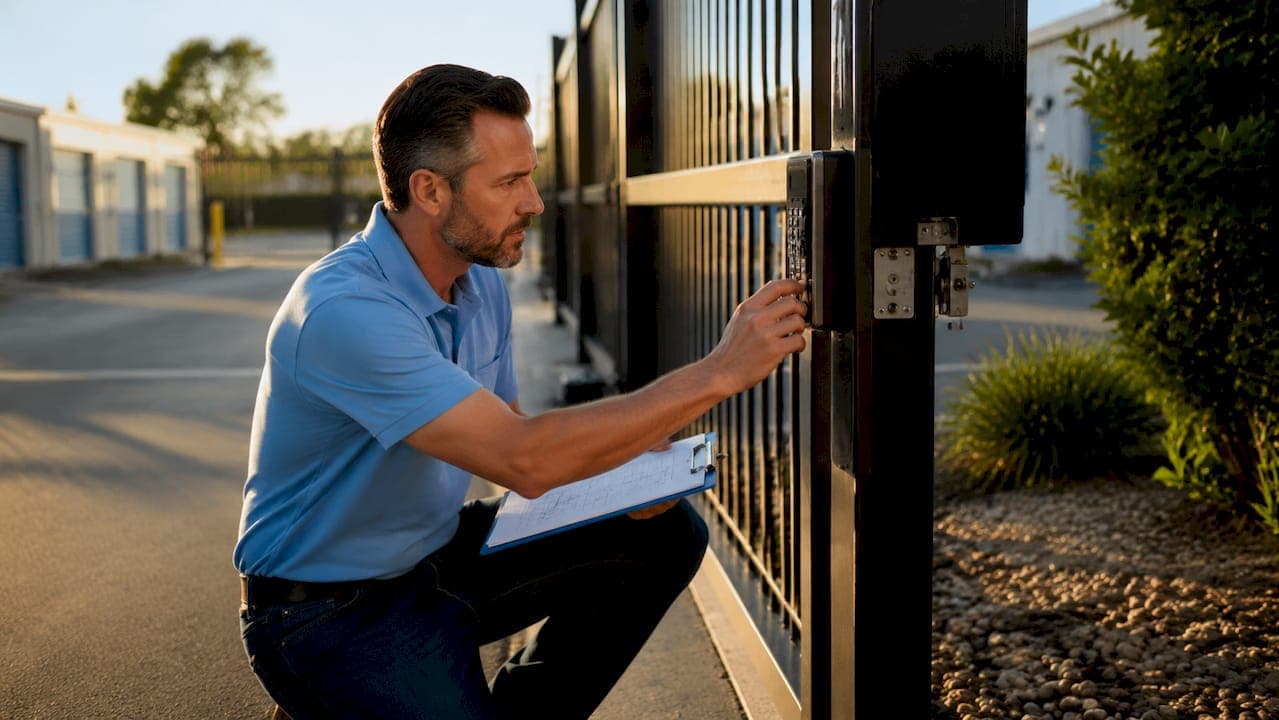
Storage facility security is the multilayered combination of perimeter fencing, electronic access control, surveillance cameras, alarm systems, and integrated software that protects a self-storage property from unauthorized access and theft. The industry term for this approach is "defense in depth," and it applies directly to self-storage operations. A facility that gets this right protects tenant property, reduces liability, and builds the kind of trust that drives long-term occupancy. One that gets it wrong faces break-ins, legal exposure, and tenant churn. Understanding what storage facility security actually requires, from physical hardware to cloud-connected software, is the first step toward running a facility that tenants choose and stay with.
What is storage facility security and its core components?
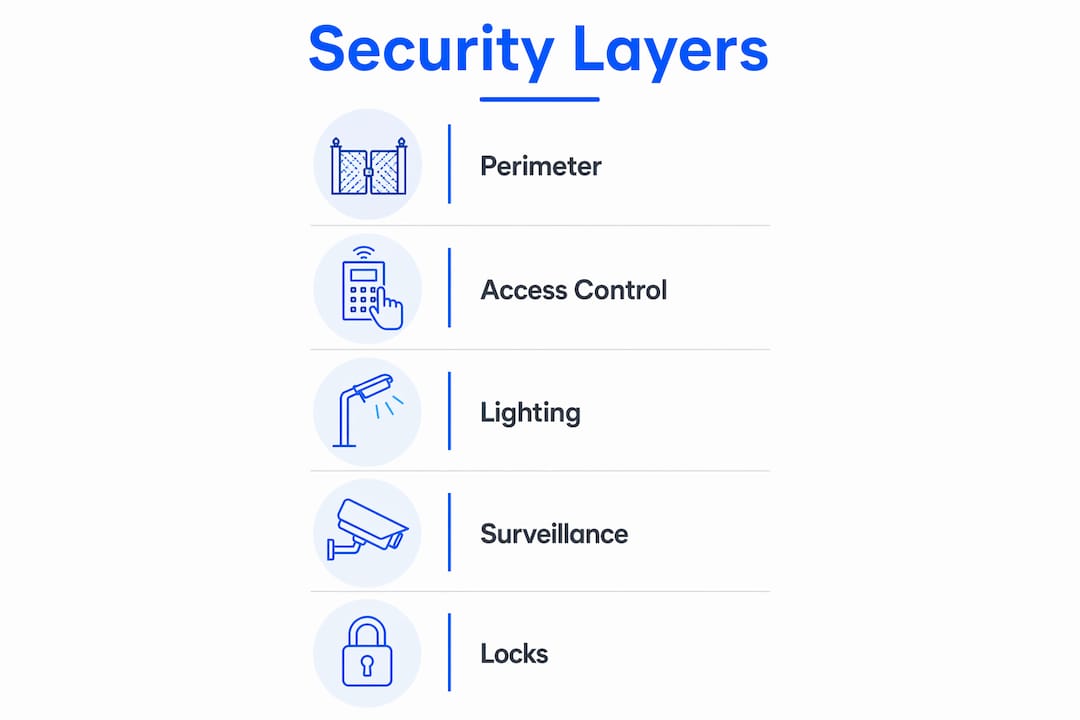
Storage facility security is a multi-layered system that integrates perimeter protection, access control, video surveillance, alarm systems, and centralized software for real-time alerts. No single component is sufficient on its own. A camera without an alarm misses the response window. An alarm without access logs makes investigations nearly impossible. The system only works when every layer communicates with the others.
The five core components every facility needs are:
- Perimeter fencing and gate systems that physically restrict who can enter the property
- Electronic access control including keypads, PIN codes, and mobile app entry
- Video surveillance covering gates, drive aisles, and hallways
- Alarm systems at the unit level and property perimeter
- Centralized security software that connects hardware and delivers real-time alerts
Integrated security software also extends equipment lifespan by up to 33% and reduces operational downtime. That means the investment in a connected platform pays back in reduced maintenance costs, not just improved security outcomes.
What are the essential physical security components for storage facilities?
Physical security forms the foundation of any facility protection plan. Core physical protections provide strong crime deterrence and should be established before any high-end automation is added. Skipping this step and jumping straight to smart technology is a common mistake that leaves obvious gaps.
The non-negotiable physical elements include:
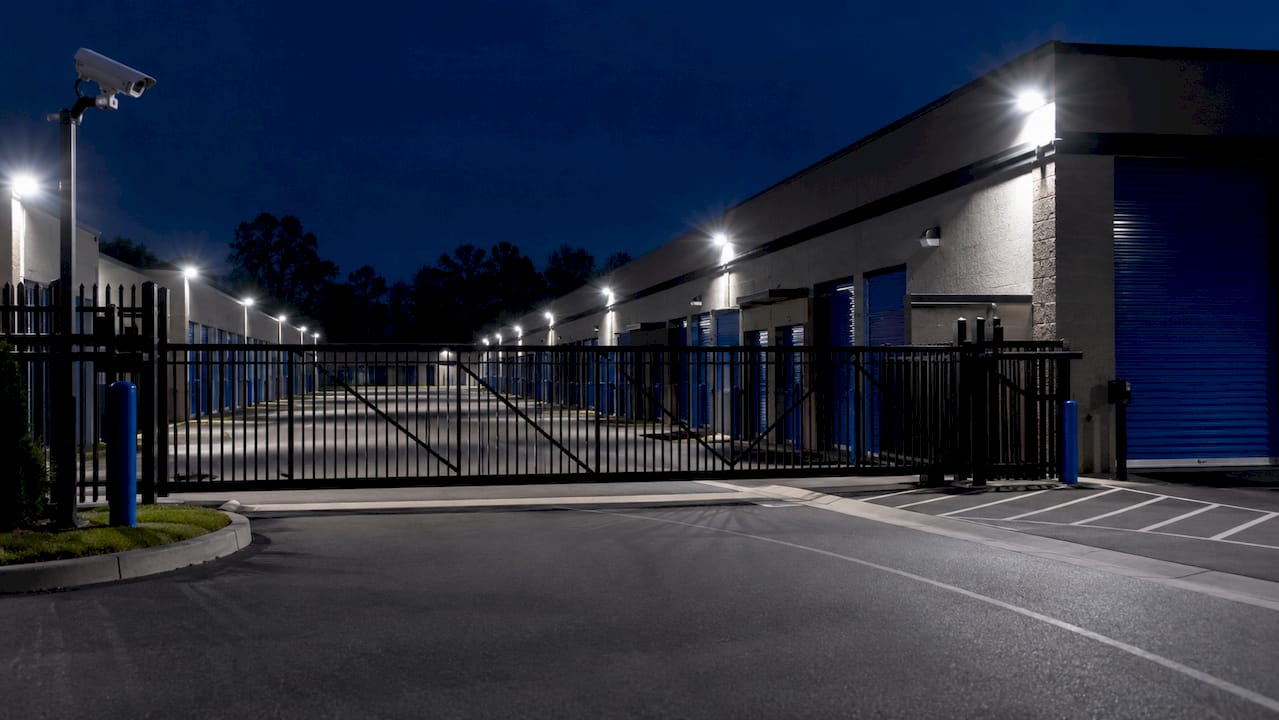
- Perimeter fencing at least 6 feet high with no easy footholds, ideally topped with anti-climb features
- Electronically controlled gate systems that log every entry and exit with timestamps
- High-quality lighting across all drive aisles, hallways, and entry points, including motion-activated fixtures for off-hours coverage
- Disc locks and cylinder locks on individual units, which resist cutting and prying far better than standard padlocks
- Tamper-resistant smart locks that pair with access control software and send alerts when a unit is accessed unexpectedly
Lighting is consistently underestimated. A well-lit facility deters opportunistic crime more effectively than a camera that records in the dark. Motion-activated lighting also signals to a would-be intruder that the property is actively monitored.
Pro Tip: Avoid "shiny object syndrome" when budgeting for security upgrades. Facilities that invest in smart locks before fixing broken fencing or poor lighting are spending in the wrong order. Physical integrity comes first.
The locks you choose matter more than most operators realize. Disc locks and cylinder locks are the industry standard for good reason. They resist bolt cutters and are difficult to tamper with without triggering visible damage. Pairing them with smart lock technology adds a digital audit trail to the physical deterrent.
How do electronic access control and monitoring technologies enhance facility security?
Electronic access control is the layer that turns a physical barrier into a managed security system. The difference between a gate with a keypad and a gate with individualized PIN codes tied to tenant accounts is enormous. One tells you the gate opened. The other tells you exactly who opened it and when.
The key technologies that define modern electronic security include:
- Individualized PIN codes assigned per tenant, so access can be revoked instantly without changing hardware
- Mobile Bluetooth access via apps that eliminate static codes entirely and tie entry to a specific device
- High-resolution cameras positioned at gates, drive aisles, and hallways with remote cloud monitoring capability
- Unit-level motion sensors and alarms that trigger notifications when a unit is accessed outside normal hours
- Integrated security software that connects all hardware into a single dashboard with real-time alerts
Smart latches with Bluetooth provide real-time unauthorized entry notifications and eliminate static code vulnerabilities entirely. This matters because stolen or shared PIN codes are one of the most common ways unauthorized access occurs at facilities that rely on older keypad systems.
Unit-level sensors add a vital layer of security that complements perimeter controls for tenant safety. A tenant whose unit triggers an alarm during off-hours gets a notification. So does the facility manager. That dual alert system creates accountability on both sides.
Camera placement follows a specific logic. Gates capture every vehicle entering and exiting. Drive aisles document movement patterns. Hallways record who accesses which unit. Placing cameras only at the entrance leaves the interior of the facility unmonitored, which is where most unit-level theft actually occurs.
Pro Tip: Cloud-connected cameras allow you to review footage remotely from any device. If a tenant calls to report a break-in at 11 PM, you can pull the footage before the police arrive rather than waiting until morning.
What vulnerabilities do storage facilities commonly face?
Storage facilities face a predictable set of vulnerabilities. Understanding them is the first step toward closing the gaps. Most thefts occur after hours when sites are unmanned, which is why after-hours access control and unit-level alarms are critical rather than optional.
| Vulnerability | Risk Level | Mitigation |
|---|---|---|
| After-hours break-ins | High | Motion sensors, unit alarms, tamper-resistant locks |
| Stolen or shared PIN codes | High | Individualized mobile Bluetooth access |
| Tailgating through gates | Medium | Video verification, anti-tailgate gate design |
| Social engineering of staff | Medium | Staff training, access log audits |
| Manipulated access logs | Medium | Cloud-based immutable logging systems |
Manipulated access logs and altered inventory records can cause damage similar to physical theft. This is a vulnerability most operators overlook entirely. If your access logs can be edited locally, they are not reliable evidence in a dispute or investigation.
The defense-in-depth approach addresses this directly. Layered controls mean that if one layer fails, others detect the breach. Motion sensors catch what cameras miss in low light. Access logs document what sensors cannot identify. Video confirms what logs record. No single point of failure shuts down the entire system.
Tailgating is a specific risk that electronic systems alone cannot solve. A tenant holds the gate open for a stranger out of courtesy. That stranger now has unsupervised access to the facility. Anti-tailgate gate designs, combined with camera coverage at the entry point, create a physical and visual deterrent to this behavior.
How does integrating security with facility management software improve operations?
Cloud-based security platforms enable monitoring of access, cameras, and alarms from a single interface, improving consistency and responsiveness across multi-site operators. For a facility manager overseeing multiple locations, this is the difference between reactive and proactive security management.
The operational benefits of integration include:
- Centralized dashboards that show access events, camera feeds, and alarm status in one view
- Automated alerts for unusual access patterns, such as a tenant accessing their unit at 3 AM on a weekday
- Reduced manual checks because the software flags anomalies rather than requiring staff to review hours of footage
- Audit-ready logs that document every access event with timestamps and user identity
Security signals should integrate into business intelligence platforms alongside occupancy and revenue data. This is a concept most operators have not considered. When you can see that a specific unit cluster has a high rate of after-hours access alongside a high turnover rate, you have actionable data about a security problem that is also a revenue problem.
Tenant trust is a direct byproduct of visible, well-managed security. A facility that can show a prospective tenant a live camera feed of their unit corridor, or send them an access notification every time their unit is opened, is offering something most competitors cannot match. Well-executed security contributes to tenant trust and higher revenues by reducing churn and positioning the facility as a premium service. That is a competitive advantage that shows up directly in occupancy rates.
For operators managing gate systems across multiple sites, centralized software eliminates the need to visit each location to review logs or respond to alerts. The system does the monitoring. Staff respond to confirmed incidents rather than spending hours on preventive patrols.
What are best practices for storage facility security in 2026?
The security standards that define top-performing facilities in 2026 reflect a clear shift from hardware-only thinking to integrated, data-driven operations. The facilities that lead on security are not necessarily the ones with the most cameras. They are the ones whose systems talk to each other.
The current best practices for storage security measures include:
- Audit your physical layer first. Fencing, lighting, and locks must be solid before any electronic upgrade adds real value.
- Replace shared PIN codes with individualized mobile access. This single change eliminates the most common access control vulnerability.
- Position cameras at every critical transition point. Gates, drive aisles, hallway intersections, and elevator banks all require coverage.
- Connect all hardware to a centralized platform. Isolated systems create blind spots. Integration creates visibility.
- Schedule quarterly security audits. Hardware degrades, software needs updates, and access lists accumulate inactive accounts that should be removed.
- Explore AI-enhanced monitoring tools. Systems that flag unusual behavior patterns automatically reduce the manual review burden significantly.
The trend toward AI-enhanced monitoring is worth watching closely. These systems analyze access patterns over time and flag deviations, such as a tenant who normally accesses their unit on weekday afternoons suddenly appearing at 2 AM on a Sunday. That kind of behavioral anomaly detection is not possible with traditional camera review.
Photographic intake records and tamper-evident seals also create a secure chain of custody that protects stored assets beyond standard access controls. This practice is common in commercial storage but underused in self-storage, where it could significantly reduce disputes about unit contents.
Reviewing your access control options annually keeps your facility aligned with current tenant expectations and technology standards.
Key Takeaways
Storage facility security requires a layered combination of physical barriers, electronic access control, surveillance, and integrated software to protect property and build tenant trust.
| Point | Details |
|---|---|
| Physical security comes first | Fencing, lighting, and quality locks must be in place before adding electronic systems. |
| Mobile access beats static PIN codes | Individualized Bluetooth access eliminates the most common unauthorized entry vulnerability. |
| Integration multiplies effectiveness | Connecting cameras, alarms, and access logs into one platform turns data into proactive management. |
| Security drives tenant retention | Facilities with visible, well-managed security reduce churn and command higher occupancy rates. |
| Audits keep systems current | Quarterly reviews of hardware, software, and access lists prevent gaps from accumulating over time. |
Security is an operational discipline, not a hardware purchase
The biggest mistake I see facility operators make is treating security as a one-time capital expense. They install cameras, add a keypad, and consider the job done. Two years later, the cameras have not been updated, the access list has 40 inactive accounts, and nobody has reviewed the alarm logs since installation.
Security is a continuous operational discipline. The facilities that perform best on this measure are the ones that treat access logs the same way they treat occupancy reports: as live data that requires regular review and response. When you integrate security signals with revenue and tenant behavior data, patterns emerge that pure hardware monitoring will never surface. A unit cluster with high after-hours access and high turnover is telling you something. A tenant who accesses their unit 15 times in a week is worth a second look.
Multi-facility operators face a compounded version of this challenge. Without centralized visibility, each site becomes a security island. You cannot compare patterns across locations or identify systemic vulnerabilities. The operators I respect most in this industry have built security management into their weekly operational rhythm, not their annual capital budget cycle.
The uncomfortable truth is that most break-ins at self-storage facilities are preventable. They happen at facilities where the physical layer has gaps, the access control is outdated, or nobody is reviewing the data the system already generates. The technology to prevent most incidents exists and is affordable. The discipline to use it consistently is the harder part.
— Mike
How Corvanesystems helps storage operators build visibility and trust
Security is one part of what makes a storage facility worth choosing. The other part is whether potential tenants can find you at all when they search online or ask an AI assistant for recommendations.
Corvanesystems is built specifically for self-storage operators who want to win on both fronts. The platform combines technical SEO, local search positioning, and AI visibility optimization so your facility surfaces when tenants search "storage near me" on Google or ask ChatGPT for recommendations in your city. With 30 keyword-optimized articles published monthly and AI visibility audits covering ChatGPT, Claude, Perplexity, and Google AI, Corvanesystems closes the gap between a well-run facility and a fully booked one. See how it works and get your facility in front of the tenants already searching for you.
FAQ
What is storage facility security?
Storage facility security is the combination of physical barriers, electronic access control, surveillance cameras, alarm systems, and integrated software that protects a self-storage property from unauthorized access and theft. The most effective programs layer these controls so that if one fails, others detect the breach.
What are the most important self-storage security features?
Perimeter fencing, high-quality lighting, disc or cylinder locks, individualized access control, and cloud-connected surveillance cameras are the core features. Unit-level motion sensors and alarms add a critical layer of protection during off-hours.
How do smart locks improve storage unit safety?
Smart locks with Bluetooth eliminate static PIN codes, which are vulnerable to being stolen or shared. They provide real-time unauthorized entry notifications and tie every access event to a specific tenant account.
Why does security affect tenant retention?
Well-executed security reduces churn and positions a facility as a premium service, which directly supports higher occupancy rates. Tenants who feel their belongings are protected are significantly less likely to leave for a competing facility.
How often should storage facilities audit their security systems?
Quarterly audits are the current best practice. These reviews should cover hardware condition, software updates, camera coverage gaps, and access list hygiene to remove inactive tenant accounts.