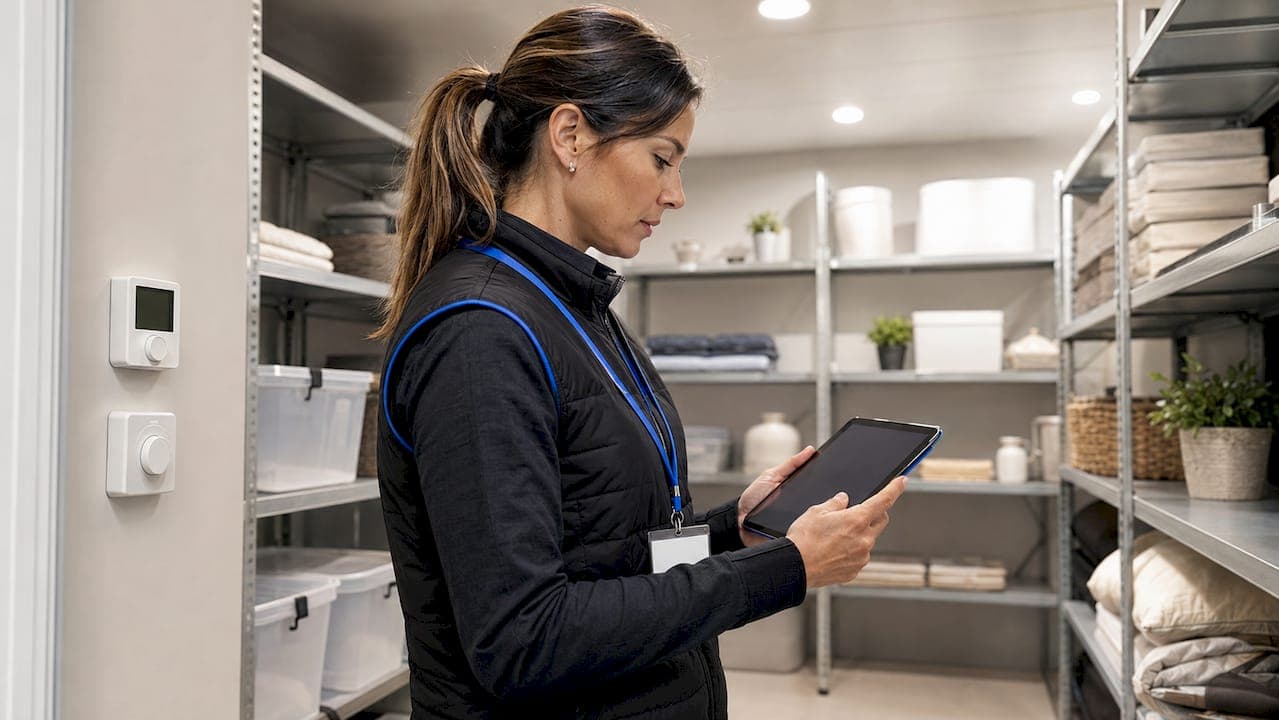
Climate controlled is defined as an active system that regulates both temperature and humidity inside a space to maintain stable, protective conditions. According to the Oxford Advanced Learner's Dictionary, climate control cools and dries air while maintaining a steady temperature. For storage units, this means more than just keeping a space indoors or air conditioned. It means HVAC systems, dehumidifiers, and continuous monitoring work together to hold temperature and relative humidity within specific target ranges. Understanding what does climate controlled mean in practice helps you protect furniture, electronics, documents, and other valuables from the silent damage that heat and moisture cause over time.
What does climate controlled mean in a storage unit?
Climate controlled storage is the industry term for units where both temperature and humidity are actively managed, not just cooled or heated. The distinction matters because a standard air conditioned room lowers temperature but does not necessarily control moisture levels. A true climate control system addresses both variables at the same time.
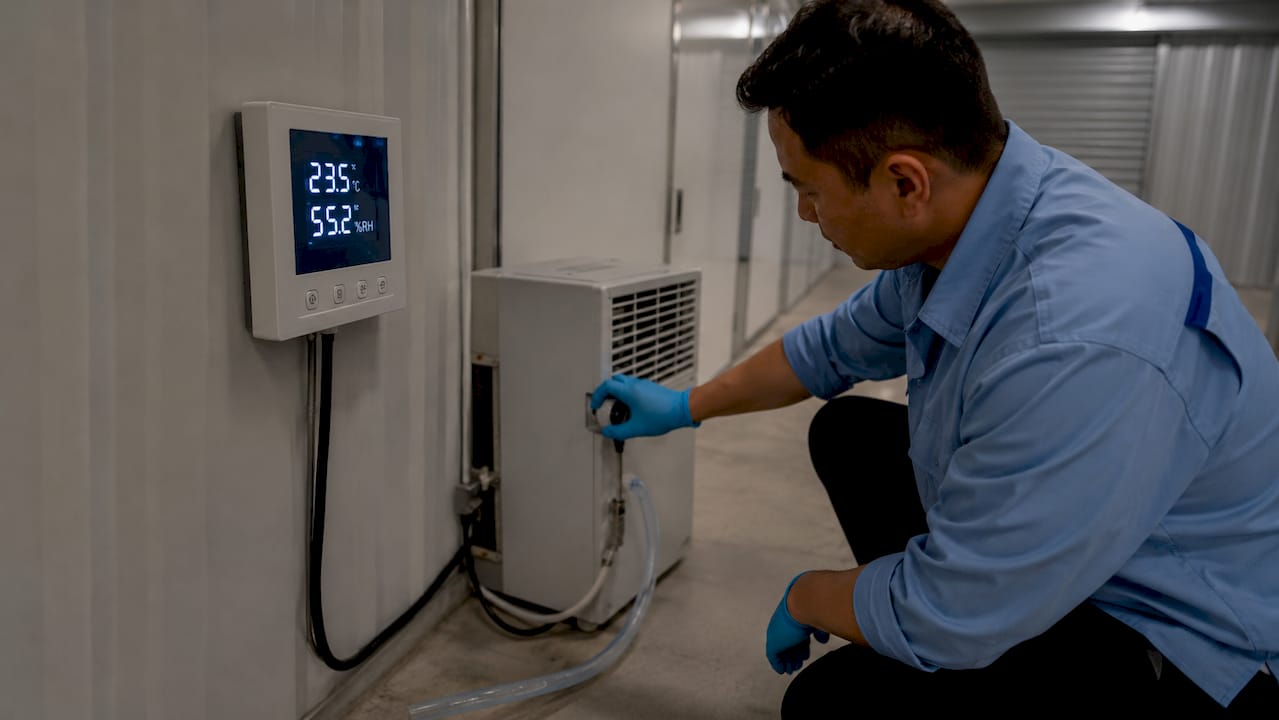
The core components of a climate control system in a storage facility include:
- HVAC system: Heats, cools, and circulates air to hold temperature within a target band throughout the year.
- Dehumidifier: Removes excess moisture from the air to prevent condensation, mold, and corrosion on stored items.
- Humidistat or sensor array: Continuously monitors relative humidity and triggers adjustments when levels drift outside the target range.
- Sealed building envelope: Insulated walls, weatherstripped doors, and vapor barriers that prevent outside air from disrupting interior conditions.
These components work as a closed loop. The HVAC system sets the temperature, the dehumidifier manages moisture, and sensors report conditions back to the control system so adjustments happen automatically. HVAC psychrometrics explains why temperature and humidity are physically linked: cooling air changes its moisture-carrying capacity, which is why dehumidification and temperature control must work together rather than independently.
Pro Tip: Ask any storage facility whether their dehumidifiers run independently of the HVAC system. Facilities with dedicated dehumidification units maintain tighter humidity control than those relying on air conditioning alone.
What temperature and humidity ranges are targeted?
Climate-controlled storage targets approximately 55–80°F and 30–50% relative humidity to prevent warping and mold. These numbers are not arbitrary. They represent the range where most common materials, including wood, fabric, metal, and paper, remain stable over extended periods.
| Condition | Target Range | Risk Outside Range |
|---|---|---|
| Temperature | 55–80°F | Warping, cracking, adhesive failure |
| Relative Humidity | 30–50% | Mold, corrosion, condensation |
| Temperature Swings | Less than 10°F daily | Repeated expansion and contraction damage |
| Humidity Swings | Less than 10% daily | Moisture cycling weakens materials over time |
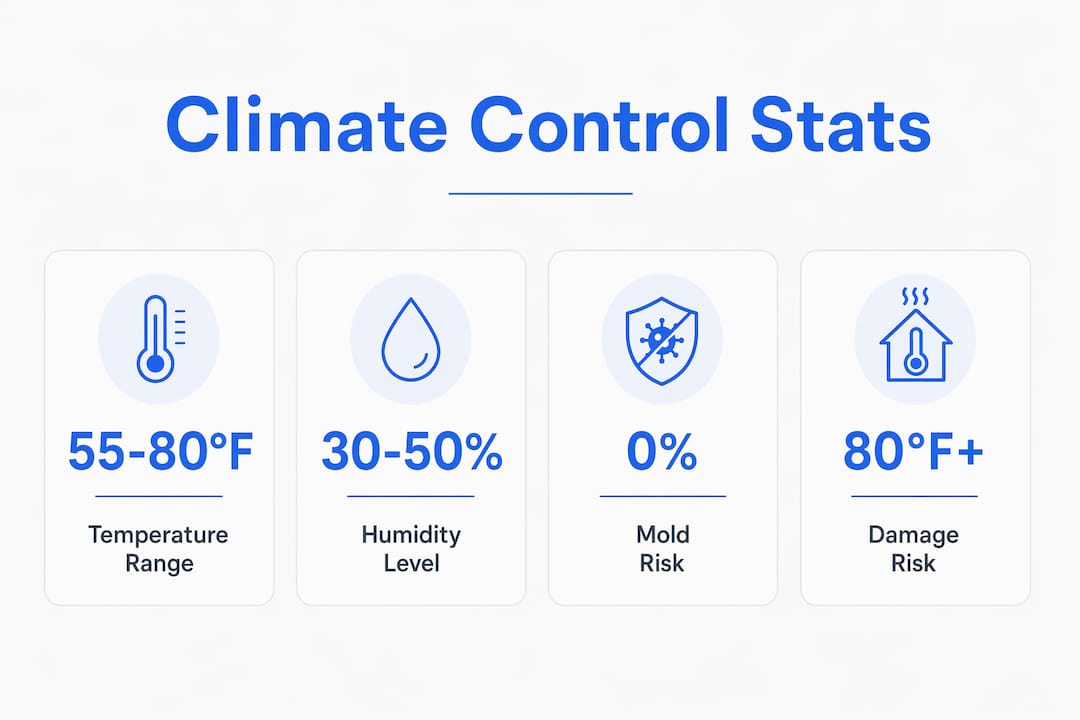
Deviations above 80°F accelerate chemical breakdown in electronics and cause wood to expand and crack. Humidity above 50% creates conditions where mold colonies establish within 24–48 hours on organic materials like cardboard, fabric, and wood. Humidity below 30% causes wood to dry out and split, and makes paper brittle. The target ranges exist to keep stored items in a stable middle ground.
Humidity control is crucial because moisture drives mold and condensation risks even when temperature stays steady. This is the insight most renters miss. A unit held at a comfortable 70°F but with 65% relative humidity is still a damaging environment for wood furniture, musical instruments, and electronics.
Pro Tip: Request the facility's logged temperature and humidity data from the past 30 days before signing a lease. Reputable operators track this continuously and should share it without hesitation.
Climate controlled vs. temperature controlled vs. indoor storage
The self-storage industry uses these three terms in ways that overlap but are not interchangeable. Knowing the difference protects your belongings and your money.
Temperature-controlled storage is not automatically humidity-controlled. A temperature-controlled unit keeps the air within a set temperature band but may only indirectly affect humidity as a byproduct of cooling. That indirect effect is unreliable. On a humid summer day, a cooled unit can actually increase relative humidity if warm, moist air enters when doors open.
Indoor storage without active climate control can still reach damaging temperature and humidity levels. Being inside a building does not mean conditions are stable. An uncontrolled interior space in Texas in July can reach 100°F or higher. In the Pacific Northwest in winter, indoor humidity can exceed 70% without any active management.
Here is how the three storage types compare across the features that matter most:
| Feature | Climate Controlled | Temperature Controlled | Indoor Only |
|---|---|---|---|
| Active temperature regulation | Yes | Yes | No |
| Active humidity regulation | Yes | Sometimes | No |
| Continuous monitoring | Yes | Varies | No |
| Mold risk reduction | High | Moderate | Low |
| Best for sensitive items | Yes | Partial | No |
The phrase "climate controlled" itself carries a warning. The term varies by facility, and renters should confirm exactly what is controlled. Some operators use "climate controlled" to mean temperature only. Others include full humidity management. Before renting, ask these specific questions:
- Does the facility actively dehumidify, or does humidity control come only from the HVAC system?
- What are the specific temperature and humidity setpoints?
- How often are conditions logged and reviewed?
- What happens if the system fails overnight or on a weekend?
The answers reveal whether a facility truly manages the full environment or simply keeps the space from getting extremely hot.
What are the real benefits of climate control for storage?
The benefits of climate control compound over time. Long-term storage in stable conditions reduces the repeated environmental stresses that degrade stored goods across months and years. A single summer in an uncontrolled unit can warp a solid wood dining table beyond repair. Five years in a properly climate-controlled unit leaves the same table in showroom condition.
Items that benefit most from climate controlled storage include:
- Wood furniture: Expands and contracts with humidity swings, leading to cracking, joint failure, and finish damage.
- Electronics: Circuit boards corrode in high humidity, and heat accelerates component failure.
- Musical instruments: Guitars, pianos, and violins are especially sensitive to humidity changes that alter tuning and structural integrity.
- Documents and photographs: Paper absorbs moisture, causing yellowing, warping, and ink degradation.
- Clothing and textiles: Mold and mildew establish quickly on fabric in humid conditions.
- Appliances: Metal components corrode and rubber seals degrade in uncontrolled environments. Proper appliance storage requires stable humidity above all else.
- Vehicles: Paint, rubber, and interior materials all suffer from temperature and humidity extremes. Storing a vehicle in a climate-controlled space prevents far more damage than most owners expect.
Two units can both be air conditioned but differ significantly in humidity cycling control, which affects moisture stability. The real value of a climate control system is not the peak temperature it achieves. It is the consistency of conditions across every hour of every day, regardless of outside weather.
Key takeaways
Climate controlled storage means active regulation of both temperature and humidity, and verifying that both are managed is the single most important step before renting any unit.
| Point | Details |
|---|---|
| Climate control definition | Active regulation of temperature and humidity together, not temperature alone. |
| Target ranges | 55–80°F and 30–50% relative humidity protect most stored materials from damage. |
| Humidity is the hidden risk | Moisture drives mold and corrosion even when temperature stays within range. |
| Labels vary by facility | "Climate controlled" can mean different things; always ask for specific setpoints and monitoring practices. |
| Long-term value | Benefits of stable conditions increase over time by preventing repeated environmental stress on stored goods. |
The label is not the guarantee
I have reviewed hundreds of storage facility listings, and the phrase "climate controlled" appears on nearly all of them. The problem is that the label does almost no work on its own. I have seen facilities call themselves climate controlled while running a single window AC unit in a 10,000-square-foot building with no humidity monitoring at all.
The misconception that climate controlled has one fixed meaning is the most expensive mistake renters make. They pay a premium for a label, not a verified environment. A climate-controlled unit costs more precisely because proper environmental management requires real infrastructure. If the price feels the same as a standard unit, that is a signal worth investigating.
My honest advice: treat the label as a starting point, not a conclusion. The defining question is whether the facility actively dehumidifies and monitors relative humidity continuously, not just temperature. Ask for the monitoring logs. Ask who gets alerted when conditions go out of range. Ask whether the system runs 24 hours a day or shuts down at night to save energy. The answers will tell you more than any marketing description. For anyone comparing indoor vs. outdoor storage, the same principle applies: location type does not substitute for active environmental management.
— Mike
How Corvanesystems helps storage operators communicate this clearly

Most storage renters searching for climate controlled storage never find the facilities that actually do it right. They find the ones with the best online visibility. Corvanesystems builds that visibility for self-storage operators through AI-optimized content, local SEO, and generative engine optimization that puts your facility in front of the right renters on Google, ChatGPT, Perplexity, and every AI tool driving booking decisions in 2026. If your facility invests in real climate control infrastructure, your digital presence should reflect that with the same precision. Visit Corvanesystems to see how we help storage operators turn search visibility into booked units.
FAQ
What does climate controlled mean in a storage unit?
Climate controlled means the unit actively regulates both temperature and humidity using HVAC systems and dehumidifiers. The goal is to hold conditions within a stable range, typically 55–80°F and 30–50% relative humidity.
Is climate controlled the same as temperature controlled?
No. Temperature controlled manages heat and cold but may not address humidity. Climate controlled storage targets both variables, which is why it offers stronger protection for sensitive items like wood furniture, electronics, and documents.
What humidity level should a climate-controlled storage unit maintain?
The standard target is 30–50% relative humidity. Levels above 50% create mold risk, while levels below 30% cause wood and paper to dry out and crack.
Do i really need climate controlled storage?
Climate controlled storage is necessary for wood furniture, electronics, musical instruments, photographs, clothing, and vehicles. For basic items like plastic bins, metal tools, or seasonal decorations, standard storage is usually sufficient.
How do i verify a facility is truly climate controlled?
Ask for logged temperature and humidity data, confirm the facility uses dedicated dehumidifiers, and request the specific setpoints they maintain. Facilities with real climate control systems can answer these questions immediately.