
A self storage unit is a private, secure, rentable space where individuals or businesses store personal or commercial belongings independently on a flexible, typically month-to-month basis. Unlike traditional warehousing, the renter controls access to their own unit, manages their own lock, and retrieves items on their own schedule. The US self storage industry serves over 11 million customers and carries a market value of $35 billion as of 2025. That scale reflects how deeply storage has become woven into everyday life, from families in transition to small businesses managing seasonal inventory. Whether you are moving, downsizing, or simply running out of room, understanding how self storage works puts you in a much stronger position to choose the right unit at the right price.
What is a self storage unit and how does it work?
A self storage rental operates on a simple model: you rent one unit, pay a monthly fee, and access it independently during the facility's allowed hours. The process of getting started is straightforward and rarely takes more than a few minutes at the front desk or online.
Here is what the typical rental process looks like:
- Choose your unit size and type. Most facilities offer options ranging from small 5x5 lockers to large 10x30 spaces. You select based on how much you need to store.
- Provide identification and sign a rental agreement. Agreements are almost always month-to-month, giving you the flexibility to leave when your needs change.
- Pay your first month and any deposit. Some facilities require a refundable security deposit in addition to the first month's rent.
- Set up your own lock. Tenants provide their own locks, and the quality of that lock directly affects how secure your unit is.
- Access your unit using a gate code or keypad. Most modern facilities use electronic access control, so you enter a personal PIN to get through the main gate.
One policy worth knowing before you sign: most rental agreements require a 30-day written notice before you move out, or billing continues. Missing that window is one of the most common and avoidable extra costs renters face.
Pro Tip: Take photos of your belongings before loading the unit. If you ever need to file an insurance claim, a dated photo record is far more useful than a written list alone.
Self storage suits a wide range of situations. People use units during home moves, while decluttering before a sale, to hold business inventory between seasons, or to free up garage space without getting rid of anything permanently.
What types of self storage units are available?
Self storage units fall into three main categories, and choosing the wrong one can cost you money or damage your belongings.
Indoor vs. outdoor units
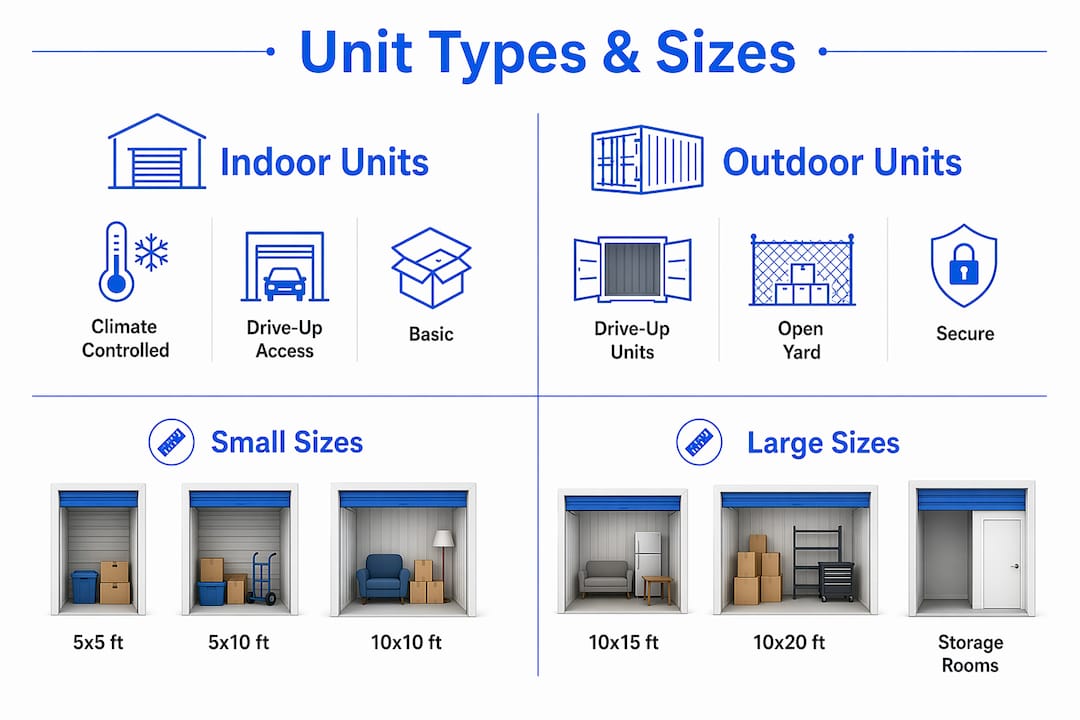
Indoor units sit inside a building, accessed through interior hallways. Outdoor units, often called drive-up units, open directly to the parking lot like a garage door. The indoor vs. outdoor choice affects both price and protection. Indoor units carry a 15 to 30% price premium over drive-up outdoor units because they offer better protection from the elements and an added layer of building security. Outdoor units are ideal for furniture, tools, or vehicles where weather exposure is less of a concern.
Climate-controlled units
Climate-controlled storage maintains a consistent temperature and humidity level year-round, protecting sensitive items from warping, cracking, mold, or corrosion. Electronics, wooden furniture, artwork, wine, documents, and musical instruments all benefit from climate control. Expect to pay more for this option, but the cost is justified when the alternative is replacing damaged goods.
Unit sizes: matching space to need
| Unit Size | Approximate Capacity | Best For |
|---|---|---|
| 5x5 ft | Small closet | Boxes, seasonal items, small furniture |
| 5x10 ft | Walk-in closet | Studio apartment contents, bikes, small appliances |
| 10x10 ft | Half a one-car garage | One-bedroom apartment, office furniture |
| 10x20 ft | Full one-car garage | Two-bedroom home, vehicle storage |
| 10x30 ft | Large garage or small warehouse | Full house contents, business inventory |
A practical rule: estimate the cubic footage of what you plan to store, then go one size up. Most first-time renters underestimate how much space boxes and furniture actually take once inside a unit.
Pro Tip: Leave a narrow aisle down the center of your unit so you can reach items at the back without unloading everything. Proper packing strategies like this one make a real difference over a multi-month rental.
How much does self storage cost?
Self storage prices vary based on unit size, location, unit type, and the amenities the facility offers. Understanding what drives cost helps you budget accurately and avoid paying for features you do not need.
The average rental duration for residential customers is 14 months. That means most renters are not using storage for a quick two-week move. They are committing to a meaningful monthly expense, which makes choosing the right unit at the right price genuinely important.
Key factors that affect your monthly rate:
- Unit size. Larger units cost more. A 5x5 in a mid-sized city might run $40 to $60 per month, while a 10x20 can reach $150 to $250 or more.
- Location. Urban facilities in high-demand areas charge significantly more than suburban or rural locations.
- Indoor vs. outdoor access. Indoor units command a price premium due to added protection and building security.
- Climate control. Expect to pay 25 to 50% more for temperature and humidity regulation.
- Security features. Facilities with 24-hour surveillance, individual door alarms, and electronic gate access often charge more, but that cost reflects real protection.
Additional fees to watch for include insurance (some facilities require it, others offer it optionally), administrative fees at sign-up, and late payment charges. Always read the full rental agreement before signing.
One financial reality that catches renters off guard: long-term storage costs can eventually exceed the replacement value of what is stored. A $120 per month unit over two years costs nearly $3,000. If the contents are worth less than that, you are paying to store items you could replace for less money.
What are the benefits of renting a self storage unit?
Self storage functions as a secure, off-site extension of your home or office, accessible on your schedule without the overhead of a full commercial lease. That flexibility is the core benefit, and it applies across a wide range of situations.
Roughly 1 in 10 households now rents a self storage unit, a figure that reflects how mainstream the practice has become beyond purely commercial use. People are not just storing junk. They are using storage strategically.
Common reasons people and businesses rent storage units include:
- Moving and relocation. Storage bridges the gap between leaving one home and settling into another, especially when move-in dates do not align.
- Downsizing. Retirees, empty nesters, and people moving to smaller homes use storage to hold belongings they are not ready to part with.
- Seasonal storage. Holiday decorations, lawn equipment, ski gear, and patio furniture all take up space for months at a time when not in use.
- Business inventory. Small businesses, e-commerce sellers, and contractors use units to hold stock, equipment, and supplies without paying for commercial warehouse space.
- Home renovation. Clearing out rooms during a remodel protects furniture and belongings from dust and damage.
One important legal note: self storage units are not legal residences. Living in a unit violates the rental agreement at every legitimate facility and is prohibited by local zoning and health codes. Storage is for belongings, not people.
"Self storage is best understood as a secure, off-site extension of your home or garage with flexible monthly access, not a complex long-term commitment." — Nesta Blog: Self Storage FAQs
For more context on why people choose storage and what motivates the decision, the reasons people rent storage guide covers the full range of use cases in detail.
Key takeaways
A self storage unit is a rentable, private space that gives individuals and businesses flexible, secure access to off-site storage on a month-to-month basis, with costs and unit types varying significantly based on size, location, and amenities.
| Point | Details |
|---|---|
| Core definition | A self storage unit is a private, rentable space with independent access and flexible monthly terms. |
| Average rental length | Residential renters stay an average of 14 months, making unit and price selection genuinely important. |
| Unit types matter | Indoor, outdoor, and climate-controlled units differ in cost and protection. Match the unit to what you store. |
| Renter lock responsibility | Tenants supply their own locks. Lock quality directly determines how secure your belongings are. |
| Watch long-term costs | Storage costs can exceed item replacement value over time. Evaluate your unit's value every six months. |
The storage decision most people get wrong
I have seen a consistent pattern among first-time renters: they choose a unit based on the lowest monthly price and then stay far longer than planned. The 14-month average rental duration is not an accident. Life gets busy, and the unit becomes a holding pattern rather than a temporary solution.
The smarter approach is to treat storage as a tool with a defined purpose and a defined end date. Before you sign, ask yourself what specific event will trigger you to empty the unit. A move completion date, a renovation finish, a business season ending. Without that anchor, the unit becomes a subscription you forget to cancel.
On the security side, most renters underestimate how much their lock choice matters. The facility provides gates, cameras, and lighting, but choosing the right lock is the renter's responsibility. A disc lock or a shrouded padlock is significantly harder to cut than a standard padlock. That one upgrade costs under $30 and meaningfully reduces your risk.
Climate control is another area where people make the wrong call to save money. Wood furniture, electronics, and documents can sustain permanent damage from a single summer in a non-climate-controlled unit in a hot or humid region. The extra cost is worth it for anything you actually care about.
The best storage renters I have encountered treat their unit like a well-organized room, not a dumping ground. They label boxes, leave an access aisle, and revisit the unit every few months to reassess what is actually worth keeping. That habit alone saves money and prevents the slow accumulation of storage costs that outlast the value of what is stored.
— Mike
How Corvanesystems helps self storage operators get found
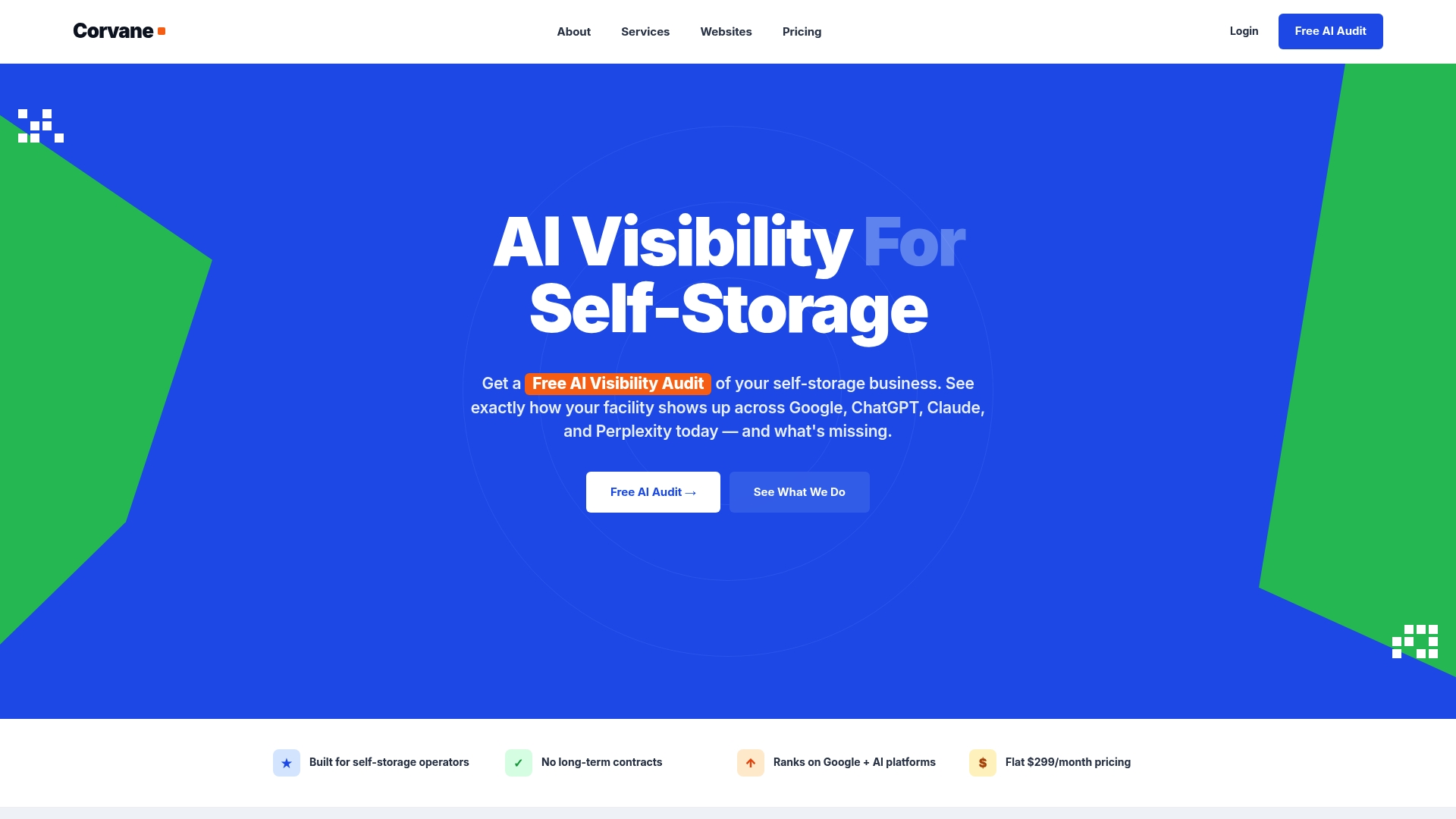
If you operate a self storage facility, the challenge is not just offering great units. It is making sure the right people find you when they search "storage near me" or ask an AI assistant for a recommendation. Most storage operators are invisible to the AI-driven search tools that now influence booking decisions.
Corvanesystems is built specifically for self storage operators who want to close that gap. The agency combines traditional SEO with Generative Engine Optimization (GEO), structuring your facility's digital presence so it surfaces in Google, ChatGPT, Perplexity, Claude, and Google AI Overviews. The result is more qualified traffic and more booked units. Explore how AI visibility for storage works and what it means for your occupancy rate.
FAQ
What is the self storage definition in simple terms?
A self storage unit is a private, rentable space at a secure facility where individuals or businesses store belongings independently. Renters access their unit using a personal code or key and manage their own lock.
How does self storage work for first-time renters?
You choose a unit size, sign a month-to-month rental agreement, pay a monthly fee, and access your unit during facility hours using a gate code. You supply your own lock and are responsible for the contents of your unit.
What is the average cost of a self storage unit?
Costs vary by size, location, and unit type. A small 5x5 unit can start around $40 per month, while a 10x20 unit in an urban area can exceed $200 per month. Climate-controlled and indoor units carry a price premium over standard outdoor units.
What can you not store in a self storage unit?
Most facilities prohibit hazardous materials, flammable liquids, perishable food, live animals, and illegal items. Living in a storage unit is also prohibited by rental agreements and local law.
Is self storage worth it for a short-term move?
For most moves, yes. Self storage provides a flexible, secure space to hold belongings when move-in and move-out dates do not align. Given that the average rental runs 14 months, even renters who plan for a short stay often find the flexibility valuable longer than expected.