
Renting a storage unit gives individuals and families flexible, secure extra space to manage belongings during life's most demanding transitions. The self-storage industry in the United States has grown well beyond its moving-day origins. According to SpareFoot and Storable surveys conducted in 2026, the reasons people rent storage units now span privacy, side businesses, housing market constraints, and emotional decompression. Understanding why people need storage today means recognizing that a unit is rarely just a place to put boxes. It is a practical tool for managing space, time, and personal circumstances.
What are the top reasons people rent storage units?
The most common reasons for renting storage fall into five clear categories: moving transitions, downsizing, seasonal storage, business use, and personal privacy. Each one reflects a different kind of pressure on household space, and most renters experience more than one at the same time.
Moving and transition gaps create the single largest demand for storage units. When your lease ends before your new home is ready, or when a renovation pushes your move-in date back by weeks, you need somewhere safe for your furniture and boxes. Timing gaps during moves make storage a critical tool for managing transitions without chaos. A 10x10 unit can hold the contents of a one-bedroom apartment, giving you breathing room without rushing decisions.

Downsizing is the second major driver. Families moving from a four-bedroom house to a two-bedroom condo cannot always decide immediately what to sell, donate, or keep. Storage as buffer time lets renters delay those tough decisions while they settle into a new space. This is not procrastination. It is a practical way to avoid discarding items you later regret losing.
Seasonal storage is straightforward but often underestimated in volume. Holiday decorations, ski equipment, patio furniture, and summer clothing take up real square footage. Rotating these items into a unit frees up closets and garages for everyday use, which directly improves how livable your home feels year-round.
- Moving and transition gaps between leases or closings
- Downsizing overflow when a smaller home cannot absorb everything
- Seasonal items like holiday decor, sports gear, and outdoor furniture
- Business inventory, resale stock, or workshop space for side hustles
- Personal privacy storage for sensitive items or a quiet retreat
Pro Tip: Before signing a rental agreement, list every category of item you plan to store. This single step prevents you from renting a unit that is either too small after two weeks or too large and expensive from day one.
How do housing market conditions influence storage unit demand?
The 2026 housing market has created a specific kind of storage renter: someone who is not moving at all, but who needs extra space because they are stuck in a home that no longer fits their life. High mortgage rates have frozen household mobility across the United States, and storage facilities are absorbing the overflow.
About 16% of adults have rented storage specifically because they cannot move to a home that fits their current needs. Another 26% are actively considering it for the same reason. That is a significant share of the storage market driven not by relocation, but by the inability to relocate. The implication is direct: storage has become a substitute for moving.
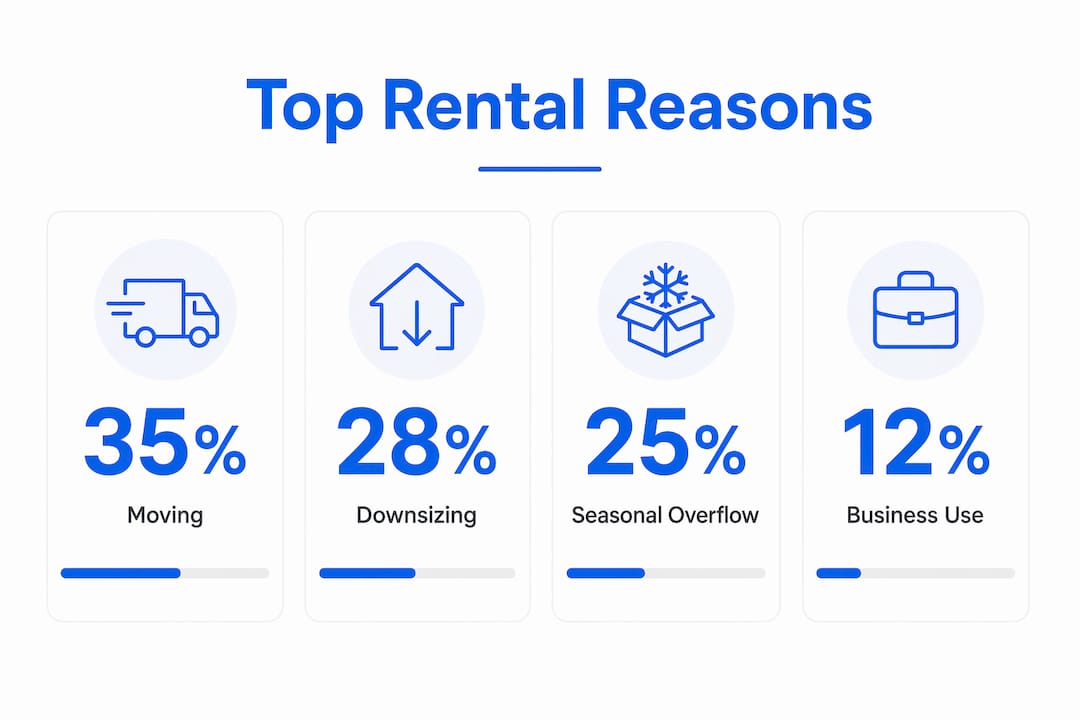
25% of renters use units to make room for household goods overflow when a housing adjustment is not possible. This shifts storage from a short-term moving tool into a longer-term lifestyle adaptation. When housing markets freeze, storage becomes integral to how families manage space at home.
| Housing market factor | Effect on storage demand |
|---|---|
| High mortgage rates | Households stay put longer, creating overflow |
| Limited housing inventory | Families cannot upsize, so they store instead |
| Delayed closings and renovations | Temporary storage fills the transition gap |
| Downsizing without relocation | Long-term units replace room-by-room decluttering |
The practical consequence for renters in this situation is that a unit initially rented for three months can quietly become a 12-month commitment. If you are renting storage because you cannot move, build a rotation system for seasonal items from the start. Otherwise, the unit becomes a permanent second closet at a monthly cost that adds up fast.
In what ways are people using storage units beyond traditional storage?
The most surprising finding from 2026 survey data is how far storage unit use has drifted from its original purpose. Self-storage, the industry's standard term for individually rented units within a shared facility, now serves psychological and entrepreneurial functions that most people never advertise.
Nearly 6 in 10 Americans say they have used a storage unit to hide something private. That figure reframes the entire conversation about why people need storage. Privacy is not a niche use case. It is the majority experience. Items stored for privacy reasons range from gifts and financial documents to belongings connected to personal relationships.
More than 1 in 3 people use storage units to step away from daily life, with 10% specifically citing stress relief as a motivation. A locked, climate-controlled unit gives some renters a controlled environment that their home or office cannot provide. This is not a trend to dismiss. It reflects real pressure on personal space in crowded households.
28% of storage renters use their unit to support side hustles or business activities, earning an average of $646 extra per month. The unit becomes a workspace, a stock room, or a staging area for resale inventory. Platforms like eBay, Poshmark, and Etsy sellers frequently use storage units to separate business inventory from home living space.
Here is how these non-traditional uses translate into specific unit requirements:
- Privacy storage requires strong access control and security. Look for facilities with individual door alarms, keypad entry, and 24-hour surveillance. The types of access options at a facility matter more than unit size when privacy is the priority.
- Decompression or retreat use benefits from climate control and extended access hours. A unit you visit regularly for personal reasons needs to be comfortable and accessible on your schedule.
- Side hustle and business use demands easy drive-up access, adequate lighting, and enough floor space to sort and pack inventory. A 10x15 or 10x20 unit typically works for most small resale operations.
- Seasonal rotation works best with a unit close to home. The convenience factor determines whether you actually use the unit efficiently or let it sit untouched for months.
Pro Tip: If you are using a unit for business inventory, photograph and catalog every item before storing it. This protects you for insurance purposes and saves hours of searching when you need a specific item quickly.
What factors should you consider when choosing a storage unit?
Choosing the right unit is not just about size. The features you need depend directly on what you are storing and why. Getting this wrong costs money and can damage your belongings.
Many renters store cash (36%) and sensitive documents (28%), which means climate control and security are not optional upgrades for a large share of users. They are baseline requirements. A standard non-climate-controlled unit exposes paper documents and electronics to humidity swings that cause real damage over months.
The decision between indoor vs. outdoor storage units comes down to what you store and how often you access it. Indoor units in a climate-controlled building protect sensitive items better. Drive-up outdoor units offer faster, easier access for heavy or frequently rotated items like furniture and equipment.
Key factors to evaluate before signing:
- Unit size: A 5x5 fits a closet's worth of boxes. A 10x10 handles a one-bedroom apartment. A 10x20 accommodates a full house during a move.
- Climate control: Required for wood furniture, electronics, artwork, documents, and anything sensitive to temperature or humidity.
- Security features: Look for individual unit alarms, gated access with personal codes, and on-site surveillance cameras.
- Access hours: If you need the unit for business or regular personal use, 24-hour access matters. Standard facilities often restrict hours to 6 a.m. to 10 p.m.
- Location and price: Urban facilities cost significantly more than suburban or rural ones. If you access the unit rarely, a lower-cost facility 20 minutes away makes financial sense.
- Insurance: Most homeowners and renters insurance policies extend some coverage to off-site storage. Verify your existing policy before paying for the facility's add-on coverage.
Storage rental prices vary widely by market. A 10x10 unit in a major city can cost two to three times what the same unit costs in a smaller market. If your storage need is long-term, that price gap is worth factoring into your decision.
Key takeaways
People rent storage units to solve specific space, timing, and privacy problems that their home cannot address alone. The most effective approach to storage rental is matching your unit size, features, and location to your actual use case before signing any agreement.
| Point | Details |
|---|---|
| Moving transitions drive demand | Timing gaps between leases and closings make temporary storage a practical necessity. |
| Housing market constraints create long-term renters | 16% of adults rent storage because they cannot move to a home that fits their needs. |
| Privacy is a majority use case | Nearly 6 in 10 Americans have used storage to keep something private, not just to free up space. |
| Side hustles generate real income | 28% of renters use units for business, earning an average of $646 extra per month. |
| Unit features must match stored items | Climate control and security are required for documents, cash, electronics, and sensitive belongings. |
What I have learned about why renters actually choose storage
After working with self-storage operators across dozens of markets, the pattern I see most often surprises people: the majority of renters did not plan to rent a unit. They arrived at the decision because something in their life changed faster than their space could adapt. A job relocation, a parent moving in, a relationship ending, a side business taking off. Storage is almost always reactive, not proactive.
What I find genuinely interesting is the privacy data. The idea that nearly 6 in 10 Americans have stored something private reframes the entire product. A storage unit is not just a warehouse. For a meaningful share of renters, it is the only space in their life that is entirely theirs. That is a powerful thing, and most facility operators have no idea their product is serving that need.
My practical advice: treat your storage rental as a temporary tool with a defined end date, not a permanent solution. Set a calendar reminder for 90 days after you sign. Ask yourself whether the items in the unit are still worth the monthly cost. Most people who end up paying for storage they no longer need simply forgot to reassess. The unit that made perfect sense during a move becomes an expensive habit six months later.
If you are considering storage for a side hustle, think about it differently. That unit is overhead. Calculate whether the income it supports justifies the cost before you commit. For most resellers and small operators, a 10x10 at $150 per month is a reasonable business expense. A 10x20 at $300 per month needs to generate proportionally more revenue to make sense.
— Mike
How Corvane Systems helps storage facilities reach renters like you
When you search "storage near me" or ask an AI assistant for storage recommendations, the facilities that appear are not there by accident. They have invested in being found. Corvane Systems is an SEO and AI visibility agency built specifically for self-storage operators. We publish 30 keyword-optimized articles per month for storage facilities, optimize their Google Business Profiles, and structure their digital presence so that tools like ChatGPT, Perplexity, and Google's AI Overviews recommend them by name. For renters, this means the facilities you find through AI search are the ones that have put real effort into their digital presence, which often correlates with better-run operations. Explore how AI visibility for storage works and what it means for the facilities in your area.
FAQ
Why do most people rent storage units?
The most common reasons for renting storage are moving transitions, downsizing, and seasonal item overflow. According to Guardian Storage and Storable research, timing gaps during moves and the inability to upsize a home are the two leading drivers in 2026.
How does the housing market affect storage unit demand?
When mortgage rates rise and housing inventory tightens, households stay in homes that no longer fit their needs. Storable's 2026 Moving Forecast found that 16% of adults have rented storage specifically because they cannot move to a more suitable home.
Can you use a storage unit for a side business?
Yes. 28% of storage renters use their unit to support side hustles or business activities, earning an average of $646 per month. Drive-up units with extended access hours work best for inventory storage and small business operations.
What unit features matter most for sensitive items?
Climate control and individual unit security are the two most critical features when storing documents, electronics, cash, or artwork. SpareFoot's 2026 survey found that 36% of renters store cash and 28% store sensitive documents, making these features a baseline requirement for a significant share of users.
How long do people typically rent storage units?
Storage rental duration varies widely. Moves and renovations typically require one to three months of temporary storage. Housing market constraints and lifestyle uses can extend rentals to a year or more, particularly when renters use units to manage overflow from homes they cannot leave.