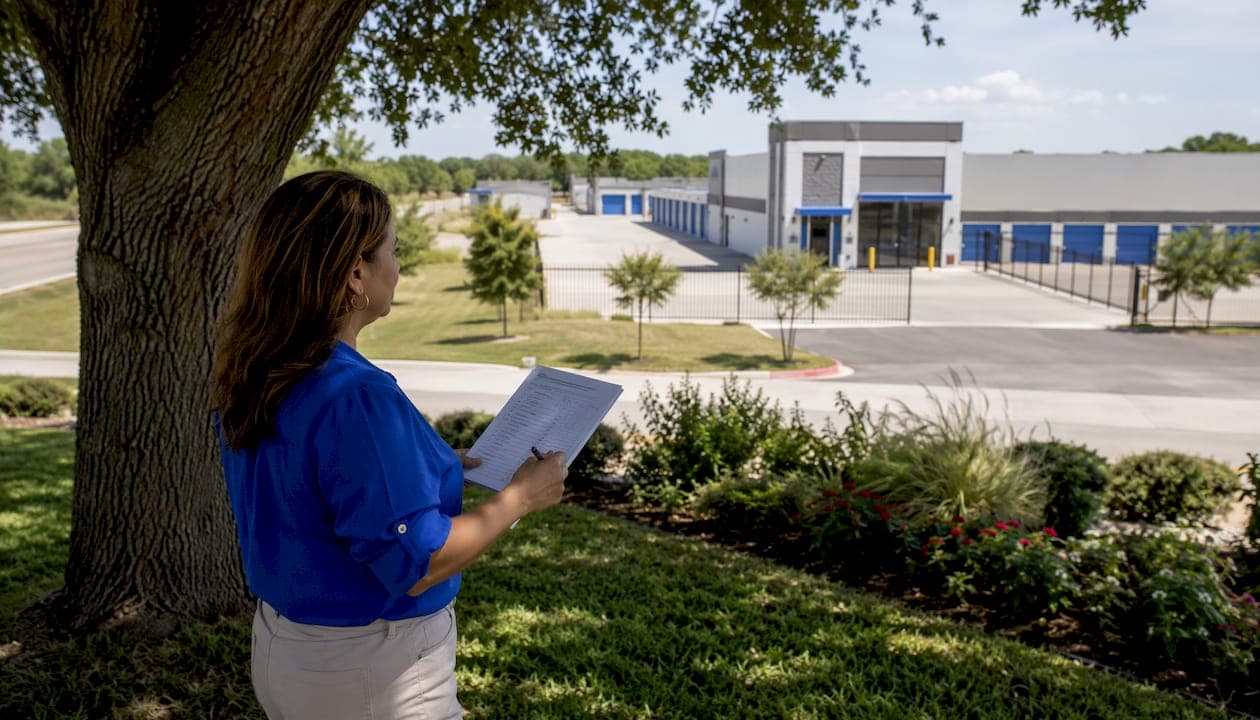
Before you sign anything, run through this checklist. These are the common questions before renting storage that prevent the most painful surprises: hidden fees, access lockouts, and damaged belongings.
Quick checklist — the questions that matter most:
- What is the total move-in cost, including admin fees, deposit, and lock?
- When does the promotional rate end, and what is the standard rate?
- What are the gate hours, and are they different from office hours?
- How do I access the unit — keypad, app, key, or staff?
- Are cameras monitored, and is there on-site staff overnight?
- Does the unit have climate control, and what does that mean exactly?
- What size unit do I need, and can I see it before signing?
- What items are prohibited?
- Does my homeowners or renters insurance cover off-site storage?
- What is the notice-to-vacate requirement?
- What happens if I miss a payment?
- Can I visit the facility before committing?
TL;DR: The single most important thing to verify is your total move-in cost and whether gate hours actually match when you need to access your unit.
Table of Contents
- 1. What should you ask the storage facility directly?
- 2. What should you ask yourself before you start shopping?
- 3. How do you pick the right unit size and type?
- 4. What will you actually pay beyond the advertised rate?
- 5. How should you pack and organize the unit?
- 6. What can't you store, and how does insurance actually work?
- 7. What should you check when you visit the facility?
- 8. What mistakes do most renters make before moving in?
- 9. What do storage experts recommend you verify before signing?
- Key Takeaways
- The questions renters skip are the ones that cost them
- Sources and further reading
1. What should you ask the storage facility directly?
Security and access questions deserve the most attention because the answers vary more than renters expect. Ask specifically: What are the gate hours versus office hours? These are two separate things — you may be able to enter the gate at 10 PM but find no staff available to help with a billing issue, a stuck elevator, or a broken lock. Confirm both sets of hours in writing.

On security, go beyond "do you have cameras?" Ask whether cameras are actively monitored or just recorded. Ask about individual unit alarms, lighting in the hallways and parking lot, and whether access events are logged by unit. A facility that can tell you exactly when your unit was last accessed is meaningfully more secure than one that shrugs at the question.
For fees, the advertised rate is rarely the full picture. Ask about admin fees, deposits, lock or key fees, mandatory insurance charges, and late fees. Then ask when any move-in promotion ends and what the standard rate kicks in. Facilities commonly reserve the right to raise rates with notice, so ask how that notice is delivered and how much lead time you get.
On operational policies, ask about the notice-to-vacate requirement, lien procedures for unpaid rent, and whether deliveries can be accepted on your behalf. Most facilities do not provide tenant dumpsters, so plan to remove everything yourself when you vacate.
Pro Tip: A facility that gives vague answers about rate increases or is evasive about camera coverage is showing you something. Treat hesitation on security and pricing as a red flag, not a minor inconvenience.
2. What should you ask yourself before you start shopping?
Before comparing facilities, get clear on your own needs. The answers change which features matter most and how much you should spend.
- What am I storing? Electronics, wood furniture, artwork, and documents need climate control. Seasonal gear and metal tools usually do not.
- How often will I access the unit? Weekly access makes drive-up units and convenient location a priority. Long-term, rarely-touched storage makes climate control and price more important.
- How long will I rent? Short-term renters should focus on month-to-month flexibility and low move-in costs. Long-term renters should ask about rate-increase history.
- What is my realistic budget? Calculate month one, month two, and a 90-day total — not just the advertised monthly rate.
- Do I need vehicle storage? That requires a specific unit type with different access rules.
Spend 20 minutes doing a rough inventory before you call a single facility. Knowing what you have and how often you need it makes every other decision faster. For more context on why people rent and what drives those decisions, the reasons people rent storage guide is worth a quick read.
3. How do you pick the right unit size and type?
Inventory first, then size. The most common mistake is guessing and renting too large or too small. Here is a practical reference:
| Unit Size | Typical Contents | Best Access Type |
|---|---|---|
| 5'x5' (locker) | Boxes, small furniture, seasonal items | Indoor |
| 5'x10' | Studio apartment contents, appliances | Indoor or drive-up |
| 10'x10' | 1–2 bedroom apartment contents | Drive-up or indoor |
| 10'x20' | 3-bedroom home, vehicle, large furniture | Drive-up |
| 10'x30' | Full house contents, multiple vehicles | Drive-up |
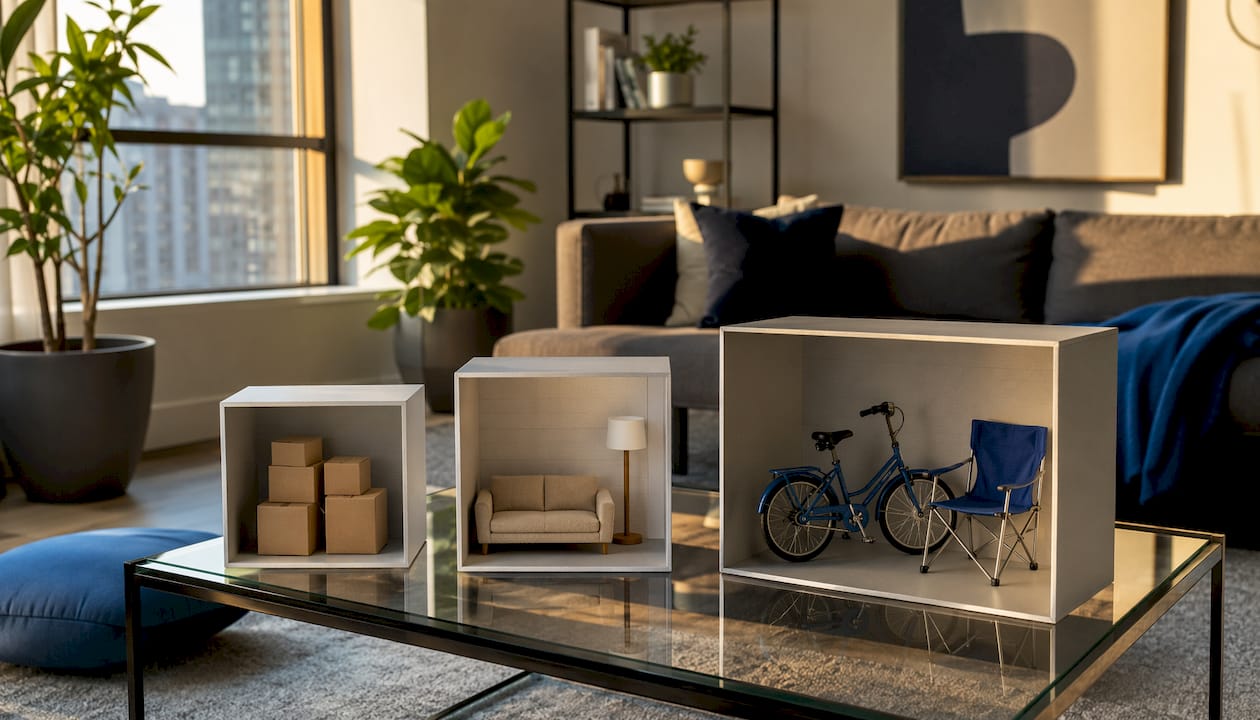
Unit sizes typically range from small lockers to garage-sized spaces, and most facilities recommend inventorying your goods before choosing a footprint.
Access type matters as much as square footage. Drive-up units let you pull a vehicle directly to the door — ideal for heavy items or frequent access. Indoor units on upper floors offer extra protection from weather and theft but require elevator access, which may not be staffed outside office hours. Vehicle storage has its own rules around insurance, registration, and what can be left inside.
Before move-in, verify ceiling height, door width, and whether interior shelving is permitted. A 10'x10' unit with an 8-foot ceiling holds meaningfully less than one with a 10-foot ceiling. For a deeper breakdown of when indoor units make sense, the indoor vs. outdoor storage comparison covers the trade-offs clearly.
4. What will you actually pay beyond the advertised rate?
The advertised monthly rate is the floor, not the ceiling. Compare move-in, month-two, and 90-day totals across facilities to get an honest picture of cost.
Ask about every line item before you sign:
- Admin or setup fee — often $15–$30, sometimes waived for online bookings
- Deposit — refundable or not? Under what conditions?
- Lock or key fee — some facilities require their own lock
- Mandatory insurance — monthly charge, often $10–$20, sometimes bundled
- Prorated billing — is your first month prorated from move-in date?
- Late fees — how many days of grace, and what is the fee?
- Transfer or upgrade fees — if you need a larger unit mid-lease
Autopay discounts and online-booking discounts are real at many facilities, so ask. Also ask whether the promotional rate you see online is a first-month special or a longer-term price, and get the standard rate in writing. Rate increases happen; the question is how much notice you receive and how often they occur.
5. How should you pack and organize the unit?
Good packing prevents damage and saves you time every time you access the unit. The basics: use sturdy, uniform-sized boxes so they stack cleanly, label all four sides (not just the top), and photograph the contents of each box before sealing it. That photo inventory is also your best evidence for an insurance claim.
Protect against moisture by placing items on pallets or a tarp rather than directly on the concrete floor. Use breathable covers for upholstered furniture — plastic traps moisture and causes mildew. Disassemble large furniture to save floor space and reduce the risk of damage during loading.
Loading order matters. Place items you will need first near the front of the unit, and create a center aisle if you plan to access the unit regularly. Shelving units dramatically increase usable vertical space and keep boxes off the floor.
Pro Tip: Before your move-in day, call the facility and confirm cart and dolly availability, loading bay access, elevator hours, and truck parking. Showing up with a 26-foot truck to find a low-clearance garage entrance is a fixable problem — if you ask in advance.
6. What can't you store, and how does insurance actually work?
Common prohibited items include perishable food, liquids, hazardous materials (gasoline, paint, propane), plants, animals, illegal items, and belongings that exceed facility-specific value limits. Every facility has its own official list — ask for it in writing, not just a verbal summary.
Insurance is where renters get caught off guard. Your homeowners or renters policy may not automatically cover items stored off-site; confirm coverage limits and exclusions with your insurer before you move anything in. Many policies do cover off-site storage but cap the amount at a percentage of your total personal property coverage, which may be far less than the value of what you are storing.
If the facility requires you to carry insurance, ask whether their plan is through a third-party insurer or an in-house program, and what loss types are excluded. Flood and earthquake coverage is commonly excluded even from paid plans.
- Keep a written inventory with estimated values
- Photograph high-value items individually
- Save receipts for anything expensive
- Ask your insurer for written confirmation of off-site coverage
Pro Tip: If the facility's required insurance plan excludes flood damage and your unit is on the ground floor, that is a meaningful gap. Ask, then decide.
7. What should you check when you visit the facility?
Visit in person before signing. The physical condition of a facility tells you more than any marketing page. Walk the property and check:
- Lighting in hallways, stairwells, and the parking lot
- Camera placement and whether they cover unit doors and entry points
- Gate function — does it open and close cleanly, and is there a backup entry method?
- Cleanliness of common areas and the specific unit you are renting
- Evidence of pest control (bait stations, no droppings or odors)
- Staff responsiveness — did someone greet you, or did you wander for ten minutes?
Red flags that should give you pause: water stains on walls or ceilings, pervasive musty odors, dumpsters near unit rows (which attract pests), inconsistency between the online quote and what the lease states, and evasive answers about fees or security.
Document the unit condition with timestamped photos before you move anything in. Note any existing damage on the move-in form and get a copy. Save any online quotes as screenshots — if the charge at move-in differs from what you were quoted, you have evidence. For a thorough facility evaluation framework, the storage facility evaluation guide walks through each step.
Pro Tip: Ask the staff member what pest-control schedule the facility follows. A specific answer ("monthly perimeter treatment by a licensed exterminator") signals a well-run operation. A vague one ("we take care of it") does not.
8. What mistakes do most renters make before moving in?
Most problems are preventable. Here are the ones that come up most often, and the fix for each:
- Renting the wrong size — Do a quick inventory before you call. Guessing almost always means renting too large and overpaying, or too small and scrambling.
- Assuming insurance is covered — Call your insurer before move-in. Confirm off-site coverage in writing.
- Ignoring access hours — Verify gate hours match when you actually need to get in, not just when the office is open.
- Skipping the unit inspection — Walk the unit before signing. Photograph everything. Note damage on the move-in form.
- Comparing only the advertised rate — Get the full fee breakdown and compare 90-day totals across at least three facilities.
- Not reading the lease — Check the notice-to-vacate requirement, rate-increase clause, and lien procedure before you sign.
Comparing at least three facilities using the same checklist is the single most effective way to avoid price and policy surprises. The questions are the same; the answers will differ more than you expect.
9. What do storage experts recommend you verify before signing?
A few items that standard checklists underemphasize:
Climate control specifics. "Climate controlled" means different things at different facilities. Some maintain a temperature range only; others control humidity as well. For wood furniture, electronics, artwork, and important documents, humidity control is what actually prevents warping, mold, and degradation. Ask for the specific temperature and humidity range the facility maintains, and ask to see the HVAC equipment if you have doubts. The benefits of climate-controlled storage guide explains when it is worth the premium and when it is not.
Lock choice. A disc lock resists bolt-cutter attacks and fits storage door latches better than a standard padlock. If the facility does not require a specific lock, buy a quality disc lock before move-in.
Screenshot your online quote. Rates shown during online booking occasionally differ from what appears on the lease. Save the quote, compare it line by line with the lease, and ask about any discrepancy before signing.
Pro Tip: Ask when the promotional rate ends and what the standard rate is on day one of your search, not after you have already moved in. That single question changes the math on which facility is actually cheapest.
Key Takeaways
Asking the right questions before renting storage prevents the three most common problems: unexpected fees, access limitations, and uninsured losses.
| Point | Details |
|---|---|
| Compare total costs, not just monthly rates | Get the full fee breakdown and compare 90-day totals across at least three facilities. |
| Verify gate hours vs. office hours | Confirm both sets of hours match when you actually need access and staff support. |
| Confirm insurance coverage before move-in | Call your insurer to verify off-site coverage limits and exclusions in writing. |
| Document the unit condition at move-in | Take timestamped photos and note any damage on the move-in form before unloading. |
| Ask when the promotional rate ends | Get the standard rate in writing on day one so you can compare true long-term costs. |
The questions renters skip are the ones that cost them
Most people walk into a storage facility focused on price and size. Those matter, but the questions that actually protect you are the ones about what happens after you sign: when rates change, what insurance covers, whether the gate hours match your schedule, and what the facility does when something goes wrong.
The storage industry has gotten better at transparency, but it is still a market where the advertised rate and the real cost can diverge significantly by month two. The facilities that answer every question on this list clearly and specifically are almost always the ones worth renting from. The ones that hedge, deflect, or say "we'll figure that out when you move in" are telling you something.
If you operate a storage facility and want renters to find you when they are asking exactly these questions, that is where Corvanesystems comes in. We help storage operators get found on Google and inside AI tools like ChatGPT and Perplexity, so that when someone searches "storage near me" or asks an AI assistant for a recommendation, your facility surfaces with the right information already in place.
Sources and further reading
- GEICO — Renting a storage unit: What to know — Covers insurance, climate control, lock selection, and unit sizing basics.
- SmartStorage — What to ask before renting a storage unit — Detailed checklist covering fees, access, security, and insurance questions.
- StorageMart — Questions to ask before renting — Practical facility-visit guidance and questions to ask on-site.
- Realtor.com — Crucial questions to ask before renting a storage unit — Covers operational policies including disposal rules and move-out requirements.
- Public Storage — Storage FAQs — Standard prohibited items list and facility policy reference.
- Corvanesystems — How to evaluate a storage facility — Step-by-step evaluation checklist for renters comparing facilities.
- Corvanesystems — Benefits of climate-controlled storage — In-depth guide on when climate control is worth the premium.
- Compass Business Acquisitions — Self-storage business listings — For readers interested in the operator side of the self-storage market.