Storage units near me are locally accessible self-storage facilities that offer secure, flexible space for personal belongings, household goods, or business inventory. The self-storage industry provides two primary categories: standard units and climate-controlled units, each suited to different needs and budgets. Standard units typically cost between $80 and $150 per month, while climate-controlled units run $70 to $100 more per month on average. That price gap reflects real protection. Climate-controlled facilities maintain temperatures between 55°F and 85°F and humidity between 30% and 50%, conditions that prevent warping, mildew, and corrosion on sensitive items. Knowing which type you need before you sign a lease saves both money and frustration.
What types of storage units are available near me?
Local storage facilities offer more variety than most renters expect. The right unit type depends on what you are storing, how long you plan to store it, and how often you need access.
The four most common unit categories are:
- Standard storage units. Unheated, uncooled spaces suited for durable items like tools, sports equipment, and plastic-boxed household goods. These are the most affordable option.
- Climate-controlled units. Enclosed spaces with active temperature and humidity regulation. Best for electronics, wood furniture, documents, leather, and fabric.
- Drive-up units. Ground-level spaces with direct vehicle access. Ideal for heavy items, frequent access, or loading large furniture without stairs or elevators.
- Indoor multi-story units. Accessed through hallways and elevators inside a building. These offer better protection from outdoor elements and are common in urban facilities.
Pro Tip: If you need to access your unit more than twice a month, prioritize a drive-up or ground-level space. The time saved on loading and unloading adds up quickly over a six-month rental.
Most facilities also offer a range of unit sizes, from small 5x5 lockers (roughly the size of a large closet) up to 10x30 spaces that hold the contents of a four-bedroom home. Security features at reputable local facilities include electronic gate access, keypad entry, video surveillance cameras, and individual unit alarms. Checking the indoor vs. outdoor comparison for your specific items before committing to a unit type is worth the few minutes it takes.
How does climate-controlled storage protect your belongings?
Climate-controlled storage is defined as a unit that actively maintains a consistent temperature range of 55°F–85°F and a relative humidity of 30%–50%. Most people assume this means the unit is simply air-conditioned. The reality is more specific: climate control acts as a buffer against temperature and humidity extremes rather than a direct heating or cooling system, and many facilities also run dehumidification equipment to prevent mildew buildup.
The items that benefit most from these conditions include:
- Electronics. Heat and humidity cause circuit board corrosion and battery degradation.
- Wood furniture. Humidity swings cause warping, cracking, and joint separation.
- Documents and photos. Paper yellows and ink fades rapidly in hot, damp environments.
- Leather and fabric. Mold and mildew grow on organic materials in unregulated spaces.
- Musical instruments. Wood-bodied instruments like guitars and violins are especially vulnerable to humidity shifts.
Climate-controlled storage is recommended for items stored longer than a few months, particularly in regions with hot summers or cold winters. A unit that costs $70 to $100 more per month is a reasonable trade-off when the alternative is replacing a $2,000 antique dresser or a $1,500 laptop.
Packing choices also affect how well climate control works. Breathable packing materials promote airflow inside the unit, while sealed plastic bins trap moisture against your belongings. Use cardboard boxes, cotton moving blankets, and furniture covers with ventilation panels wherever possible.
Pro Tip: Leave a few inches of space between boxes and the unit walls. That gap allows air to circulate and prevents moisture from migrating from the concrete or metal surfaces into your stored items.
For a deeper breakdown of when climate control is worth the cost, the 2026 guide to climate-controlled benefits covers the full range of scenarios.
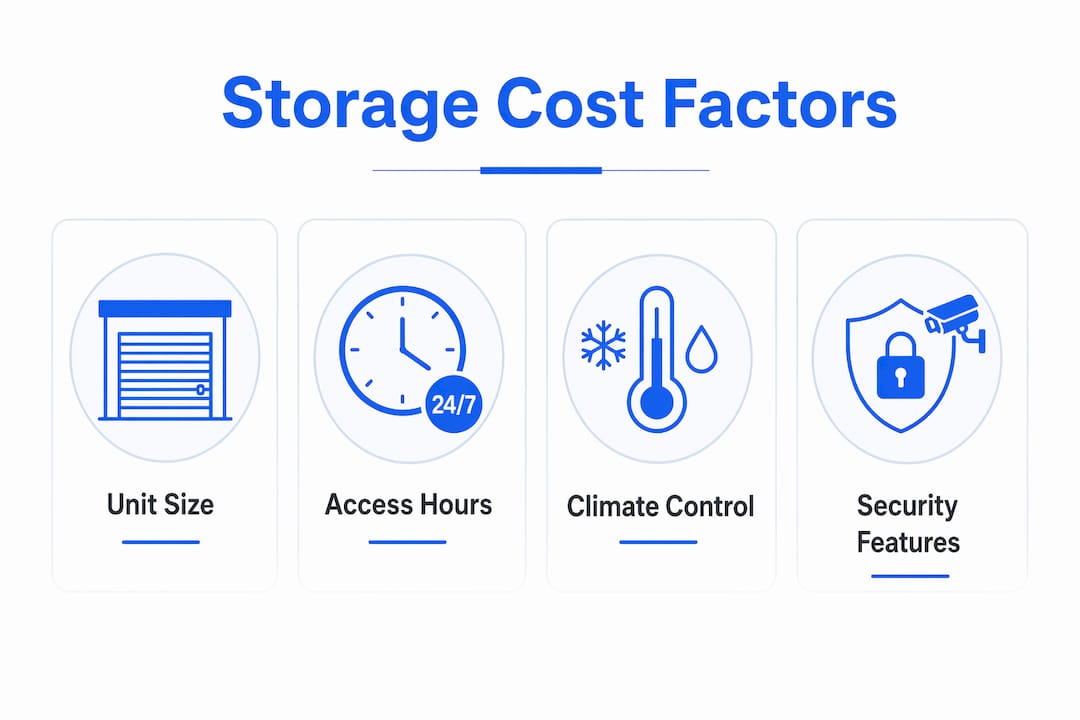
What factors affect the cost of local storage units?
Pricing for self storage nearby is rarely as simple as the advertised monthly rate. Understanding the full cost structure before you sign prevents unpleasant surprises on your first bill.
Here is what to verify before renting:
- Base rental rate. The advertised price is usually the starting point, not the total. Standard units run $80–$150 per month. Climate-controlled units add $70–$100 to that baseline.
- Administrative fees. Many facilities charge a one-time setup fee of $15–$30 when you open an account. Ask about this before signing.
- Required insurance. Some facilities require renters to carry storage insurance, either through the facility's own plan or a third-party provider. This typically adds $10–$20 per month.
- Lock purchase. Certain facilities require a specific lock type and sell it on-site. Budget an additional $15–$30 if you do not already own a disc lock.
- Rate increase clauses. Month-to-month leases often include provisions that allow the facility to raise rates with 30 days' notice. Facilities that offer rate guarantees over a fixed term, such as 12 months, provide more predictable costs.
Pricing transparency is one of the strongest predictors of customer satisfaction in the self-storage market. Facilities that clearly list all fees upfront, without burying them in contract footnotes, consistently earn higher trust ratings. If a facility's website does not show a complete fee breakdown, call and ask before visiting. A facility that is evasive about pricing on the phone will likely be evasive about rate increases later.
How do local storage facilities keep your belongings secure?
Security is the core promise of any storage rental. A facility that cannot protect your belongings from theft, vandalism, or environmental damage is not worth the monthly rate, regardless of how low it is.
The security features that matter most at local facilities include:
- Video surveillance. Cameras covering entry points, driveways, and unit corridors deter theft and provide evidence if an incident occurs.
- Electronic gate access. Coded entry limits facility access to active renters and staff. Facilities with 24-hour gate logs can trace every entry and exit.
- Individual unit alarms. Some facilities equip each unit with a sensor that triggers an alert if the door is opened without the correct code. This is a significant upgrade over shared perimeter security alone.
- On-site management. Staffed facilities during business hours add a human layer of oversight that cameras alone cannot replace.
- Pest control and cleanliness. Standardized maintenance protocols that include regular pest control and clean, lit corridors directly affect how well your belongings survive long-term storage.
Access hours also matter. Some facilities offer 24/7 access, while others restrict entry to business hours. If you run a small business and need to retrieve inventory at 7:00 AM before a delivery, a facility with limited hours creates real operational problems. Confirm access hours before committing. For a full checklist of what to look for, the storage facility security guide covers every major feature category.
How to choose the best storage unit near me
Choosing the right self-storage unit comes down to matching your specific situation to the right combination of size, features, price, and location. A systematic approach prevents the most common mistake: renting the cheapest available unit and discovering it is the wrong type for your belongings.
Follow these steps:
- List what you are storing. Separate items into two groups: durable goods that tolerate temperature swings, and sensitive items that need climate control. This single step determines which unit type you need.
- Estimate the unit size you need. A 10x10 unit holds the contents of a one-bedroom apartment. A 10x20 holds a two-to-three bedroom home. When in doubt, size up by one tier.
- Compare at least three local facilities. Visit in person when possible. A facility that looks clean and well-lit online can tell a different story in person.
- Read the full lease before signing. Look specifically for rate increase clauses, required notice periods, and any fees not listed on the website.
- Check recent reviews. Focus on reviews from the past six months. Facilities change management, and a strong reputation from two years ago may not reflect current conditions.
Pro Tip: Ask the facility manager directly: "Have rates increased for existing customers in the past 12 months, and by how much?" Their answer tells you more than any online review.
The facility evaluation guide provides a structured checklist for comparing local options side by side, including questions to ask during a site visit.
Key Takeaways
The best storage unit near you balances the right unit type, transparent pricing, strong security, and access hours that fit your schedule.
| Point | Details |
|---|---|
| Match unit type to your items | Use climate-controlled storage for electronics, wood, documents, and fabric stored longer than a few months. |
| Know the full cost | Standard units run $80–$150 per month; climate-controlled units add $70–$100 more, plus fees and insurance. |
| Verify security features | Look for video surveillance, electronic gate access, individual unit alarms, and on-site management. |
| Demand pricing transparency | Ask about all fees upfront and check for rate guarantee clauses before signing any lease. |
| Visit before you commit | In-person visits reveal cleanliness, maintenance quality, and access conditions that online listings do not show. |
What I have learned after years of evaluating storage facilities
Most people approach storage rental the same way they approach buying a phone case: they pick the cheapest option that looks adequate and move on. That works fine for a phone case. It does not work for a unit holding $10,000 worth of furniture or a year's worth of business inventory.
The single most overlooked factor in storage selection is dehumidification. Renters focus on temperature because it is easy to understand, but humidity is what actually destroys belongings. A unit held at a steady 72°F with 70% humidity will damage wood furniture faster than a unit that swings between 60°F and 80°F at 40% humidity. Ask any facility with climate-controlled units whether they run active dehumidification or simply rely on HVAC airflow. The answer separates serious operators from facilities that use "climate-controlled" as a marketing label.
Pricing transparency is the second thing I look at. Facilities that bury administrative fees, insurance requirements, and rate-increase clauses in fine print are telling you something about how they operate. The best operators list every cost on their website and answer fee questions directly over the phone. That transparency does not happen by accident. It reflects a management culture that values long-term customer relationships over short-term revenue from confused renters.
The third thing most guides skip entirely: your packing choices inside a climate-controlled unit matter as much as the unit itself. Sealed plastic totes trap moisture against your belongings. Cardboard boxes and breathable covers let the climate control system actually do its job. The unit is only half the equation.
— Mike
How Corvanesystems helps storage facilities get found by renters like you
When you search for local storage options, the facilities that appear at the top of Google or inside an AI answer are not always the best ones in your area. They are the ones with the strongest digital presence.
Corvanesystems is an SEO and AI search visibility agency built specifically for self-storage operators. The agency combines traditional local SEO with Generative Engine Optimization (GEO), so that when a renter asks ChatGPT, Perplexity, or Google's AI Overviews where to find a storage unit, the right facilities surface. For storage operators who want their facility to appear when renters are actively searching, Corvanesystems' AI visibility tools close the gap between a great facility and the renters who need it.
FAQ
What is the average cost of a storage unit near me?
Standard self-storage units typically cost between $80 and $150 per month. Climate-controlled units add $70 to $100 to that base rate, plus any administrative fees or required insurance.
When does climate-controlled storage make sense?
Climate-controlled storage is the right choice for electronics, wood furniture, documents, leather, and fabric, especially when storing items for longer than a few months or in regions with extreme seasonal temperatures.
What security features should I look for in a local storage facility?
Look for video surveillance, electronic gate access with coded entry, individual unit alarms, on-site management during business hours, and documented pest control and maintenance protocols.
How do I avoid hidden fees when renting a storage unit?
Ask the facility for a complete written breakdown of all charges before signing, including administrative fees, insurance requirements, and any rate-increase clauses in the lease agreement.
How do I know what size storage unit I need?
A 5x10 unit holds the contents of a small bedroom or office. A 10x10 fits a one-bedroom apartment. A 10x20 accommodates a two-to-three bedroom home, including large furniture and appliances.