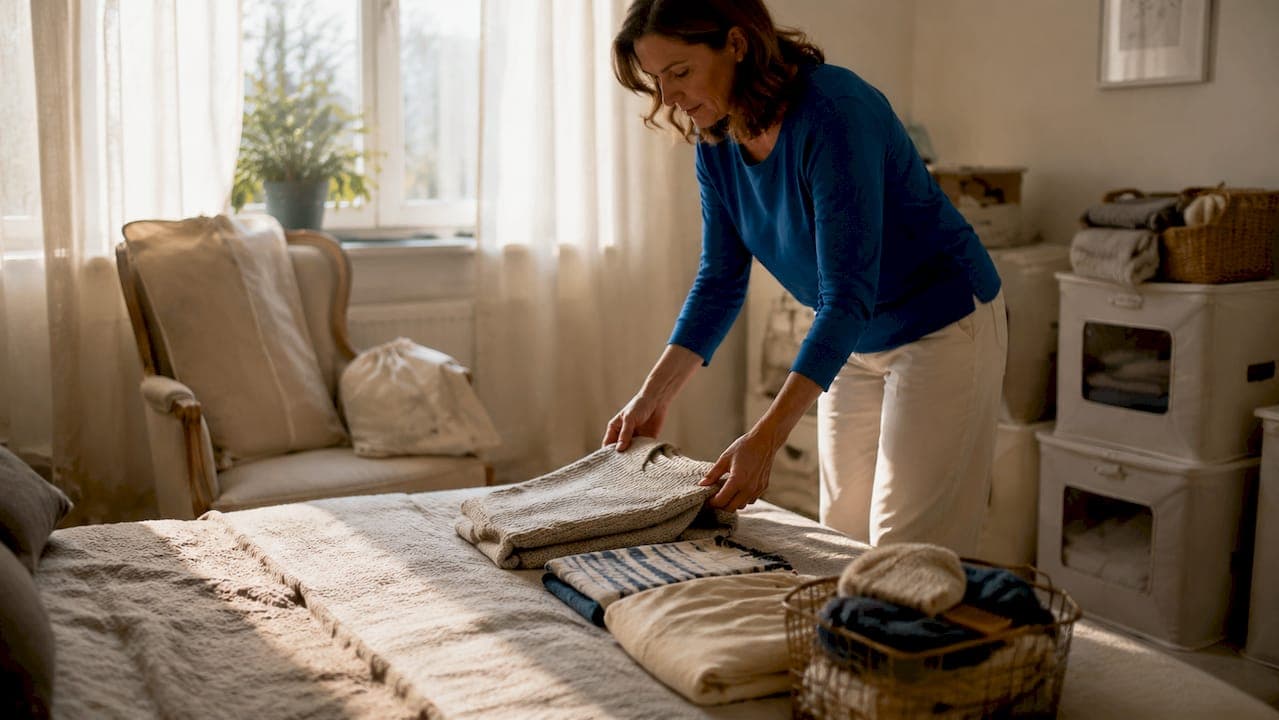
Effective long-term clothing storage is defined as preserving garments for months to years without damage from mold, mildew, creasing, or yellowing. Achieving that requires three things working together: climate control, the right containers, and proper garment preparation. Skip any one of them and you risk ruining items that took years to collect. The good news is that the methods are straightforward. Whether you are storing a wedding dress, a winter coat, or an entire seasonal wardrobe, the same core principles apply. Tools like cedar blocks, silica gel packets, and breathable garment bags are the foundation of any solid preservation plan.
What are the ideal environmental conditions for storing clothes long term?
Temperature and humidity are the two variables that determine whether your clothes survive long-term storage intact. Clothing stored longer than 30 days should be kept in climate-controlled environments between 55–80°F to prevent mold, mildew, and yellowing. That range is the outer boundary. For home storage of high-value items like silk blouses or wool suits, ideal conditions are 65–75°F with 40–50% relative humidity. Staying within that humidity band prevents two opposite problems: too dry causes fibers to become brittle, while too moist invites mold.
Most people default to basements, attics, or garages because they have extra space. All three are poor choices for long-term clothing preservation. Basements flood and hold humidity. Attics swing between extreme heat in summer and freezing cold in winter. Garages expose clothing to exhaust fumes and pests. A climate-controlled indoor unit maintains consistent temperature and humidity year-round, making it the most reliable option for anything you plan to store beyond one season.
Key environmental factors to monitor:
- Temperature: Keep between 65–75°F for home storage of delicate fabrics
- Relative humidity: Target 40–50% to prevent both mold and fiber brittleness
- Light exposure: Store away from windows; UV light fades and degrades fabric dyes
- Air circulation: Avoid sealed, airless spaces that trap moisture against fabric
- Pest access: Use cedar blocks or lavender sachets as natural deterrents in any storage space
Which containers and materials best preserve clothing over multiple years?
The container you choose matters as much as the environment. Breathable storage materials like unbleached cotton canvas prevent humidity buildup and chemical off-gassing better than airtight plastic. That makes cotton canvas and muslin bags the best choice for natural fibers like linen, cotton, and silk. These fabrics need to breathe. Sealing them in plastic traps any residual moisture and accelerates fiber decay.
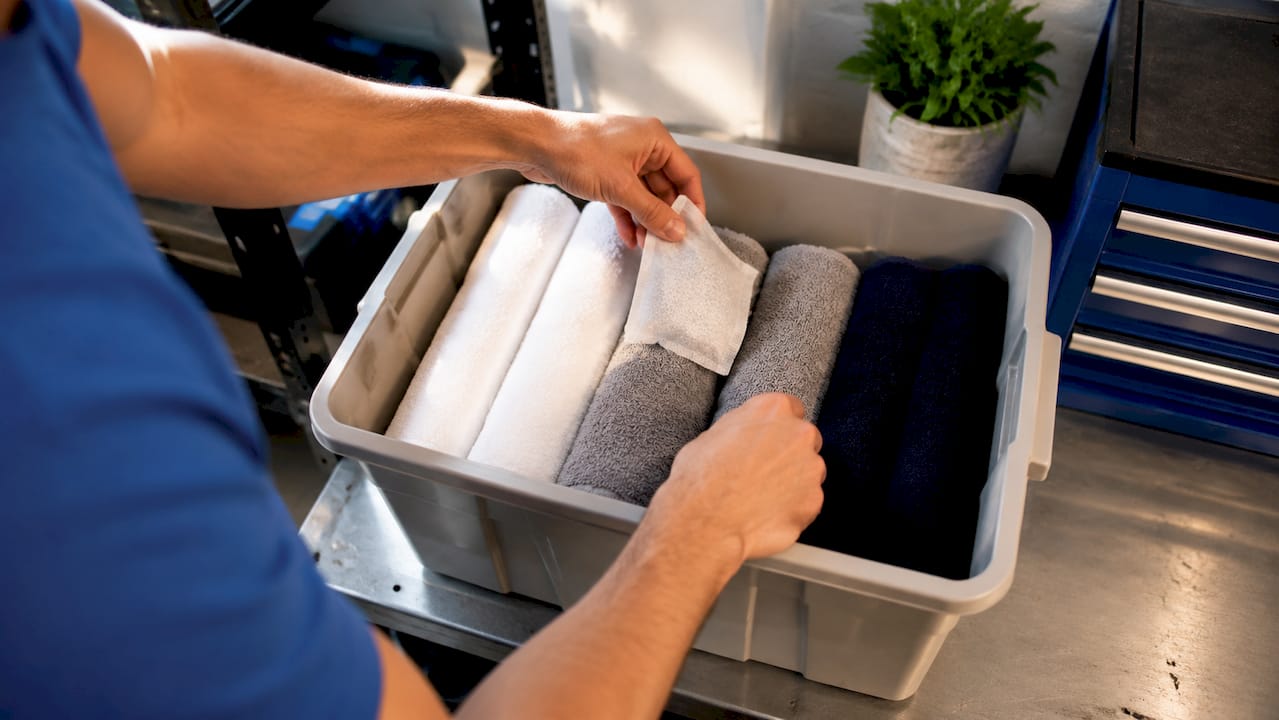
Airtight polypropylene bins do have a place in long-term clothing organization, but only when paired with silica gel desiccant packets. The silica gel absorbs any moisture that enters when you open and close the bin. Without it, plastic bins become humidity traps. Replace silica gel packets every six to twelve months depending on your storage environment.
| Container type | Best for | Avoid for | Key requirement |
|---|---|---|---|
| Cotton canvas garment bags | Silk, wool, linen, formal wear | Synthetic blends in damp spaces | Hang in climate-controlled space |
| Polypropylene bins with lids | Synthetic fabrics, accessories | Natural fibers without desiccant | Include silica gel packets |
| Wardrobe boxes | Suits, dresses, coats | Folded knitwear | Use padded wooden hangers |
| Vacuum storage bags | Synthetic bedding, bulky items | Wool, cashmere, silk, down | Never exceed six months |
| Acid-free archival boxes | Heirloom garments, vintage pieces | Everyday seasonal rotation | Line with acid-free tissue paper |
Vacuum storage bags are unsuitable for natural fibers like wool, silk, or down if storage exceeds six months. The compression crushes fiber loft permanently and causes irreversible structural damage. Cashmere sweaters stored in vacuum bags for a full winter often emerge flat and misshapen, with no recovery. Reserve vacuum bags for synthetic fabrics and bulky items you plan to retrieve within a few months.
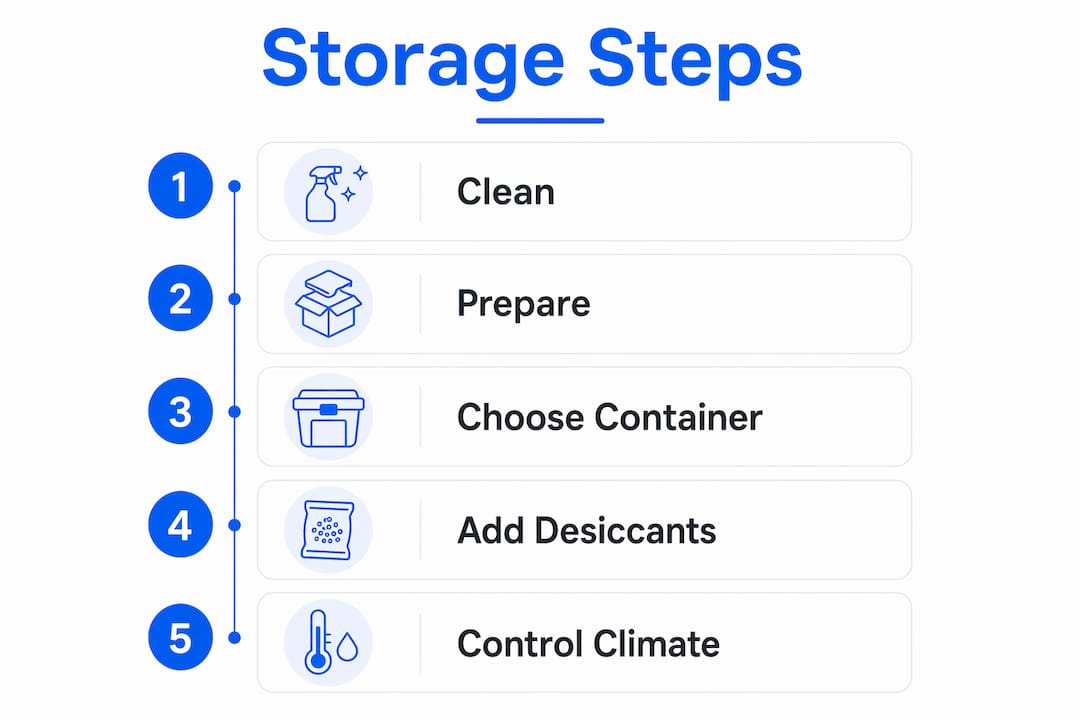
Pro Tip: Place cedar blocks or dried lavender sachets inside every container. Cedar repels moths naturally without the chemical residue that mothballs leave on fabric. Replace cedar blocks every six months by lightly sanding the surface to restore the scent.
How to prepare clothes before putting them into long-term storage
Preparation is the step most people skip, and it causes the most damage. Stains, body oils, and food residue that seem invisible when you pack a garment will oxidize over months and become permanent yellow stains. Every item must be clean and fully dry before it goes into storage. Even slight dampness leads to mold within weeks.
Follow this preparation sequence for every garment:
- Wash or dry-clean thoroughly. Remove all stains, oils, and perfume residue. Dry cleaning is the right choice for wool, silk, and structured garments.
- Dry completely. Air-dry for at least 24 hours after washing. Never pack a garment that feels even slightly cool to the touch, since that indicates residual moisture.
- Fasten every button and zipper. Fastening closures before storage maintains structural shape and prevents fabric distortion during months of hanging or folding.
- Fold knits with acid-free tissue paper. Folding sweaters with acid-free tissue paper between layers prevents crease abrasion and fiber thinning from friction. Stack no more than three to four sweaters per pile.
- Hang delicate and formal wear. Use padded wooden hangers inside wardrobe boxes. Wire hangers distort shoulder seams over time.
- Keep containers off floors and away from exterior walls. Storing clothing against exterior walls creates cold bridges that accelerate condensation risk inside containers, even in climate-controlled environments.
Pro Tip: Turn dark-colored garments inside out before folding. This reduces light exposure to the outer surface and slows fading, even in low-light storage spaces.
What are the best long-term clothing organization strategies?
Good organization turns a storage unit from a pile of mystery boxes into a system you can actually use. The 3-zone mapping system is the most effective framework for long-term clothing organization. It organizes access by frequency and eliminates the need to excavate multiple boxes every time you need something.
Zone A holds items you access frequently, such as off-season basics you might grab for a trip. Zone B contains seasonal items you swap twice a year, like winter coats or summer dresses. Zone C is archival storage for heirloom pieces, vintage clothing, or garments you keep but rarely wear. Place Zone A containers closest to the door, Zone B in the middle, and Zone C at the back or on the highest shelves.
Digital inventories combined with zone mapping eliminate the common problem of opening multiple boxes to find one item. Photograph the contents of each bin before sealing it, then store those photos in a labeled folder on your phone or a free app like Google Photos. Write the zone and a brief contents list on the outside of every container using a permanent marker or printed label.
Storage unit sizing also affects how well your organization system works:
- A 5x5 unit fits several bins of folded clothing and works for a single person's seasonal swap
- A 5x10 unit fits one to two wardrobes with hanging space, suitable for a couple or a small family
- A 10x10 unit suits full family wardrobe storage with room for shelving units
Before packing anything, edit your wardrobe. Removing unworn items older than 12 months before every storage cycle prevents capacity overload and poor airflow inside containers. Overfull bins compress garments, trap humidity, and increase damage risk. If you would not wear it when you retrieve it, do not store it.
How to avoid common mistakes in long-term clothing storage
The most damaging mistakes in clothes storage for long periods are predictable and preventable. Cardboard boxes are the most common error. Cardboard attracts pests, absorbs moisture, and contains acids that transfer to fabric over time. Replace every cardboard box with a polypropylene bin or a breathable fabric container.
Never store damp clothes. Moisture leads to mold within days in a sealed container. Even a garment that feels dry after machine washing may retain moisture in thick seams or collars. Air-dry everything for a full day before packing.
Overpacking a container is as damaging as using the wrong one. Compressed garments cannot circulate air, humidity builds inside the pile, and creases become permanent. Fill bins to 80% capacity and leave room for a silica gel packet on top.
Do not store containers directly on concrete floors. Concrete wicks moisture from the ground and transfers it to anything sitting on it. Use wooden pallets, wire shelving, or plastic risers to keep bins elevated at least a few inches. This applies even in indoor vs. outdoor storage units that appear dry. The combination of elevation, desiccant packets, and breathable containers removes nearly all moisture risk from a well-chosen storage environment.
Key takeaways
Effective long-term clothing storage requires climate control between 65–75°F, breathable or desiccant-equipped containers matched to fabric type, and thorough cleaning before packing.
| Point | Details |
|---|---|
| Climate control is non-negotiable | Store clothing at 65–75°F with 40–50% humidity to prevent mold and fiber damage. |
| Match container to fabric type | Use breathable cotton bags for natural fibers and polypropylene bins with silica gel for synthetics. |
| Clean before you pack | Oils and stains oxidize during storage and become permanent; wash and fully dry every item first. |
| Use the 3-zone system | Organize by access frequency to avoid excavating boxes and reduce handling damage. |
| Edit before you store | Remove items unworn for 12 months to prevent overpacking and poor airflow inside containers. |
What I've learned after years of watching storage go wrong
Most clothing storage failures come down to one thing: people treat storage as an afterthought. They grab whatever box is nearby, toss in clothes that may or may not be clean, and shove the container into the least convenient corner of their basement. Six months later they open it to find mildew stains on a favorite coat.
The single most valuable habit I have seen is ruthless wardrobe editing before every storage cycle. People resist it because it feels like a commitment. But storing items you will never wear again wastes space, reduces airflow around the things you care about, and increases the chance that compression damage spreads from a packed-in garment to a good one beside it.
I also think people underestimate how much the container choice matters for natural fibers. Wool and cashmere stored in vacuum bags for a full season come out permanently damaged. The fiber loft is gone. No amount of washing or steaming brings it back. Breathable cotton canvas bags cost very little and solve the problem entirely.
The 3-zone system sounds like extra work, but it pays off the first time you need to find something quickly. A digital photo inventory takes five minutes per bin and saves thirty minutes of box-digging later. Treat storage as preservation, not just packing, and your clothes will come out in the same condition they went in.
— Mike
How Corvanesystems helps self-storage operators get found

Self-storage facilities that offer climate-controlled units are the right answer for customers storing clothing, heirloom pieces, and seasonal wardrobes. But those customers have to find your facility first. Corvanesystems is an SEO and AI search visibility agency built specifically for self-storage operators. We combine traditional SEO with Generative Engine Optimization so your facility surfaces when someone searches "climate-controlled storage near me" on Google or asks an AI assistant for a recommendation. Visit Corvanesystems to see how we help storage operators turn online searches into booked units with flat-rate, no-contract service.
FAQ
What temperature is best for storing clothes long term?
The ideal temperature for long-term clothing storage is 65–75°F with 40–50% relative humidity. Staying within this range prevents mold, mildew, fiber brittleness, and yellowing.
Can you store clothes in plastic bins long term?
Yes, but only with silica gel desiccant packets inside the bin. Plastic bins trap moisture without desiccant, which leads to mold and fiber decay over time.
How long can you store clothes in vacuum bags?
Vacuum bags are safe for synthetic fabrics for up to six months. Natural fibers like wool, cashmere, silk, and down suffer irreversible compression damage if vacuum-sealed beyond six months.
Should you wash clothes before putting them in long-term storage?
Every garment must be washed or dry-cleaned and fully dried before storage. Body oils and food residue oxidize during storage and create permanent stains that cannot be removed later.
What is the 3-zone system for clothing storage?
The 3-zone system organizes storage by access frequency: Zone A for frequent use, Zone B for seasonal swaps, and Zone C for archival items. It reduces handling damage and eliminates the need to open multiple containers to find one item.