
Filling vacant units is the core revenue challenge for every self-storage operator, and the path to lease more storage units runs directly through your online presence. Facilities that make it fast and simple to rent additional storage space online consistently outperform those that rely on phone calls and walk-ins. The industry standard is a month-to-month lease structure, which gives renters the flexibility they want while keeping your occupancy numbers moving. Pair that with move-in promotions, accurate real-time availability, and a frictionless digital rental process, and you have the foundation to attract more renters and keep them longer.
How to lease more storage units with digital platforms
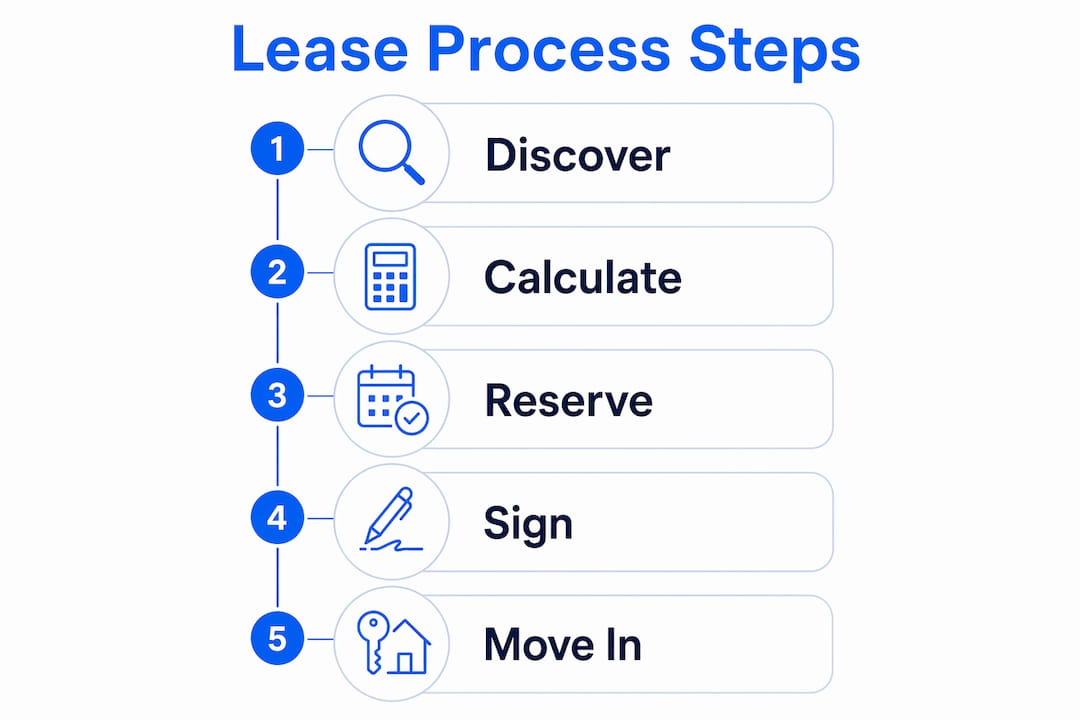
The fastest way to increase storage unit rentals is to remove every obstacle between a potential renter and a signed lease. The entire rental process can be completed online in under 10 minutes, including lease signing and payment setup. That speed matters because renters searching "find storage units near me" are often in an active moving situation and will book the first facility that makes it easy.
Remove friction from the first click
Operators who offer no security deposit requirements and fully remote lease signing see measurably better conversion rates. A renter who lands on your site at 10:00 PM should be able to pick a unit, sign digitally, and get access instructions without calling anyone. Every extra step in that process costs you a booking.
Real-time unit availability is non-negotiable. Online availability data from your direct website is consistently more accurate than third-party aggregator listings. When a renter sees a unit listed as available on an aggregator but finds it already taken, that experience destroys trust and sends them to the next facility on the list.
- Display live unit counts by size directly on your homepage
- Show a clear "Reserve Now" button without requiring account creation first
- Confirm reservations instantly via email or text with access details
- Avoid requiring a phone call to complete any part of the rental process
Pro Tip: Add a unit size calculator to your reservation flow. Renters who pick the wrong size cancel or transfer, which creates unnecessary churn. Giving them a visual guide upfront reduces that problem significantly.
Why flexible month-to-month leasing attracts more renters

Month-to-month leasing is the dominant model in self-storage because it matches how renters actually think about storage. Most people do not know exactly how long they will need a unit. A flexible lease removes the commitment barrier and makes your facility an easier yes.
Most self-storage rentals operate on a month-to-month basis, with a standard 10-day advance move-out notice required to avoid additional charges. That structure gives renters freedom and gives operators predictable notice windows for planning inventory. The tradeoff is that flexible month-to-month leases may include periodic price adjustments, which some renters find unpredictable.
"Balancing lease flexibility and pricing stability is key to appealing to diverse renter timelines and budgets. Operators who communicate rate adjustment policies clearly upfront retain tenants far longer than those who surprise them with increases."
Here is how to present lease options clearly to prospective renters:
- State the month-to-month structure on your pricing page, not buried in the lease agreement
- Explain the 10-day move-out notice requirement before the renter signs
- Describe your rate adjustment policy in plain language, including how often rates change
- Offer a comparison between month-to-month and any available longer-term pricing so renters can choose what fits their budget
Operators who educate renters before they sign reduce disputes and improve retention. A renter who understands the terms is far less likely to leave angry after a rate adjustment. For a deeper look at how flexible contracts serve different customer types, the month-to-month storage guide from Corvanesystems covers the full picture.
Promotions and pricing strategies that fill units faster
Move-in deals are the most direct tool for reducing vacancy. Move-in discounts commonly range from 50% off the first month to the first month completely free at select facilities. These offers work because they lower the perceived risk of committing to a new facility.
The key is placing those offers where renters see them during the decision moment, not after they have already committed. Your homepage, Google Business Profile, and any paid search landing pages should all display current promotions clearly.
| Promotion type | Best use case | Risk to watch |
|---|---|---|
| First month free | High-vacancy periods, new facility launches | Attracts short-term renters who leave after month one |
| 50% off first month | Competitive markets with price-sensitive renters | Margin compression if applied too broadly |
| Seasonal rate reduction | Late fall and winter when demand drops | Sets a price expectation that is hard to reverse |
| Referral discount | Existing tenant base with strong community ties | Requires active promotion to generate volume |
Seasonal pricing adjustments are a separate lever. Late spring and summer months see higher demand for certain unit sizes, which means you can hold rates firm or even push them slightly higher during peak periods. The off-peak months are when promotional pricing earns its keep by keeping occupancy from dropping too far.
Pro Tip: Run your move-in promotions on a defined schedule rather than leaving them permanent. A "limited time" framing on a first-month discount creates urgency. A discount that is always available becomes the expected price, which erodes your rate floor over time.
For a detailed breakdown of how to build a pricing structure that holds up across seasons, the storage pricing strategy guide from Corvanesystems is worth reviewing.
Managing unit availability and size options to retain tenants
Inventory management is where many operators lose renters they should have kept. A renter who needs a larger unit and cannot get one at your facility will move to a competitor. Customers can transfer between larger and smaller units within the same facility without penalty, and operators who make that process easy retain tenants through life changes that would otherwise trigger a move.
Offering a wide range of unit sizes from small lockers to large drive-up units is the baseline. The more important operational detail is keeping your availability data current so renters can trust what they see online.
- Update unit status in your management software the same day a unit is vacated
- Flag units under maintenance or cleaning as unavailable until they are ready
- Use a size guide or visual tool on your website to help renters pick correctly the first time
- Proactively contact renters on month-to-month leases when a larger or smaller unit opens up that fits their stated needs
| Unit size | Typical use case | Availability sensitivity |
|---|---|---|
| 5x5 to 5x10 | Seasonal items, small apartment overflow | High demand year-round |
| 10x10 | One-bedroom apartment contents | Peak demand in summer |
| 10x20 | Two-bedroom move, vehicle storage | Very high during spring moves |
| 10x30 | Full home contents, business inventory | Limited supply, books fast |
Offering online tools such as unit size calculators or visual guides significantly reduces renter anxiety and the rate of mismatched unit selections. A renter who picks the right size the first time is less likely to churn, transfer, or leave a negative review about wasted money.
Key Takeaways
Filling vacant units consistently requires a combination of digital accessibility, flexible lease terms, and accurate inventory management working together.
| Point | Details |
|---|---|
| Speed up digital leasing | Complete the full rental process online in under 10 minutes to convert more visitors into renters. |
| Communicate lease terms clearly | Explain month-to-month structure and the 10-day move-out notice before renters sign. |
| Use promotions with a time limit | First-month discounts and seasonal deals fill units faster when framed as limited offers. |
| Keep availability data current | Update unit status the same day a unit turns over to maintain booking accuracy. |
| Enable easy unit transfers | Allowing penalty-free size transfers retains tenants through life changes that would otherwise send them elsewhere. |
What I have learned after years of watching storage operators compete online
The operators who consistently fill units are not always the ones with the best facilities. They are the ones who make it easiest to say yes. I have seen well-maintained facilities sit at 60% occupancy while a less polished competitor across town runs at 95%, simply because the competitor's website let someone book a unit at midnight without calling anyone.
The month-to-month lease model is genuinely powerful, but most operators undersell it. Renters do not know that they can move out with 10 days' notice. They assume storage is a long commitment, like an apartment. The moment you explain that they can leave next month with no penalty, the hesitation drops. That one piece of communication converts more renters than any discount.
Promotions are also widely misused. Operators run a first-month-free deal permanently and then wonder why their average tenant stays only six weeks. The renters who respond to a permanent discount are often the ones who were never planning to stay. A time-limited deal attracts renters who are ready to commit but needed a small push. The distinction matters enormously for your long-term occupancy rate.
The piece that almost no operator gets right is inventory accuracy. Renters who show up and find their unit is not actually available do not give you a second chance. They leave a one-star review and book somewhere else. Keeping your availability data current is not a technology problem. It is a discipline problem, and it is completely within your control.
— Mike
How Corvanesystems helps you fill more units through search visibility
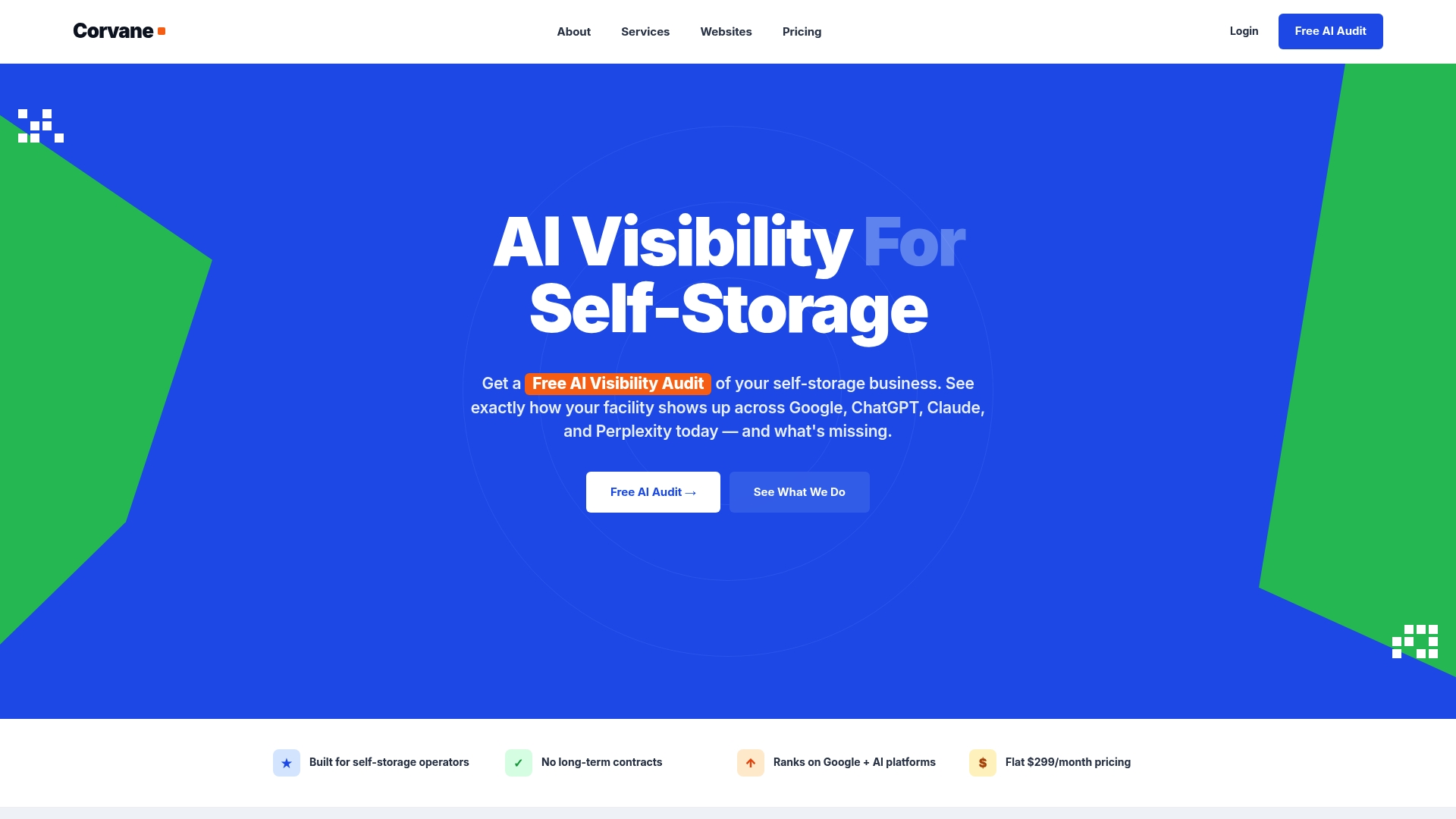
Most storage operators have a solid facility and a weak digital presence. Renters searching "find storage units near me" or asking an AI assistant for recommendations never see those facilities because they are not structured to appear in search results or AI-generated answers. Corvanesystems fixes that gap with a purpose-built SEO and AI visibility service for self-storage operators. The service includes technical SEO, Google Business Profile optimization, and 30 keyword-optimized articles published monthly so your facility appears when and where renters are making decisions. Pricing is one flat monthly rate with no contracts. Visit Corvanesystems to see how it works for storage operators specifically.
FAQ
How long does it take to rent a storage unit online?
The full online rental process typically takes under 10 minutes, including lease signing and payment setup. Facilities that offer no security deposit requirements complete the process even faster.
Are storage units typically month to month?
Most self-storage rentals operate on a month-to-month basis, giving renters flexibility without long-term commitment. A standard 10-day advance move-out notice is required at most facilities.
What move-in deals do storage facilities typically offer?
Move-in discounts commonly include the first month free or 50% off the first month for renters who reserve online. These deals are most effective when presented as time-limited offers rather than permanent pricing.
Can a renter switch to a different unit size after moving in?
Renters can transfer between larger and smaller units within the same facility without penalty at most operators. Making this process easy is one of the most effective ways to retain tenants through life changes.
How do I keep my online unit availability accurate?
Update unit status in your management software the same day a unit is vacated, and rely on your direct website rather than third-party aggregators. Direct availability data is consistently more accurate than aggregator listings and reduces booking errors that damage tenant trust.