
Long-term storage is defined as keeping belongings in a controlled environment for several months to years without active use. The best examples of long-term storage tips share three core principles: thorough preparation before packing, consistent climate control, and systematic organization. Temperature swings and humidity are the leading causes of warping, rusting, and mold growth in stored items. Getting these fundamentals right from the start determines whether your belongings survive storage intact or come out damaged.
1. Examples of long-term storage tips: start with thorough preparation
Preparation is the single most important step before anything goes into a storage unit. Dirty, damp, or assembled items are far more likely to degrade over time than clean, dry, and properly packed ones.
Follow these steps to prepare household items correctly:
- Clean everything. Wipe down furniture, appliances, and hard surfaces. Wash and fully dry all textiles. Residue and moisture accelerate mold and pest problems.
- Disassemble furniture. Remove legs, shelves, and hardware. This reduces structural stress and saves significant floor space.
- Wrap fragile items. Use moving blankets for furniture and bubble wrap for breakables. Avoid newspaper, which transfers ink and retains moisture.
- Keep appliance doors ajar. Refrigerators and washing machines trap residual moisture when sealed shut. Leaving doors slightly open prevents mildew buildup over years of dormancy.
- Elevate items off the floor. Place pallets or shelving under boxes and furniture. Items should sit at least 2–4 inches above the floor to reduce moisture exposure.
- Label every container. Write contents, date packed, and any handling notes on at least two sides of each box.
Pro Tip: Pack a small "first open" box with the items you will need soonest. Place it near the unit door and label it clearly. This saves you from unpacking half the unit to find one item.
For clothing specifically, vacuum-seal bags remove air and compress textiles without chemical treatment. Learn more about storing clothing long term before packing your wardrobe.
2. Choose the right packing materials and containers
The container you choose directly affects how well an item survives long-term storage. Not all boxes and bins offer the same protection.
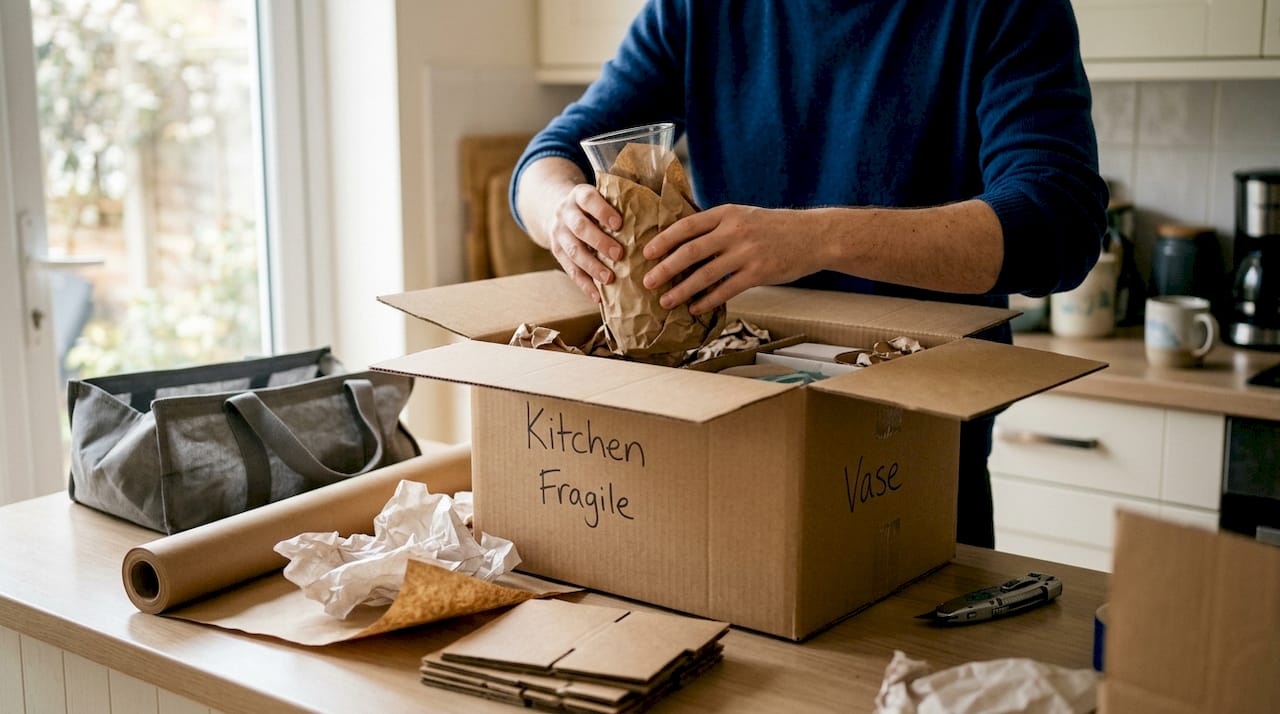
Cardboard boxes work for general household goods when kept dry. Double-walled boxes stack better and resist crushing under weight. Avoid single-wall boxes for anything heavy or fragile.
Plastic bins with tight-fitting lids outperform cardboard in humid environments. They block moisture and deter pests. Clear bins let you see contents without opening them, which speeds up retrieval.
Mylar bags with oxygen absorbers are the gold standard for dry food storage. They block light, oxygen, and moisture far better than standard plastic bags or containers.
Acid-free folders and archival sleeves protect documents and photographs from yellowing and brittleness. Store papers upright in dedicated containers rather than flat under heavy items.
| Container type | Best use | Key advantage |
|---|---|---|
| Double-wall cardboard box | General household goods | Affordable, stackable |
| Plastic bin with lid | Humid environments | Moisture and pest resistant |
| Mylar bag with oxygen absorber | Dry food, seeds | Blocks oxygen and light |
| Acid-free archival sleeve | Documents, photos | Prevents yellowing and decay |
| Vacuum-seal bag | Clothing, textiles | Compresses volume, removes air |
Pro Tip: Label containers on the top and at least one side. When boxes are stacked, the top label is the only one visible. Side labels matter when boxes are stored on shelves.
Climate-controlled storage units add another layer of protection beyond what any container alone can provide.
3. Control temperature and humidity
Environmental control is the most overlooked factor in long-term storage methods. Most item damage comes not from poor packing but from the environment around the packed items.
The ideal storage temperature is 60–70°F with humidity kept below 15%. These conditions prevent the condensation cycles that cause wood to warp, metal to rust, and fabric to mold. A standard garage or outdoor unit rarely holds these numbers year-round.
Silica gel desiccant packets absorb moisture inside sealed containers. Place them inside plastic bins, document boxes, and food storage buckets. For seed storage specifically, a 1:1 ratio by weight of silica gel to seeds over a 7–10 day pre-storage period brings moisture content down to safe levels before sealing.
A center aisle inside your storage unit is critical for airflow. Without circulation, moisture collects in pockets between stacked items and creates mold even in an otherwise clean unit. Leave at least 18 inches of walkable space down the middle of the unit.
Pro Tip: Place a small digital hygrometer inside your unit. Check it during inspections to catch humidity spikes before they cause damage. These cost under $15 and can save hundreds in ruined belongings.
The cost difference between climate-controlled and standard units is real, but the apparent savings on a cheaper unit often disappear when you factor in damaged furniture, ruined electronics, or moldy clothing. For sensitive items, climate control pays for itself.
4. Tips for storing food long term
Food preservation follows stricter rules than household goods because nutritional viability and safety are at stake. The best long-term food storage techniques rely on controlling oxygen, moisture, pests, and heat as a combined system rather than addressing each in isolation.
Use these methods to maximize shelf life:
- Choose the right foods. White rice, dried beans, hard wheat, and rolled oats store well for decades. Brown rice, nuts, and high-fat foods go rancid within months due to their oil content.
- Use Mylar bags with oxygen absorbers. White rice and wheat stored this way can maintain nutritional viability for 20–30 years in a cool, dark environment. Use 300–500cc oxygen absorbers for 1-gallon bags and 1,500–2,500cc for 5-gallon bags.
- Seal fast. Oxygen absorbers degrade within 15–30 minutes of air exposure. Work in small batches and seal each bag immediately after filling.
- Store sealed bags in food-grade buckets. Airtight lids add a second barrier against pests and moisture. Stack buckets on pallets, never directly on concrete floors.
- Freeze grains before storage. Place flour, rice, or oats in a freezer for 72 hours before sealing. This kills any insect eggs present in the grain and prevents infestations inside sealed containers.
- Rotate with FIFO. First In, First Out means using the oldest stock first. Keep a written or digital inventory with pack dates to track rotation accurately.
Moisture content of stored food should stay below 10% to prevent spoilage. This is the threshold where mold and bacterial growth become serious risks.
5. Build an organizational system that lasts
Long-term storage fails most often not from bad packing but from poor tracking. You cannot protect what you cannot find, and you cannot rotate what you have not cataloged.
- Create a written and digital inventory. List every item by category, container number, and date packed. A simple spreadsheet works. Update it every time something goes in or comes out.
- Label containers on multiple sides. Contents, pack date, and any special instructions should appear on the top and at least one side of every box or bin.
- Schedule inspections every 6–12 months. Periodic inspection is necessary to catch moisture, pests, and container failures before they spread. Check seals, look for condensation, and test desiccant packets.
- Digitize critical documents. Scan important papers and store digital copies in two places: a local external drive and a secure cloud backup. Physical copies can be destroyed by fire, flood, or mold.
- Create clear storage zones. Group items by category and access frequency. Items you may need sooner go near the front. Seasonal or rarely needed items go to the back.
- Avoid the "set it and forget it" trap. Long-term storage is a system that requires ongoing management, not a one-time event. Conditions change, containers degrade, and inventories shift.
Pro Tip: Photograph the inside of your storage unit after each major packing session. A photo record takes 30 seconds and gives you a visual inventory you can check from home.
Choosing the right facility matters as much as how you pack. Reviewing indoor vs. outdoor storage units helps you match the environment to what you are storing.
Key takeaways
Effective long-term storage requires controlling four threats, oxygen, moisture, pests, and heat, through preparation, quality materials, and consistent monitoring.
| Point | Details |
|---|---|
| Prepare items before packing | Clean, dry, and disassemble everything before it enters storage to prevent mold and structural damage. |
| Match container to content | Use Mylar bags for food, acid-free sleeves for documents, and plastic bins with lids for household goods. |
| Control the environment | Keep temperature at 60–70°F and humidity below 15% using climate-controlled units and desiccants. |
| Build and maintain an inventory | Track every item with dates and categories, and inspect storage every 6–12 months. |
| Seal food fast | Oxygen absorbers lose effectiveness within 15–30 minutes, so seal Mylar bags immediately after filling. |
What I have learned after years of watching storage go wrong
The most common mistake I see is treating storage as a destination rather than a process. People pack carefully, lock the unit, and assume the job is done. Six months later they open the door to warped wood, rust stains, and a smell that tells the whole story.
The details that get skipped are almost always the same ones. Nobody leaves the appliance doors open. Nobody builds a center aisle. Nobody checks the humidity after the first month. These are not complicated steps. They just require thinking past the packing day.
Food storage has its own version of this problem. The sealing window for Mylar bags is genuinely short. I have seen people open a pack of oxygen absorbers, spend 20 minutes filling bags, and then seal them. By that point, the absorbers are already compromised. Work in batches of two or three bags at a time. It feels slower, but it is the only way to guarantee the seal actually does its job.
The other thing I would push back on is the idea that climate control is a luxury. For wood furniture, electronics, documents, and clothing, a standard unit is a gamble. The price difference between a standard and climate-controlled unit is real, but it is almost always smaller than the cost of replacing what gets damaged. Invest in the right environment once rather than replacing belongings repeatedly.
Long-term storage done right is not complicated. It is just consistent. Clean, seal, label, monitor, and rotate. That system works whether you are storing a studio apartment's worth of furniture or five years of emergency food.
— Mike
How Corvanesystems helps storage facilities serve you better
When you are searching for a storage facility that meets the standards described in this article, finding the right one quickly matters.

Corvanesystems helps self-storage facilities show up where you are already searching, on Google, ChatGPT, Perplexity, and other AI tools people use to make decisions. That means when you search for a climate-controlled storage facility near you, the operators who have invested in proper environments and quality service are the ones you actually find. Corvanesystems works with storage operators to make their facilities visible, accurate, and easy to book. The result is better matches between renters and the right storage solutions.
FAQ
What is the ideal temperature for long-term storage?
The ideal temperature range for long-term storage is 60–70°F with humidity kept below 15%. These conditions prevent warping, rust, and mold growth across most household items.
How long can food last in Mylar bags with oxygen absorbers?
White rice, wheat, and dried beans stored in Mylar bags with proper oxygen absorbers can maintain nutritional viability for 20–30 years when kept in a cool, dark environment.
How often should I inspect a long-term storage unit?
Inspect your storage unit every 6–12 months to check for moisture, pests, and container integrity. Regular inspections catch problems before they spread to other items.
Do I need a climate-controlled unit for household furniture?
Climate-controlled units are strongly recommended for wood furniture, electronics, clothing, and documents. Standard units expose these items to temperature swings and humidity that cause permanent damage over time.
How do I protect important documents in long-term storage?
Store documents in acid-free folders and archival sleeves, keep them upright in dedicated containers, and digitize critical records with both a local and a cloud-based backup copy.