
Qualified storage leads are prospects who match your ideal customer profile and show clear intent to rent, making them the single most important input for occupancy growth. Most operators treat all inquiries the same. That mistake costs real revenue. Only 7% of leads receive any follow-up from storage managers, yet automated CRM workflows can increase rental conversions by up to 250%. The gap between a full facility and a half-empty one often comes down to how well you identify, capture, and respond to high-intent prospects. The strategies below cover exactly how to do that.
1. What are qualified storage leads and why do they matter?
Qualified storage leads are inbound prospects who have demonstrated specific intent to rent, fit your unit inventory, and are ready to act within a defined timeframe. The industry term for this process is "lead qualification," and it separates genuine rental prospects from casual browsers who inflate your inquiry numbers without contributing to occupancy.
The distinction matters because storage marketing spend is finite. Sending ad dollars after every click dilutes your budget and floods your team with low-value contacts. Focusing on qualified storage prospects means your follow-up time, your unit holds, and your promotional offers go to people who are actually moving, downsizing, or running a business that needs space now.

Qualification typically involves three filters: urgency (when do they need the unit?), fit (does your inventory match their size and type requirements?), and value (are they likely to stay long enough to justify acquisition cost?). Operators who apply all three filters consistently report tighter occupancy cycles and fewer no-shows on reserved units.
2. How targeted Google Ads improve storage lead generation
Separating high-intent keywords from research-phase traffic is the single most effective change most operators can make to their Google Ads campaigns. A searcher typing "10x10 climate-controlled unit near me" is at the quote stage. A searcher typing "how much does storage cost" is still researching. Running both through the same ad group wastes budget on the second group and lowers your overall lead quality.
Effective storage lead generation through Google Ads relies on a few core tactics:
- Segment by intent. Build separate campaigns for quote-stage keywords ("rent storage unit [city]") and research-phase keywords. Bid aggressively on quote-stage terms and conservatively, or not at all, on informational ones.
- Use call-only ad formats. For mobile users, call-only ads remove the landing page step entirely. Callers convert at higher rates than form fills because they have already decided to engage.
- Build unit-specific landing pages. A page for climate-controlled units should speak directly to electronics, wine, or document storage. A page for drive-up units should address contractors and vehicle owners. Generic landing pages bleed conversions.
- Track verified move-ins, not clicks. Verified move-in tracking ties ad spend to actual tenancy. Click volume and impression share are vanity metrics. Move-ins are the only number that pays rent.
Pro Tip: Refresh your ad creatives every 30 days and adjust bids based on verified move-ins, not cost-per-click. Campaigns optimized for actual tenancy consistently outperform those chasing low CPC.
3. How AI voice agents capture and qualify leads after hours
30–40% of qualified self-storage inbound calls occur outside standard business hours. Those callers are not casual browsers. After-hours callers tend to exhibit greater urgency and a higher willingness to lock in a unit immediately. Sending them to voicemail is losing your most ready-to-rent prospects.
AI voice agents solve this problem by answering calls in two rings, around the clock, and walking callers through a structured qualification process. Here is how the best implementations work:
- Answer immediately. The agent picks up within two rings regardless of the time. No hold music, no voicemail prompt.
- Ask qualifying questions. The agent asks what the caller needs to store, how long they expect to need the unit, and when they want to move in. These answers determine unit fit and urgency score.
- Check live availability. The agent queries your property management system in real time and presents matching unit options with current pricing.
- Book a soft reservation. Rather than collecting contact info and promising a callback, the agent locks a unit with a soft reservation. Facilities using AI-driven soft reservations achieve 35–50% conversion rates, far above standard inquiry conversion.
- Send an SMS confirmation. The caller receives a confirmation text immediately, which reinforces commitment and reduces no-shows.
- Flag for same-day follow-up. Any caller who does not complete a reservation gets flagged for a human callback within the same business day.
The difference between a soft reservation and a simple message is significant. A soft reservation creates a psychological commitment. The prospect has chosen a unit, seen a price, and received confirmation. That is a fundamentally different mental state than someone who left their name and number.
Pro Tip: Integrate your AI voice agent directly with your property management system so reservations appear in real time. Add an automatic SMS confirmation to every booking. Both steps reduce drop-off between reservation and move-in.
4. Best practices for follow-up and lead nurturing with CRM automation
Consistent follow-up is where most storage operators lose deals they already won. Storage managers follow up with only 7% of leads, which means 93% of inquiries receive no outreach at all. Automated CRM workflows close that gap without adding headcount.
A well-built nurture sequence for storage prospects works like this:
- Immediate acknowledgment. Send an automated text or email within five minutes of inquiry. Speed signals professionalism and keeps your facility top of mind while the prospect is still actively searching.
- Day 1 follow-up. A personal-sounding email or SMS that references the unit type they asked about. Generic "thanks for your inquiry" messages underperform by a wide margin.
- Day 3 check-in. A short message asking if they still need storage and offering to hold a unit. This catches prospects who got busy and forgot to book.
- Day 7 close or release. A final outreach that either converts the lead or removes them from active follow-up. Keeping stale leads in your pipeline distorts your conversion metrics.
Prioritizing high-intent leads within your CRM is equally important. Prospects who called, asked about a specific unit size, and requested pricing deserve faster follow-up than someone who filled out a generic contact form. Most CRM platforms let you tag leads by source and intent level, which makes routing straightforward. For a deeper look at the digital tools that support this process, leasing more units with digital tools covers the full workflow.
Tracking response time and conversion rate by lead source tells you which channels produce the best prospects. That data lets you shift budget toward high-performing sources and cut spend on channels that generate volume without tenancy.
5. How to score and prioritize qualified storage prospects
Live lead scoring integrates facility management data with customer intent to protect premium inventory and direct the right prospects to the right units. Without a scoring model, operators default to first-come-first-served, which fills premium units with low-value short-term renters and leaves high-margin inventory sitting empty.
A practical scoring model weighs four factors:
| Scoring Factor | What It Measures | Weight |
|---|---|---|
| Urgency | Move-in date within 7 days scores highest | High |
| Unit fit | Requested size matches available inventory | High |
| Rental value | Longer expected stay and larger unit size | Medium |
| Conversion likelihood | Called directly, asked for pricing, or booked a soft reservation | Medium |
Operators who ask qualifying questions like "what are you storing?" and "how long do you need the unit?" gather the data needed to score leads accurately. Those answers feed directly into the scoring model and determine which unit type gets offered first.
High-scoring leads go to premium inventory: climate-controlled units, ground-floor drive-up access, and larger sizes with higher monthly rates. Lower-scoring leads, such as prospects with flexible timelines or uncertain storage needs, route to overflow inventory or receive a longer nurture sequence before a unit hold is placed.
The operational benefit extends beyond sales. When your scoring model connects to your facility management software, your operations team sees the same demand picture your sales team does. That alignment prevents double-booking, reduces held-unit waste, and gives you a cleaner forecast for upcoming availability.
Key Takeaways
Generating qualified storage leads requires targeting high-intent prospects, capturing them with AI tools, and following up consistently through automated CRM workflows.
| Point | Details |
|---|---|
| Qualify before you market | Focus ad spend on quote-stage keywords to attract prospects ready to rent now. |
| Capture after-hours callers | AI voice agents recover 30–40% of leads that would otherwise go to voicemail. |
| Use soft reservations | AI-driven soft reservations convert at 35–50%, far above standard inquiry rates. |
| Automate follow-up | CRM automation addresses the 93% of leads that never receive a callback. |
| Score leads in real time | Live scoring routes high-value prospects to premium units and protects margin. |
What I've learned about lead speed as a competitive moat
The operators I see winning in 2026 are not necessarily the ones with the best facilities or the lowest prices. They are the ones who respond fastest and qualify most accurately.
Speed is a moat that most operators underestimate. When a prospect calls three storage facilities in a row, the first one to answer, ask the right questions, and offer a confirmed unit wins. The second and third callers are competing for a customer who has already mentally committed elsewhere. That dynamic plays out hundreds of times a month in any competitive market.
The shift to AI-assisted lead capture is not about replacing your team. It is about making sure no qualified prospect falls through the cracks at 9 PM on a Sunday. The operators I have seen adopt integrated AI voice agents and CRM automation consistently report tighter occupancy cycles and fewer last-minute vacancies. The technology pays for itself quickly when you measure it against verified move-ins rather than call volume.
My honest advice: stop tracking clicks and start tracking tenancy. Every marketing decision should trace back to a move-in. If a channel cannot show you verified rentals, it is not generating qualified leads. It is generating noise. For operators who want to understand how AI recommendations are reshaping how renters find facilities, self-storage AI recommendations is worth your time.
— Mike
How Corvanesystems helps operators attract and convert more renters
Filling units starts with being found. Most storage operators invest in their facility but remain invisible to the AI tools and search engines that now drive booking decisions.
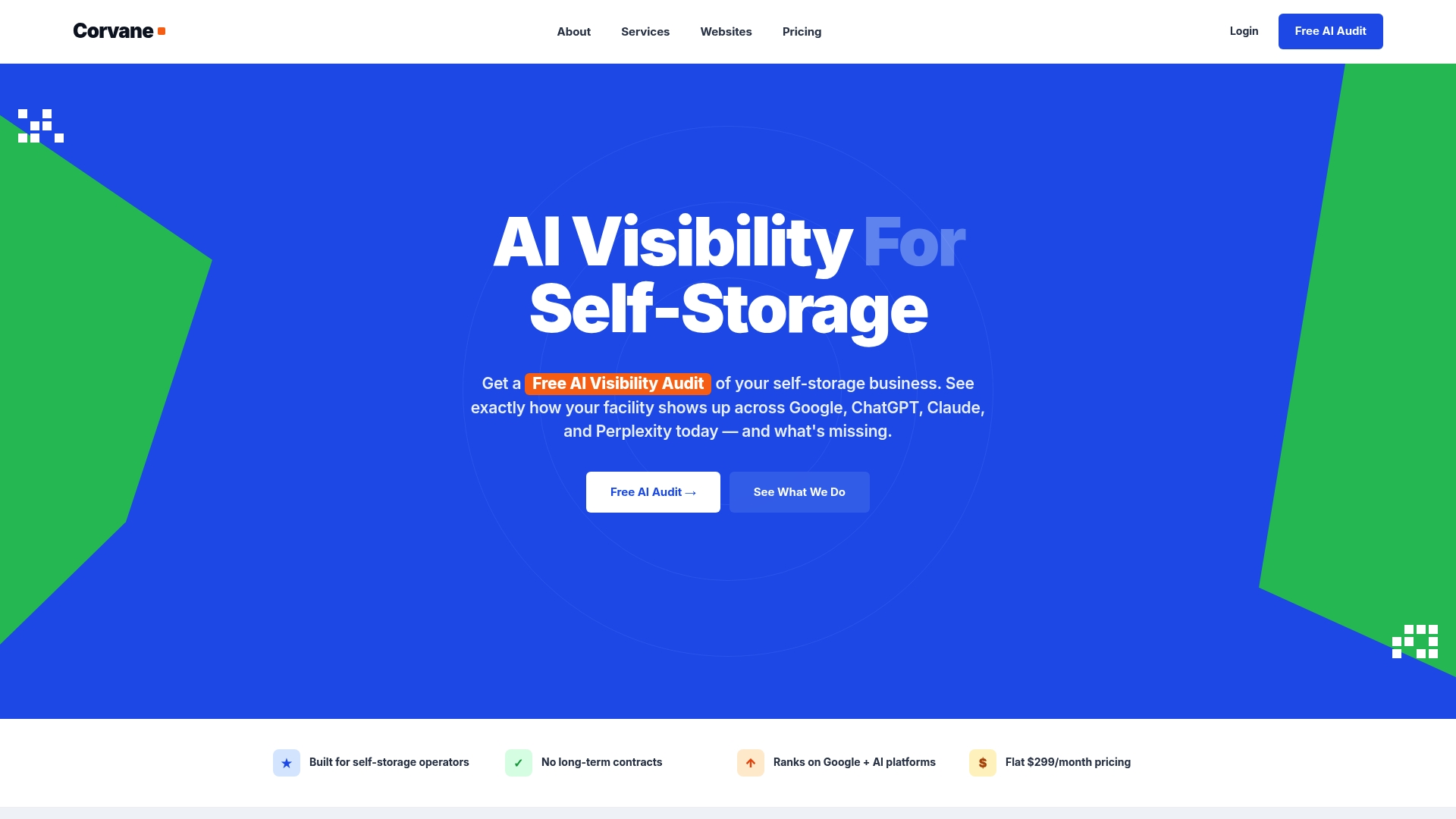
Corvanesystems is built specifically for self-storage operators who want to close that gap. The platform combines traditional SEO with Generative Engine Optimization, so your facility surfaces when a renter searches "storage near me" on Google or asks an AI assistant for a recommendation. Monthly AI-optimized content, Google Business Profile management, and AI visibility audits across ChatGPT, Claude, and Perplexity work together to put your facility in front of high-intent prospects before they call anyone else. See how Corvanesystems works for operators ready to turn search visibility into booked units.
FAQ
What makes a storage lead "qualified"?
A qualified storage lead is a prospect who matches your available unit inventory, has a defined move-in timeline, and has demonstrated clear intent to rent. Urgency, unit fit, and rental value are the three core qualification filters.
How do I find storage leads with high conversion potential?
Targeting quote-stage keywords in Google Ads and using AI voice agents to capture after-hours callers produces the highest-intent prospects. Soft reservations convert at 35–50%, making them the strongest signal of a qualified prospect.
Why do most storage leads go uncontacted?
Storage managers follow up with only 7% of leads due to manual processes and staffing gaps. Automated CRM workflows solve this by triggering immediate outreach without requiring staff action.
What is a soft reservation in self-storage?
A soft reservation is a unit hold placed during an inbound call or online inquiry, before a lease is signed. It creates a commitment from the prospect and significantly increases the likelihood of a completed move-in compared to collecting contact information alone.
How does lead scoring improve occupancy rates?
Live lead scoring routes high-urgency, high-value prospects to premium units and lower-priority leads to overflow inventory. That alignment protects margin and reduces the number of premium units held for prospects who never convert.