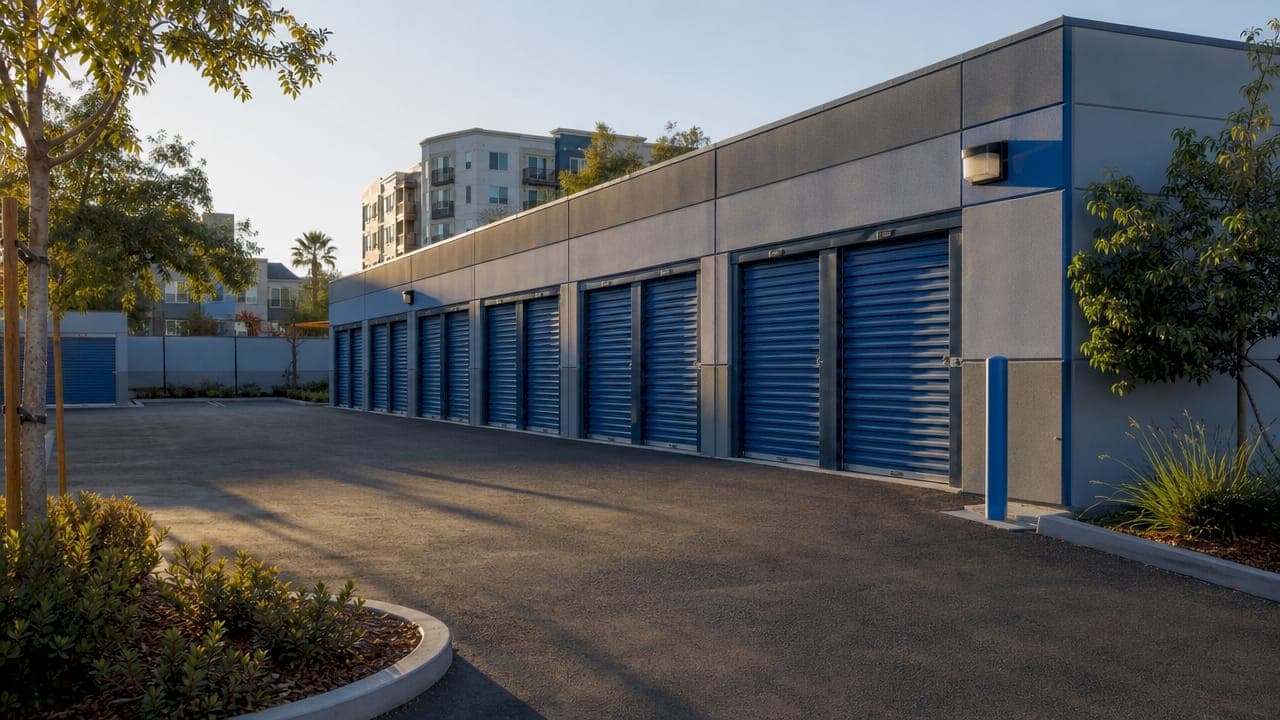
The self-storage industry is defined as a real estate and rental sector where operators lease secure, lockable spaces directly to individuals and businesses, typically on month-to-month terms. Known formally as the storage and warehouse leasing sector, it covers everything from small lockers and climate-controlled rooms to drive-up units and outdoor parking bays. The global self-storage market was valued at USD 65.01 billion in 2025 and is projected to reach USD 109.66 billion by 2034, growing at a CAGR of 5.98%. That growth rate reflects genuine, recurring demand, not a speculative bubble. What makes the industry especially attractive is its profit margin of 53.6% of revenue, which places it among the most profitable real estate categories in the United States.
What is self storage industry explained: how it works operationally
Self storage gives tenants direct, private access to their rented unit without going through facility staff. A customer signs a lease, receives access credentials, and manages their space independently. That independence is the core feature separating self storage from traditional warehousing, where a third party handles your goods.
Most facilities share a standard set of operational features:
- Gated keypad entry with individual access codes tied to each tenant account
- 24/7 surveillance cameras covering driveways, hallways, and unit corridors
- Month-to-month leases that can be terminated with short notice, usually 10–30 days
- Online payment portals for rent, account management, and move-out requests
- On-site staff during business hours for assistance, though many facilities now run partially automated
Unit sizes typically range from 5x5 feet (roughly the size of a large closet) up to 10x30 feet or larger for business inventory. Climate-controlled units maintain stable temperature and humidity, which matters for electronics, wood furniture, artwork, and documents. Non-climate units cost less and work well for durable goods like tools, vehicles, or seasonal equipment.
Tenants are responsible for providing their own lock and, critically, their own insurance. Facilities do not insure personal belongings stored on site. Some require proof of insurance before move-in. That detail surprises many first-time renters who assume the facility covers their goods.
Pro Tip: Before signing, ask specifically whether your renter's insurance or homeowner's policy extends to off-site storage. Many do, which means you may not need to purchase a separate policy from the facility.
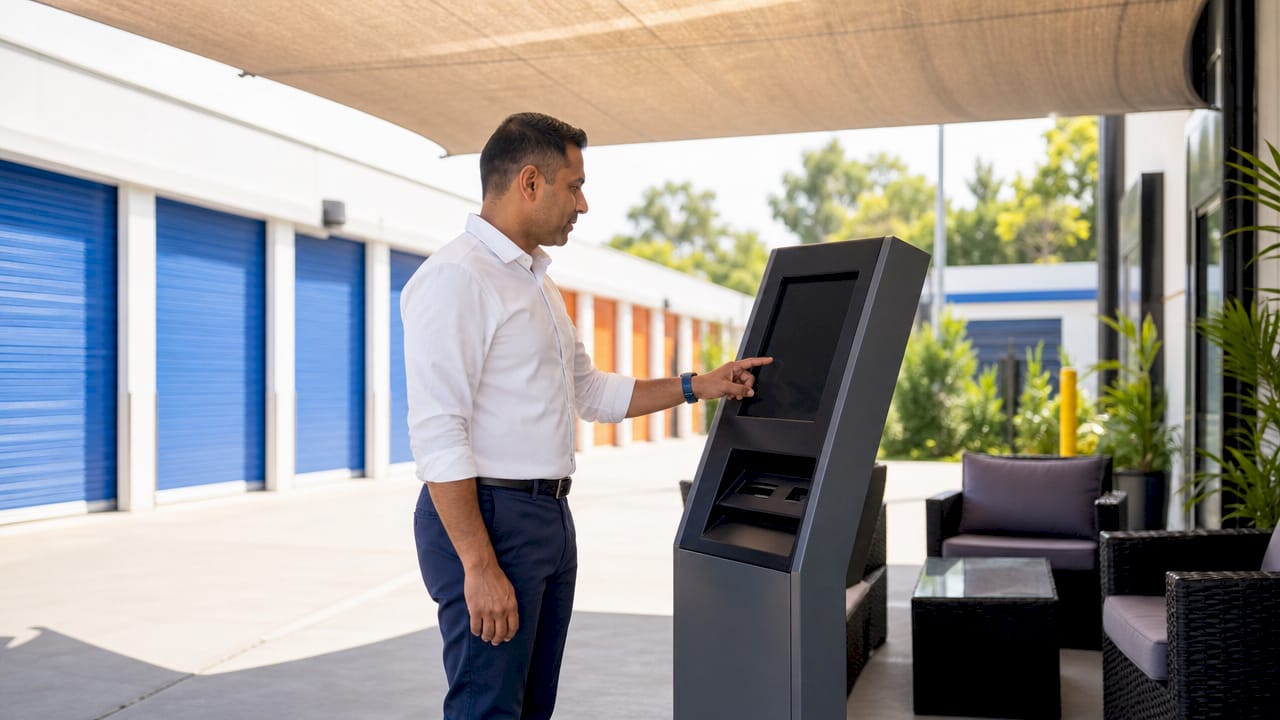
Technology adoption is accelerating across the sector. Smart locks, mobile app access, and automated kiosks now handle move-ins at many facilities without any staff involvement. These tools reduce labor costs and improve the customer experience simultaneously.
What are the current market trends and size of the self storage industry?
The self-storage market is in a stabilization phase after years of rapid supply growth. Forecasted 2026 deliveries for top U.S. cities are down 15% from 2025 levels. Competitive supply as a percentage of existing inventory is expected to fall to 6% in 2026, down sharply from the high-20% range seen between 2021 and 2023. That slowdown in new construction is the single biggest factor supporting rent stability going forward.
Street rates have softened in the near term. The U.S. average street rate for a standard storage unit was $133 in may 2026, down 2.2% year-over-year. That decline reflects the overhang of supply built during the post-pandemic construction boom, not a collapse in demand.
"The self-storage market is not declining. It is digesting. Supply built during 2021–2023 is being absorbed, and the pipeline is thinning. Operators who hold through this period will benefit from the rebalancing expected around 2026 and beyond."
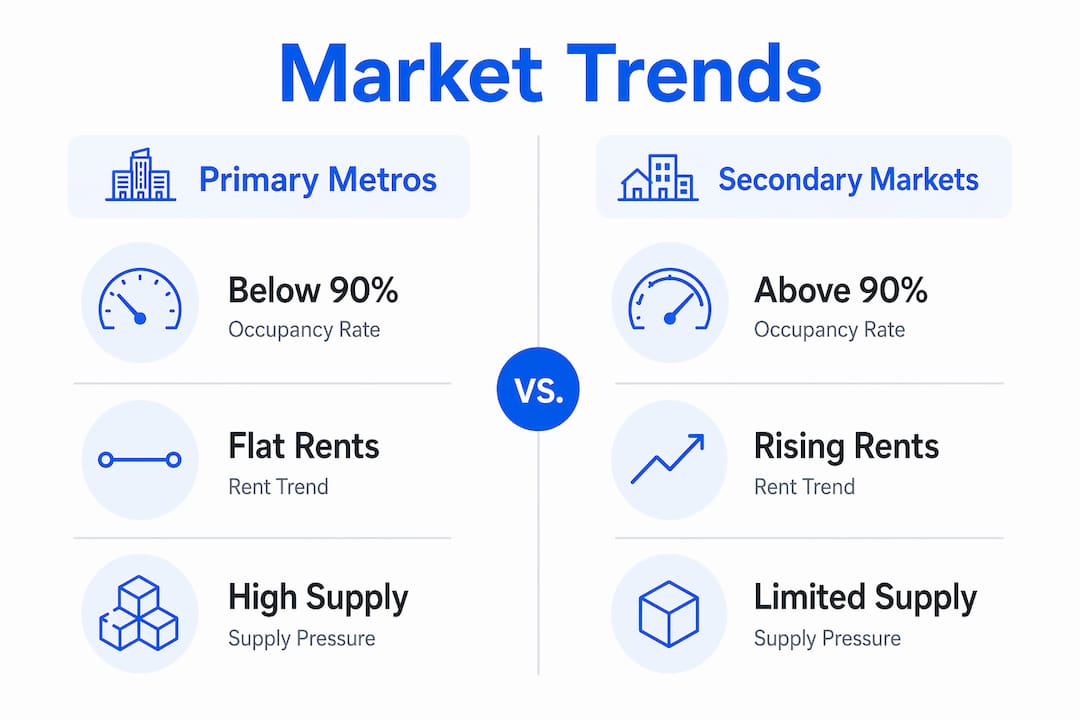
The most important geographic story is market bifurcation. Primary metro areas face oversupply and flat rents. Secondary markets, defined as population areas under 200,000, show occupancy rates above 92% and annual rent growth of 3–6%. That gap is widening, not narrowing.
| Market Type | Occupancy Rate | Rent Trend | Supply Pressure |
|---|---|---|---|
| Primary metros | Below 90% | Flat or declining | High |
| Secondary markets | Above 92% | 3–6% annual growth | Low |
| National average street rate | N/A | Down 2.2% YoY | Moderating |
Urbanization, remote work migration, and housing market friction all drive demand. When people move, downsize, or transition between homes, they need temporary storage. Those life events do not stop during economic slowdowns, which is why self storage demand remains relatively stable across cycles.
What types of self storage units and services are commonly offered?
Self storage facilities offer a wider range of unit types than most people realize. Small units make up about 41% of the global market, driven by urban consumers, students, and individuals with limited storage needs. That dominance reflects the industry's core customer: someone who needs a manageable, affordable space for a defined period.
The main unit categories include:
- Lockers and small units (5x5 to 5x10 ft): Ideal for boxes, seasonal clothing, and small furniture. Most affordable option.
- Medium units (10x10 to 10x15 ft): Fit the contents of a one-bedroom apartment. The most commonly rented size.
- Large units (10x20 to 10x30 ft): Used for full household moves, business inventory, or vehicle storage.
- Drive-up units: Ground-floor access with a roll-up door, allowing direct loading from a vehicle.
- Outdoor spaces: Parking for RVs, boats, and trailers, often uncovered or under a canopy.
Climate-controlled units command a price premium, typically 25–50% above comparable non-climate spaces. The premium is worth it for temperature-sensitive items. Wine, musical instruments, pharmaceutical samples, and vintage clothing all benefit from controlled environments.
Access options vary by facility. Many advertise 24/7 availability, but actual unrestricted access is often limited to specific unit types or requires prior authorization. Indoor hallway units, for example, may have gate hours that differ from outdoor drive-up units at the same property. Checking the exact access terms for your specific unit before signing is not optional. It is the most commonly overlooked step in the rental process.
Supplementary services at modern facilities include packaging supplies for sale, truck rental partnerships, moving labor referrals, and tenant insurance programs. These add-ons generate secondary revenue for operators and genuine convenience for customers.
How does the self storage business model generate revenue?
Rental income is the primary revenue driver in self storage, and the business model is built around high margins and low operational complexity. Profit margins of 53.6% place self storage well above most commercial real estate categories. The reasons are structural.
Labor costs are low. A single facility with 500 units might operate with two or three full-time employees. Maintenance requirements are minimal compared to residential or retail properties. There are no kitchens, plumbing fixtures in individual units, or tenant improvement obligations. The building either stores goods or it does not.
The month-to-month lease structure reduces vacancy lag. When a tenant leaves, the unit is available for re-rental within days, not months. That speed of turnover is a direct advantage over traditional commercial leases, which can sit vacant for quarters at a time.
Technology is now a meaningful revenue lever. Operators using dynamic pricing platforms and smart access systems achieve 500 to 1,200 basis point occupancy improvements over facilities using manual pricing. That gap translates directly to revenue. A facility at 92% occupancy generates materially more income than one at 82%, with almost no difference in operating cost.
Pro Tip: If you are evaluating a storage facility as an investment, look at the pricing strategy it uses. Facilities with dynamic, data-driven pricing consistently outperform those relying on static rate cards.
Challenges do exist. Seasonal fluctuations affect demand in colder climates. Regional oversupply, as seen in many primary metros right now, compresses street rates and forces operators to compete on price rather than value. Operators who invest in digital visibility and technology-driven management are best positioned to hold occupancy through those cycles.
Why do people and businesses rent self storage?
Self storage serves a remarkably broad set of use cases, which is one reason demand stays consistent across economic conditions. The most common reasons people rent include:
- Household moves and transitions: Moving between homes, especially when closing and opening dates do not align, creates an immediate need for temporary storage.
- Downsizing: Retirees and empty-nesters moving to smaller homes often need time to sort through decades of belongings before deciding what to keep.
- Business inventory: Small businesses, e-commerce sellers, and contractors use storage units as low-cost alternatives to commercial warehouse space. A guide to storing business inventory covers this use case in detail.
- Seasonal items: Boats, holiday decorations, ski equipment, and lawn furniture all need a home during off-seasons.
- Renovation projects: Homeowners clearing rooms during remodels use storage to protect furniture and belongings from dust and damage.
Renters should approach the process with a few non-negotiable steps. First, inspect the actual unit you will rent, not a model or a photo. Physical inspection of the specific space is critical because moisture seepage, pest activity, and door seal gaps are rarely addressed contractually. Second, confirm your insurance situation before move-in. Third, measure your belongings before choosing a unit size. Most people underestimate how much space they need and end up renting a second unit later.
The flexibility of month-to-month leasing is the industry's strongest customer benefit. You are not locked into a year-long commitment. If your situation changes, you can vacate with minimal notice and stop paying immediately.
Key Takeaways
The self-storage industry is a high-margin real estate sector built on flexible leasing, direct tenant access, and low operational costs, with a global market projected to reach USD 109.66 billion by 2034.
| Point | Details |
|---|---|
| Market size and growth | The global market was valued at USD 65.01 billion in 2025, growing at a 5.98% CAGR through 2034. |
| Profit margins | Industry profit margins average 53.6%, driven by low labor costs and high unit turnover speed. |
| Geographic bifurcation | Secondary markets outperform primary metros, with occupancy above 92% and rent growth of 3–6% annually. |
| Technology drives occupancy | Operators using dynamic pricing gain 500–1,200 basis points in occupancy over manual competitors. |
| Renter due diligence | Always inspect the physical unit, confirm insurance coverage, and verify actual access hours before signing. |
What I have learned watching this market evolve
The self-storage industry looks simple from the outside. You build boxes, rent them out, and collect checks. The reality is more interesting and more demanding than that.
The technology gap between top operators and average ones is widening fast. Facilities running automated pricing, mobile access, and digital-first customer acquisition are not just slightly ahead. They are pulling away. I have seen facilities in the same zip code with 15-point occupancy differences, and the gap almost always traces back to how they manage pricing and how visible they are online.
The secondary market story is the one most people miss. Everyone watches Manhattan and Los Angeles. The real action is in mid-size cities where supply is thin, demand is steady, and operators who show up with a decent facility and a visible digital presence can build strong, durable occupancy.
For renters, the single most underrated piece of advice is to inspect your unit in person before signing anything. Facilities are not legally required to guarantee the physical condition of your specific space. A five-minute walk-through with a flashlight protects you from months of frustration.
The industry is maturing, not declining. Supply is moderating, demand drivers remain intact, and the operators who invest in their digital presence and pricing infrastructure now will be the ones with full facilities when the market rebalances.
— Mike
How Corvanesystems helps self-storage operators get found
Self-storage is a local business competing in an increasingly digital search environment. When a potential customer asks an AI assistant or types "storage near me" into Google, the facilities that surface are the ones that have invested in their online presence.
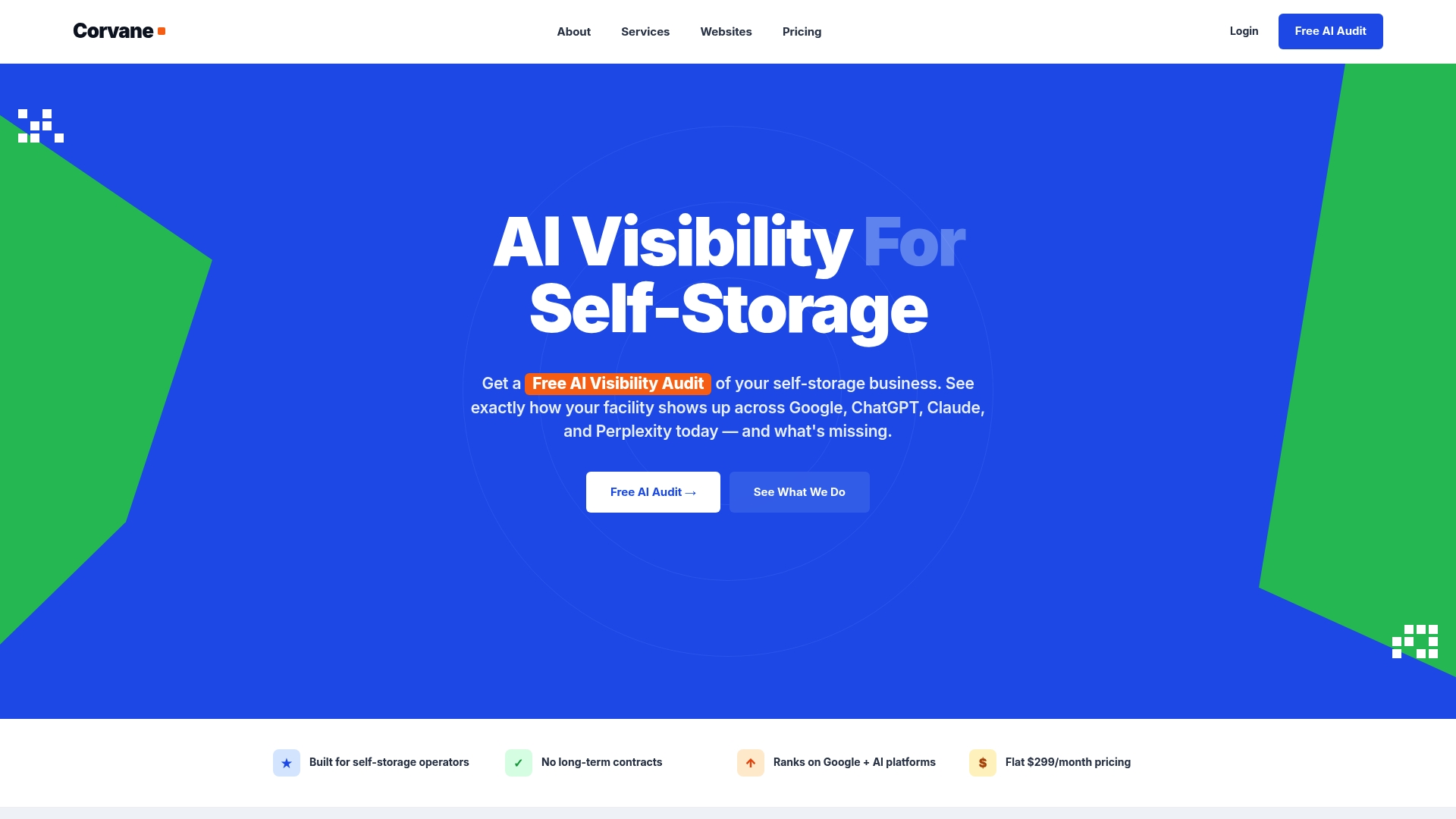
Corvanesystems is built specifically for self-storage operators. The platform combines traditional SEO with Generative Engine Optimization (GEO), structuring your facility's digital presence so it appears in both standard search results and AI-generated answers from tools like ChatGPT, Claude, and Perplexity. Services include technical SEO, local search positioning, AI-optimized content, and clear AI visibility audits that show exactly where your facility stands and what to fix. Pricing is flat-rate with no contracts. For operators competing for occupancy in crowded local markets, that visibility is the difference between a full facility and an empty one.
FAQ
What is the self storage industry?
The self-storage industry is a real estate sector where operators rent secure, lockable spaces to individuals and businesses on flexible, typically month-to-month leases. Tenants access their units directly and manage their space independently.
How profitable is the self storage business?
Self storage carries profit margins of approximately 53.6% of revenue, making it one of the most profitable categories in commercial real estate. Low labor costs and fast unit turnover drive those margins.
What size storage unit do most people rent?
Medium units in the 10x10 to 10x15 foot range are the most commonly rented size, fitting the contents of a one-bedroom apartment. Small units under 5x10 feet make up about 41% of the global market by volume.
Do storage facilities insure my belongings?
Facilities do not insure personal belongings stored on site. Tenants are responsible for their own insurance, and some facilities require proof of coverage before allowing move-in.
Is the self storage market growing?
The global self-storage market is projected to grow from USD 65.01 billion in 2025 to USD 109.66 billion by 2034 at a 5.98% CAGR. Secondary markets with populations under 200,000 are currently the strongest performers, with occupancy above 92% and annual rent growth of 3–6%.