
Handle every move as a coordinated service event, not a walk-in surprise. The storage facility moving process breaks into four stages: reception, intake, staging, and redelivery. Nail those four and you reduce damage claims, prevent billing disputes, and convert transient movers into long-term renters.
TL;DR for operators:
- Confirm logistics 7–10 days before move day: truck size, parking, access codes, elevator reservations
- Reserve a dedicated staging area and mark center-aisle clearance requirements
- Run a photo-timestamped intake inspection on every move-in
- Offer optional paid handling or guaranteed move windows as upsells
- Seed AI-optimized content targeting "move-friendly storage" queries to capture transient demand
Table of Contents
- How storage facilities handle moves most effectively
- Step-by-step operational checklist for move day
- What customer-facing policies actually prevent billing disputes
- Which tech tools make move intake predictable
- How to market move-friendly services for search and AI visibility
- Staff training and safety protocols for move days
- One-page move-day playbook for your front desk
- Key Takeaways
- Why operational readiness and search visibility are the same problem
- Corvanesystems turns your move-ready services into booked units
How storage facilities handle moves most effectively
The industry's clearest operational insight: treat the storage unit as an active transition hub, not a static warehouse. That framing changes everything downstream. Instead of reacting to a customer who shows up with a truck, you're running a scheduled service with defined handoffs.
Facilities that plan moves this way see fewer same-day access problems, faster unit turnovers, and higher referral rates from moving companies. The commercial upside is real: coordinated service offerings covering pickup, intake, and redelivery reduce the customer's vendor burden and increase the likelihood they choose your facility over a competitor that offers nothing but a lock and a key.
Operators who skip this planning pay for it in overflow, billing errors, and lost bookings during peak season in the warmer months, with the highest demand and pricing pressure in the summer
Step-by-step operational checklist for move day
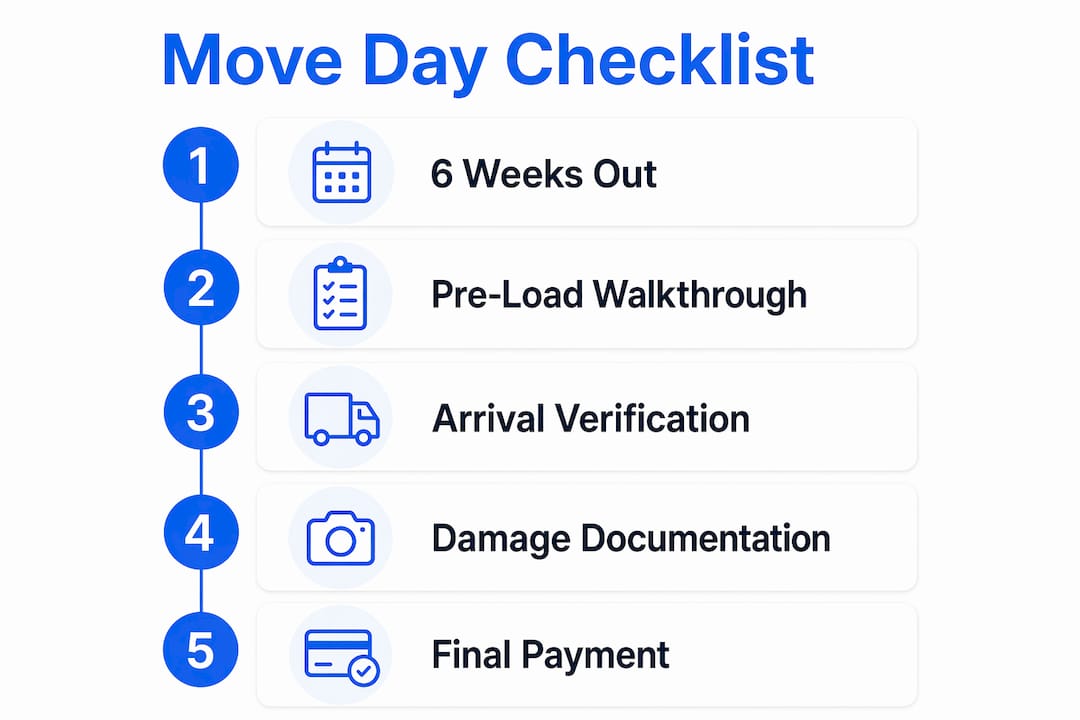
A staged timeline approach prevents last-minute problems. Here's how to sequence it:
- Several weeks out: Take the reservation, confirm unit size, collect vehicle info, and send the move agreement addendum.
- About a week before: Confirm truck length, overnight parking policy, elevator scheduling, and gate-code access. This is the single highest-impact checkpoint.
- Move week: Send a parking map and arrival window via email or SMS. Assign staff roles: reception, intake inspector, and floor safety.
- Move day: Run a pre-load walkthrough. Boxes stored long-term can become brittle and heavy items shift; a five-minute walkthrough prevents last-minute disassembly and damage disputes.
- During intake: Photograph every item at the unit entrance. Tag inventory. Confirm a clear center aisle — without one, tenants must unload the entire unit to reach a single item.
- Post-move (1–2 weeks after): Verify move-out condition, process any damage claims, reconcile billing, clean the unit, and trigger a follow-up marketing sequence.
| Checkpoint | Window | Owner |
|---|---|---|
| Reservation + size estimate | 6 weeks out | Manager |
| Truck/parking confirmation | 7–10 days before | Manager + tenant |
| Staff briefing + role assignment | Day before | Manager |
| Intake inspection + photos | Move day (arrival) | Intake staff |
| Billing reconciliation | Within 48 hours post-move | Manager |
| Unit cleaning + turnover | 1–2 weeks post-move | Maintenance |
Pro Tip: A short pre-load walkthrough — even five minutes — is the single fastest way to cut same-day surprises. Walk the unit with the tenant before the truck is unloaded, not after.
What customer-facing policies actually prevent billing disputes
Most move-related billing disputes trace back to one gap: the customer never read the move-out notice clause. Many facilities require 10–15 days' notice before move-out; missing that window triggers automatic billing for an extra month. Make that language impossible to miss.
What to require at booking:
- Signed move agreement addendum (separate from the standard lease)
- Proof of insurance or purchase of facility coverage
- Vehicle type, crew size, and estimated move window
The communication sequence that prevents the most friction:
| Trigger | Channel | Content |
|---|---|---|
| Booking confirmed | Move addendum, insurance requirement, parking map | |
| 7–10 days before | Email + SMS | Arrival window, gate code, elevator reservation link |
| 48 hours before | SMS | Reminder: truck size limit, center-aisle rule, staff contact |
| Move day | SMS | Staff name on duty, direct phone number |
Transparent fee presentation matters here too. Access hours, billing cycles, and move-out notice timing are the three items customers most often cite in negative reviews. Put all three in the confirmation email, not buried in the lease.
Which tech tools make move intake predictable
The right digital tools turn a chaotic move day into a repeatable workflow. Prioritize these categories:
- Online reservation with calendar blocking: prevents double-booking move windows and lets staff prepare in advance
- Intake/photo capture with timestamps: a photo-timestamped, signed handoff is defensible documentation in any damage dispute and cuts claims processing time significantly
- Automated reminders: webhook-triggered SMS and email at 7–10 days, 48 hours, and move day reduce no-shows and last-minute cancellations
- Temporary access codes: time-limited gate codes for move crews eliminate the need for staff escort and reduce security exposure
- KPI dashboard: track move-booking-to-occupancy conversion, average handling time per move, claims per 100 moves, and no-show rates monthly
Integrate intake forms with your property management software so every move generates a CRM record automatically. That record becomes the foundation for post-move marketing sequences.
How to market move-friendly services for search and AI visibility
Movers search with specific intent: "short-term storage during a move," "truck parking at storage facility," "storage unit near me with drive-up access." Most operators have no content targeting any of those queries.
Build content around these priorities:
| Content asset | Target query | SEO/AI tactic |
|---|---|---|
| "Move-friendly services" landing page | "storage with move-in help near me" | ServiceOffering schema, local keyword targeting |
| Truck parking and access page | "storage facility truck parking" | FAQ schema, Google Business Profile post |
| Move-day checklist (downloadable) | "moving storage checklist" | Long-form content, AI snippet formatting |
| Move-out notice explainer | "storage move-out notice requirements" | Question-answer format for AI Overviews |
Add structured data (ServiceOffering and FAQPage schema) to your move-related pages. AI tools like ChatGPT, Perplexity, and Google's AI Overviews pull answers from well-structured, question-answer formatted content. A facility with a clear FAQ about move windows and insurance is far more likely to surface in those answers than one with a generic homepage.
Tracking what matters: monitor search visibility for moving-intent keywords, conversion rate from move-related landing pages, and call volume from those pages monthly. For operators looking to fill empty units faster, move-related content is one of the highest-ROI content investments available.
Staff training and safety protocols for move days
Move days carry the highest injury and damage risk of any operational day. A brief pre-move briefing, not a binder, is what actually changes behavior.
- PPE and equipment check: steel-toed footwear, gloves, back support for staff handling items over 50 lbs, dollies, moving blankets, ratchet straps, and floor protection mats at elevator entries
- Role assignments: one staff member on reception (arrival verification, ID check), one on intake (photos, inventory tags, condition notes), one on floor safety (aisle clearance, equipment staging)
- Lifting protocol: two-person lift for anything over 50 lbs; no exceptions during move-in rush
- Loading guidance for staff assisting crews: heaviest items toward the cab, fragile items upright and padded, ratchet straps on every load
- Damage escalation: any item with visible damage at intake gets photographed, noted on the intake form, and flagged to the manager before the tenant leaves the property
For a solo tenant move, one staff member covering reception and intake is sufficient. A crew-handled unit clearance (three or more movers) warrants two staff on the floor.

One-page move-day playbook for your front desk
Post this. Hand it to every staff member before a scheduled move.
| Phase | Action | Responsible |
|---|---|---|
| 7–10 days before | Confirm truck size, parking, elevator, gate code | Manager |
| Day before | Brief staff, assign roles, stage equipment | Manager |
| Arrival | Verify ID, confirm move window, walk unit | Reception |
| Intake | Photo every item, tag inventory, sign handoff | Intake staff |
| During move | Enforce center-aisle rule, monitor floor safety | Floor staff |
| Post-move | Inspect unit, note damage, trigger billing check | Manager |
| 1–2 weeks after | Clean unit, update availability, send follow-up | Maintenance + Manager |
Reception script (arrival): "Welcome. I'll need your ID and the name on the reservation. Your unit is [X]. We require a clear center aisle at all times for access and safety. I'll walk the unit with you before you start unloading."
Intake script (damage documentation): "I'm going to photograph the unit and any items with visible wear before we complete intake. This protects both you and the facility. I'll note anything on the intake form and you'll sign off before you leave."
Key Takeaways
Treating every move as a planned service event, not a walk-in, is the single operational change that reduces damage claims, prevents billing disputes, and converts transient movers into long-term renters.
| Point | Details |
|---|---|
| Confirm 7–10 days before | Verify truck size, parking, elevator, and gate access at least a week out to prevent move-day failures. |
| Photo intake is non-negotiable | Timestamped photos and a signed handoff form cut claims processing time and provide defensible documentation. |
| Notice clauses drive billing disputes | Automate reminders at 15 days, 10 days, and 48 hours before move-out to prevent unexpected billing cycles. |
| Move-intent content fills units | Landing pages targeting "truck parking at storage facility" and similar queries capture high-converting transient demand. |
| Corvanesystems amplifies move-ready operators | Corvanesystems builds AI-optimized content and local SEO so move-related searches surface your facility, not a competitor's. |
Why operational readiness and search visibility are the same problem
Most storage operators treat operations and marketing as separate departments. They're not. A facility with a clear move-day process, a dedicated parking page, and a structured FAQ about move windows will outrank a larger competitor that has none of those things, because search engines and AI tools reward specificity.
The operators who struggle with occupancy during peak moving season aren't failing on price. They're invisible at the moment a mover is searching. That's a content and structure problem, not a rate problem. Building the operational playbook above is step one. Making sure Google, ChatGPT, and Perplexity can find and recommend it is step two.
Corvanesystems turns your move-ready services into booked units
Running a tight move-day operation is worth nothing if movers can't find you when they search. Corvanesystems is purpose-built for self-storage operators who want their facility to surface in Google results and AI-generated answers, not just sit on page three while a competitor with a weaker operation takes the booking.
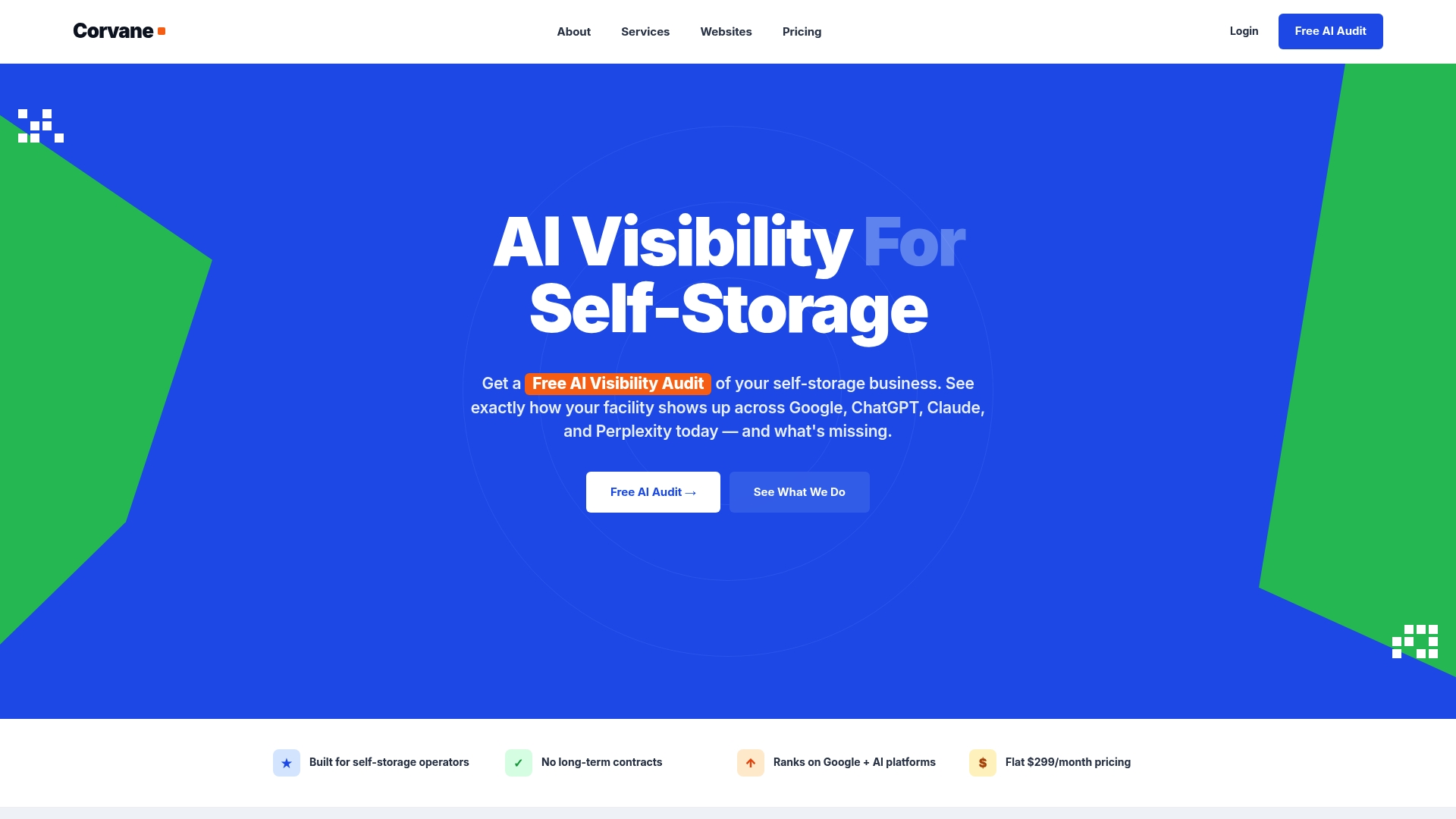
The flat-rate service includes 30 AI-optimized articles per month (move-day checklists, parking pages, FAQ content), full technical and on-page SEO, Google Business Profile management, and AI visibility audits across ChatGPT, Claude, Perplexity, and Google's AI Overviews. No contracts, no tiers, one predictable monthly rate.
If you've built the operational playbook, let Corvanesystems make sure the right movers find it. Request an AI visibility audit and see exactly where your facility stands today.