
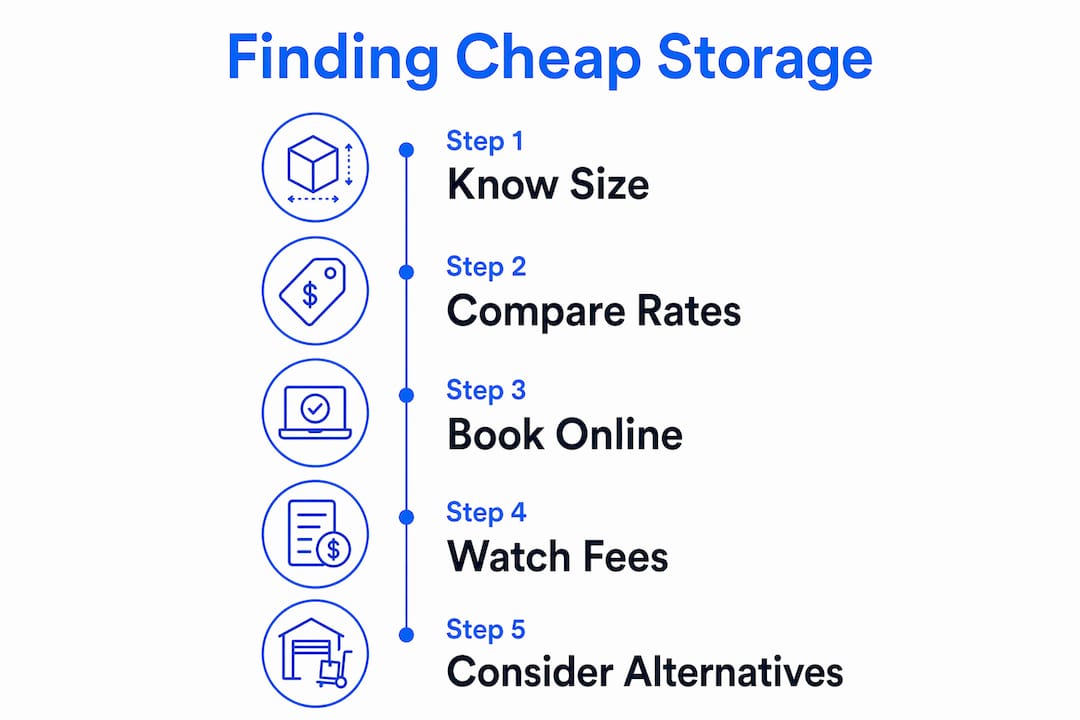
Cheap self-storage is defined as a rental unit that balances low monthly cost with the right size, access type, and location for your needs. When you want to find cheap storage near me, the advertised base price is rarely the full story. Mandatory fees, insurance requirements, and access premiums can push your real monthly cost well above the headline rate. This guide walks you through what a self-storage unit actually costs, how to book smart, and how to avoid the traps that catch most renters off guard.
What are the typical price ranges and unit sizes you should expect locally?
Self-storage pricing follows a clear size ladder, and knowing where you fall on that ladder saves you from overpaying. Small 5x5 units start as low as $14–$19 per month, which is enough space for boxes, seasonal gear, or a few pieces of furniture. Medium 10x10 units average $101–$129 depending on your market, making them the most popular choice for one-bedroom moves or renovation overflow. Large 10x20 units run $150–$180 monthly in most areas and can hold the contents of a two-bedroom apartment.
Local market conditions shift these numbers significantly. A 10x10 unit in a dense urban neighborhood will cost more than the same unit in a suburban or rural area. Climate-controlled units add another layer of cost on top of the base rate. Access type also drives pricing, with drive-up units commanding a premium over units accessed by stairs or elevators.

| Unit Size | Typical Monthly Range | Best For |
|---|---|---|
| 5x5 | $14–$19 | Boxes, seasonal items, small furniture |
| 5x10 | $30–$50 | One room of furniture, bikes, appliances |
| 10x10 | $101–$129 | One-bedroom apartment contents |
| 10x20 | $150–$180 | Two-bedroom apartment or vehicle storage |
Use this table as a baseline, not a guarantee. Prices in high-demand zip codes can run 30–50% above these figures. Always get a quote directly from the facility before budgeting.
How can online booking help you find the best rates?
Booking online is the single fastest way to cut your storage cost before you ever sign a contract. Many facilities offer first month free or 50% off for reservations made directly through their website. These promotions are almost never available at the front desk. The discount exists because online bookings reduce staff time and fill units faster.
The digital-first booking process at most modern facilities takes under 10 minutes. You enter your unit size, provide ID and insurance information, and receive an electronic gate code before you ever visit the property. That speed is a genuine advantage when you are mid-move and need a unit today.
Key features to look for when booking storage rentals in your area online:
- Mobile-friendly size calculator so you pick the right unit without guessing
- Instant reservation confirmation with no deposit required at many facilities
- Electronic gate code delivery so you can access your unit the same day
- Visible promotional pricing displayed before checkout, not buried in fine print
- Online account management to pay, extend, or cancel without calling
Pro Tip: Book on a weekday morning. Facilities often release new promotional rates early in the week, and inventory is higher before weekend movers snap up available units.
Reading online reviews for storage facilities before you book gives you a real picture of how a location handles rate increases, cleanliness, and security. A facility with a strong review record is less likely to surprise you with undisclosed fees later.
What hidden costs and fees should you watch for?
The advertised monthly rate is not what you will pay in month one. Mandatory admin fees of $25–$30 and required insurance costs can effectively double your first payment compared to the base rent. These charges are rarely displayed prominently in online listings. They show up at checkout or on move-in day.
Here are the most common hidden costs renters miss:
- One-time admin fee: Typically $25–$30, charged at move-in regardless of how long you rent
- Mandatory insurance: Most facilities require coverage, either through their own plan or proof of a renter's policy. Facility plans often run $10–$20 per month.
- Lock purchase: Some locations require you to buy their specific lock, adding $15–$25 upfront
- Rate increases after promotions: Post-promotion rate hikes are common and rarely disclosed clearly. Ask the facility directly how often rates increase and by how much.
- Late payment fees: These vary widely but can add $10–$25 to a missed payment
Ask every facility one direct question before you sign: "What is the total cost I will pay in month one, including all fees?" A facility that cannot answer that question clearly is one worth skipping. Understanding how storage facilities set prices helps you ask the right questions and spot inflated rates before they hit your bank account.
What alternative storage options can help you find cheaper solutions nearby?
Non-traditional storage is the most underused tool for renters who need low-cost storage solutions. Peer-to-peer residential storage can run 30–40% cheaper than a traditional climate-controlled commercial unit. Platforms like Neighbor list available space in private garages, sheds, and attics. The tradeoff is that security verification differs from a commercial facility, so this option works best for non-fragile, lower-value items.
Demographic discounts are another source of savings that most renters never ask about. Facilities frequently offer 5–10% off for seniors, students, military personnel, and local business owners. These discounts are almost never advertised. You have to ask for them at the facility level.
Prepayment discounts are equally powerful. Paying six months upfront can earn half a month free, and a 12-month prepayment often includes a full month free. That brings your effective monthly rate well below the advertised price.
| Storage Type | Average Cost | Pros | Cons |
|---|---|---|---|
| Traditional commercial unit | $60–$180/month | Security, climate control, 24/7 access | Higher cost, admin fees |
| Drive-up outdoor unit | $50–$150/month | Easy loading, no elevator | Less climate protection |
| Peer-to-peer residential | 30–40% less than commercial | Lower cost, flexible terms | Variable security, no facility staff |
| Indoor non-drive-up unit | Lowest commercial rate | Cheaper than drive-up | Stairs or elevator required |
Pro Tip: Always ask about indoor vs. outdoor unit options at any facility you visit. An indoor unit on an upper floor can cost meaningfully less than a ground-floor drive-up unit at the same location.
Key Takeaways
The cheapest storage near you is the one where you know the total cost upfront, including fees, insurance, and any post-promotion rate increases.
| Point | Details |
|---|---|
| Know your size before you search | Match unit size to your actual needs; oversizing is the most common way renters overpay. |
| Book online for the best rate | Online reservations unlock promotions unavailable at the front desk, including first month free offers. |
| Ask about all fees before signing | Admin fees and mandatory insurance can double your first month's payment beyond the base rate. |
| Request demographic and prepay discounts | Seniors, students, and military can save 5–10%; prepaying six months can earn half a month free. |
| Consider peer-to-peer alternatives | Residential storage platforms can cut costs by 30–40% for non-fragile, lower-value belongings. |
What I've learned from watching renters get burned on storage costs
Most people approach storage like a utility bill. They see a number, they sign, and they move on. That mindset costs them money every single month.
The single biggest mistake I see is choosing a unit based on the advertised rate without asking what the total first-month cost actually is. Admin fees and insurance requirements are not optional at most facilities. They are built into the contract. A $60-per-month unit can easily cost $105 in month one once you add the admin fee, a lock, and the facility's insurance plan.
The second mistake is ignoring access type as a pricing lever. Drive-up access units cost more than units you reach by stairs or elevator. If you are storing items you will rarely touch, the cheaper indoor unit is the smarter call. You pay a premium for convenience you may not need.
The third mistake is never asking about unadvertised deals. Prepayment discounts and demographic discounts exist at a large number of facilities. They are not listed online. The only way to get them is to ask directly, either by phone or in person. A five-minute conversation can save you $100 or more over a six-month rental.
The best approach is to treat your storage search like a negotiation, not a transaction. Get the total cost in writing, ask about rate-hike history, and compare at least three facilities before you commit.
— Mike
How Corvanesystems helps storage facilities show up when you search
When you search for affordable storage units nearby, the facilities that appear at the top of Google and inside AI tools like ChatGPT or Perplexity are not there by accident. Corvanesystems is an SEO and AI search visibility agency built specifically for self-storage operators. The agency structures facility websites and content so that search engines and AI systems correctly understand, index, and recommend those locations to renters actively searching for storage.
For storage operators competing in crowded local markets, being invisible online means losing bookings to facilities that invested in their digital presence. Corvanesystems closes that gap with local SEO, AI-optimized content, and monthly performance reporting. Visit Corvanesystems to see how the agency helps storage facilities get found by the renters who are ready to book.
FAQ
What is the cheapest storage unit size available?
A 5x5 unit is the smallest and cheapest option at most facilities, with prices starting as low as $14–$19 per month in many markets. This size fits boxes, seasonal items, and small furniture pieces.
How do I find cheap storage near me without hidden fees?
Ask the facility for the total first-month cost including admin fees, insurance, and any required lock purchase before signing. Online booking portals sometimes display these costs at checkout, but calling directly is the most reliable method.
Are peer-to-peer storage platforms safe to use?
Peer-to-peer platforms like Neighbor can offer savings of 30–40% compared to commercial units, but security verification varies by listing. They work best for lower-value, non-fragile items where climate control and 24/7 facility security are not required.
Do storage facilities offer discounts for seniors or military?
Many facilities offer 5–10% off for seniors, students, and military personnel, but these discounts are rarely advertised online. Ask at the facility directly or by phone to confirm eligibility before you visit.
When is the best time to book a storage unit for the lowest rate?
Booking online on a weekday gives you access to the most current promotional rates, including first month free or 50% off move-in specials that are typically reserved for direct online reservations.